

















































Standard Time Returns: Why Americans Face Another Clock Change Despite House Vote to End It

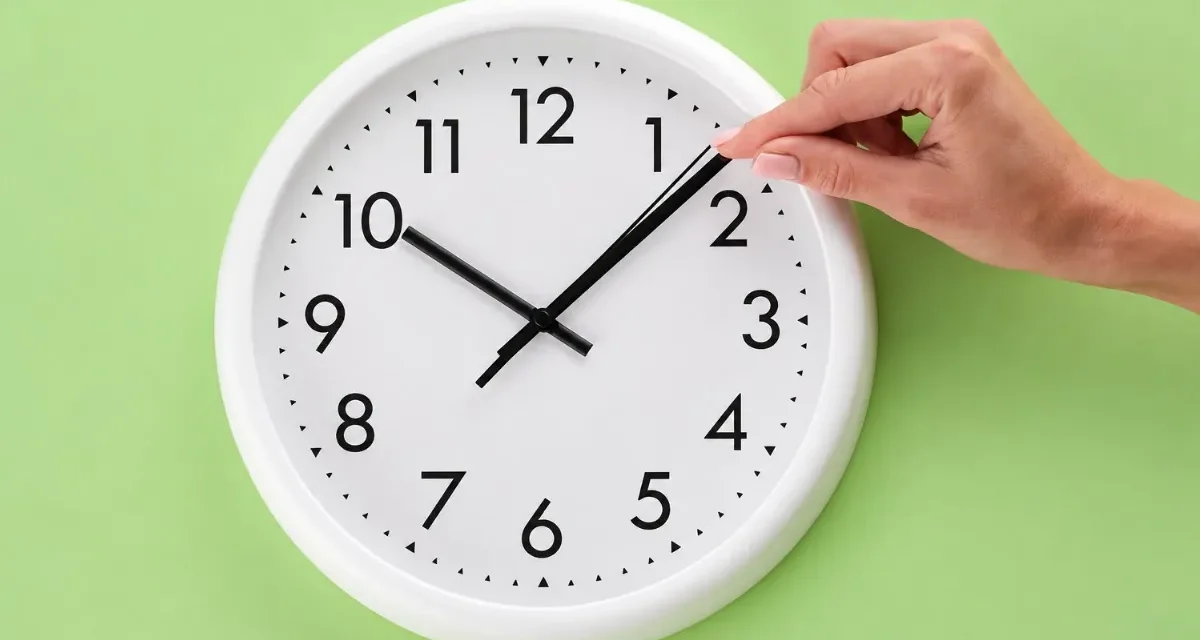
WASHINGTON — On Sunday, November 1, 2026, tens of millions of Americans will set their clocks back one hour, marking the end of Daylight Saving Time (DST) for the year. The return to Standard Time occurs despite a major legislative milestone earlier in the summer, when the U.S. House of Representatives voted overwhelmingly to make daylight saving time permanent.
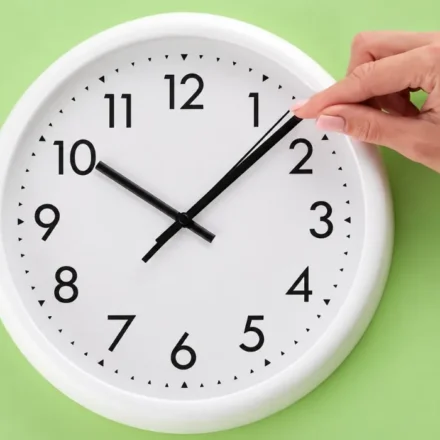
Because the legislation remains unpassed by the Senate and unsigned by the President, the nation’s twice-yearly clock-changing ritual continues. At 2:00 a.m. local time on November 1, clocks will fall back to 1:00 a.m., granting an extra hour of overnight sleep while dramatically shifting daylight hours toward the morning and leaving late-afternoon skies in darkness.
Main Facts: The Mechanics and Immediate Impacts of the November 1 Reset
The annual transition back to Standard Time is governed by federal statute, officially ending the eight-month period of Daylight Saving Time that began on Sunday, March 8, 2026.
  Daylight Saving Time (2026)      --->      Standard Time (Winter)
  March 8, 2026 – Nov 1, 2026                Nov 1, 2026 – March 14, 2027
  (Clocks "Spring Forward" +1hr)             (Clocks "Fall Back" -1hr)
The Immediate Time Shift
At 2:00 a.m. on Sunday, November 1, digital infrastructure—including smartphones, computers, synchronized network clocks, and modern vehicle systems—will automatically adjust to 1:00 a.m. Older analog clocks, microwave displays, and non-connected household appliances will require manual intervention.
Sunset Acceleration
While the shift adds an extra hour overnight, it immediately pulls sunset one hour earlier on the clock. Northern and central states will experience the sharpest contrast:
- Minneapolis, MN: Sunset on November 1 will shift to approximately 5:01 p.m., receding further to 4:44 p.m. by mid-November as winter solstice approaches.
- Chicago, IL & Boston, MA: Commuters leaving workplaces by 5:00 p.m. will travel home in complete darkness during the first week of November.
+-----------------------------------------------------------------------+
|                 DAYLIGHT DISTRIBUTION COMPARISON                      |
|                                                                       |
| Standard Time (Nov 1):   [Dark]--Sunrise (7:00 AM)---Sunset (5:00 PM)--[Dark]
| Year-Round DST (Hypothetical): [Dark]--------Sunrise (8:00 AM)---Sunset (6:00 PM)--[Dark]
+-----------------------------------------------------------------------+
Chronology: The Legislative Path and Historical Precedents
The effort to eliminate seasonal time shifts has a long legislative history in the United States, marked by wartime mandates, failed experiments, and recent congressional maneuvering.
+-----------------------------------------------------------------------------+
|                          TIMELINE OF U.S. TIME POLICY                       |
+-----------------------------------------------------------------------------+
| 1918: Standard Time Act introduces national daylight saving during WWI.     |
| 1966: Uniform Time Act establishes standardized national DST framework.      |
| 1974: Emergency Year-Round DST enacted; repealed 9 months later.            |
| 2005: Energy Policy Act extends DST from March to November.                 |
| Jan 2025: Sen. Rick Scott introduces S. 29 (Sunshine Protection Act).        |
| Jul 14, 2026: House passes H.R. 139 by a vote of 308 to 117.                |
| Jul 15, 2026: H.R. 139 referred to Senate Commerce Committee (Stalled).     |
| Nov 1, 2026: Nation returns to Standard Time under existing federal law.    |
+-----------------------------------------------------------------------------+
1. The 1974 Permanent Daylight Saving Experiment
Year-round Daylight Saving Time is not unprecedented in the U.S. In January 1974, President Richard Nixon signed emergency legislation establishing year-round DST to conserve energy during the OPEC oil embargo.
The policy initially had widespread public support (79% in December 1973). However, support dropped to 42% by February 1974 as cold winter mornings forced children to travel to school in complete darkness, leading to high-profile traffic accidents involving young pedestrians. Congress repealed the law in October 1974, restoring the seasonal winter return to Standard Time.
2. Modern Legislative Efforts (2025–2026)
- January 2025: Senator Rick Scott (R-FL) introduced S. 29, a bill aimed at making Daylight Saving Time permanent across the nation. Despite bipartisan co-sponsors, the bill stalled in the Senate Committee on Commerce, Science, and Transportation.
- July 14, 2026: The U.S. House of Representatives passed a companion measure, H.R. 139 (The Sunshine Protection Act), by a vote of 308 to 117. The roll call demonstrated strong cross-party alignment, signaling broad political agreement on ending biannual clock shifts.
- July 15, 2026: H.R. 139 was formally transmitted to the Senate and referred to the Committee on Commerce, Science, and Transportation. Without Senate passage and a presidential signature, the House vote remains insufficient to alter current law before November 2026.
Supporting Data: Health, Public Safety, and Economic Impacts
The debate over time policy balances conflicting priorities: evening economic activity versus biological circadian alignment.
+--------------------------------------------------------------------------+
|               SUMMARY OF TIME CHANGE RESEARCH & IMPACTS                  |
+--------------------------------------------------------------------------+
|  AREA          | IMPACT OF SPRING SHIFT      | IMPACT OF FALL SHIFT       |
+----------------+-----------------------------+----------------------------+
|  Sleep Health  | Acute deprivation (~40 min) | Disrupted circadian cycle  |
|  Cardiovascular| ~24% spike in heart attacks | Baseline return            |
|  Road Safety   | Early week collision surge  | Late-afternoon pedestrian  |
|                |                             | fatality increases         |
|  Public Sleep  | 30.5% adults sleep <7 hrs   | Exacerbates existing sleep |
|  Deficit       | (CDC 2024 Data)             | debt                       |
+----------------+-----------------------------+----------------------------+
Sleep Medicine and Human Biology
While the public often favors permanent Daylight Saving Time for extra evening light, the scientific and medical communities overwhelmingly advocate for permanent Standard Time.
    Solar Light Exposure & Biological Clock
    ---------------------------------------
    Morning Sunlight  ==> Triggers Suppression of Melatonin ==> Awakens Body
    Evening Sunlight  ==> Delays Melatonin Production       ==> Disrupts Sleep Onset
The American Academy of Sleep Medicine (AASM) and the Centers for Disease Control and Prevention (CDC) emphasize that morning light is essential for synchronizing the human master clock (the suprachiasmatic nucleus). Permanent Daylight Saving Time deprives northern populations of early morning light for up to four months of the year, creating systemic circadian misalignment.
Furthermore, a CDC National Center for Health Statistics report published in April 2026 revealed that 30.5% of U.S. adults reported sleeping fewer than seven hours per day on average. Sleep researchers caution that maintaining permanent summer time in winter would compound chronic sleep deficits by delaying natural evening melatonin production.
Public Safety Dynamics
Data from the National Highway Traffic Safety Administration (NHTSA) highlights distinct risk profiles for both clock transitions:
- Spring Shift (March): The sudden loss of one hour of sleep correlates with an estimated 6% surge in fatal motor vehicle collisions during the immediate workweek following the change, as well as a acute spike in cardiovascular events such as heart attacks and strokes.
- Fall Shift (November): While drivers gain an hour of rest, the sudden movement of sunset into the peak late-afternoon commute leads to a documented uptick in pedestrian fatalities. Visibility declines precisely when vehicle traffic volume peaks between 4:30 p.m. and 6:30 p.m.
Official Responses and Federal vs. State Jurisdictional Realities
The persistence of the clock-changing system stems from the structure of federal energy and commerce laws.
                        U.S. TIME ZONE JURISDICTION
                                     |
               +---------------------+---------------------+
               |                                           |
      FEDERAL LEVEL                                 STATE LEVEL
  (Uniform Time Act / DOT)                      (State Legislatures)
               |                                           |
  - Controls overall framework                  - Can opt OUT to Permanent
  - Must authorize year-round DST                 Standard Time (e.g., AZ, HI)
  - Manages boundaries                          - CANNOT adopt year-round DST
                                                  without Federal Approval
The Federal Framework
Under the Uniform Time Act of 1966 (codified at 15 U.S.C. § 260a) and overseen by the U.S. Department of Transportation (DOT), states are granted specific, limited authority:
- Permitted Action: States may choose to exempt themselves entirely from Daylight Saving Time, remaining on permanent Standard Time year-round.
- Prohibited Action: States cannot unilaterally implement year-round Daylight Saving Time without explicit statutory authorization passed by Congress.
State Trigger Laws in Limbo
According to a Congressional Research Service (CRS) analysis, 19 states have passed state-level legislation or resolutions to adopt permanent Daylight Saving Time once federal law allows it.
+--------------------------------------------------------------------------+
|      STATES WITH TRIGGER LAWS FOR PERMANENT DAYLIGHT SAVING TIME        |
+--------------------------------------------------------------------------+
|  Alabama       |  Georgia       |  Mississippi   |  South Carolina       |
|  California    |  Idaho         |  Montana       |  Tennessee            |
|  Colorado      |  Louisiana     |  Ohio          |  Utah                 |
|  Delaware      |  Maine         |  Oregon        |  Washington           |
|  Florida       |  Minnesota     |  Kentucky      |                       |
+--------------------------------------------------------------------------+
For residents in states like Minnesota or Florida, state-level approval has no immediate effect on November 1. Until Congress amends federal law, state statutes remain inert, and the federal clock-changing calendar governs.
Non-Participating Jurisdictions
Several U.S. states and territories already decline to observe Daylight Saving Time, utilizing the statutory exemption to remain on permanent Standard Time:
- Hawaii (Exempted since 1967 due to minimal variation in daylight hours given its low latitude)
- Arizona (Exempted since 1968 to reduce summer energy demands during extreme afternoon heat; the Navajo Nation within Arizona does observe DST)
- U.S. Overseas Territories: Puerto Rico, Guam, American Samoa, the U.S. Virgin Islands, and the Northern Mariana Islands.
Implications and Future Outlook: Looking Toward 2027
As the November 1 transition takes effect, attention shifts back to Capitol Hill and the approaching 2027 calendar.
                    SCHEDULED TIME CHANGE TRANSITIONS

   Nov 1, 2026                       March 14, 2027                   Nov 7, 2027
   [Fall Back]   ------------------>  [Spring Forward] -----------------> [Fall Back]
 (Standard Time)                      (Daylight Saving)                 (Standard Time)
       ^                                    ^
       |                                    |
   CONFIRMED                            SCHEDULED
(Under current law)                 (Unless Senate acts)
The Policy Dilemma Facing Congress
The legislative standoff in Washington reflects conflicting public preferences and scientific advice:
  PRO-DAYLIGHT SAVING CAMP              PRO-STANDARD TIME CAMP
  (Commerce, Retail, Recreation)         (Sleep Research, Education, Public Health)
  ------------------------------        ------------------------------------------
  • More evening light for shopping     • Aligns with natural human biological clock
  • Increased afternoon outdoor activity • Reduces dark winter morning travel hazards
• Favored by tourism and golf sectors • Supported by American Academy of Sleep Medicine- The Permanent DST Push: Championed by retail, tourism, and outdoor recreation industries, this position favors brighter evenings to encourage commerce and outdoor activity after the workday.
- The Permanent Standard Time Alternative: Championed by sleep scientists, parent-teacher associations, and health organizations, this position points to circadian health and child safety during morning school commutes.
- The Status Quo: Retaining seasonal clock changes acts as a compromise, balancing longer summer evenings with safer winter mornings, despite public frustration over twice-yearly transitions.
March 2027 Outlook
Under federal law, Daylight Saving Time is scheduled to resume on Sunday, March 14, 2027, when clocks will spring forward to 3:00 a.m. at the 2:00 a.m. mark.
Unless the Senate takes up H.R. 139 or S. 29 during the remainder of the congressional session, the U.S. will remain tied to its traditional biannual routine. For now, Americans across 48 states must set their clocks back one hour on Sunday, November 1, 2026, preparing for earlier sunrises and dark winter afternoons.