
























































Leadership Transition at Pivotal: What Ken Karklin’s Departure Means for the Future of Personal Flight

The burgeoning landscape of Advanced Air Mobility (AAM) hit a notable milestone this week as Pivotal, the high-profile, Larry Page-backed eVTOL (electric vertical takeoff and landing) company, announced that CEO Ken Karklin is stepping down. After a four-year tenure that saw the company transition from a clandestine startup into a commercial player, Karklin’s departure marks a pivotal moment—both for the firm and for the wider personal aviation sector.
As the company prepares to navigate its next phase of scaling, board member Mike Ross has been appointed as interim CEO. The transition arrives at a critical juncture, with Pivotal actively pushing its lightweight, personal aircraft into the hands of consumers and testing its utility in real-world emergency response scenarios.
The Core Facts: A Leadership Shift at 30,000 Feet
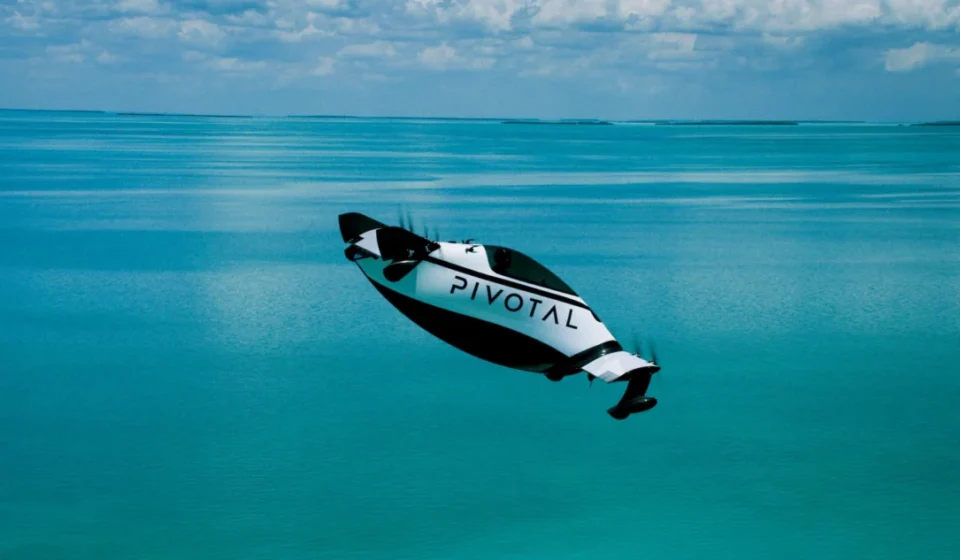
On Monday, Pivotal issued a formal statement confirming that Ken Karklin would be leaving his post to "pursue new endeavors." While the brevity of the announcement is standard for corporate executive transitions, the implications are significant. Karklin took the helm during a transformative period for the company, overseeing the transition from research and development to the commercialization of the Helix, a single-seat electric aircraft that does not require a pilot’s license.
Replacing him is Mike Ross, a seasoned aviation executive who joined Pivotal’s board of directors in November 2025. Ross is expected to maintain the company’s current trajectory, ensuring that the "disciplined approach to safety, engineering, and accessibility" remains the core tenet of the organization as it scales.
A Chronology of Pivotal’s Rise
To understand the weight of this leadership change, one must look at the trajectory of the company under Karklin’s guidance:
- The Early Years (Pre-2020): Before Karklin joined, the company operated largely in the shadows, fueled by the vision and capital of Google co-founder Larry Page. The focus was on engineering a craft that could democratize the skies—making flight as accessible as driving a car.
- The Karklin Era (2021–2025): Under Karklin, Pivotal moved from "prototype" status to "production" status. His tenure was defined by a shift in philosophy: focusing on lightweight, "fun-to-fly" aircraft rather than the heavy, complex air taxis that have dominated the headlines of competitors like Joby Aviation or Archer.
- January 2024: Pivotal officially kicked off U.S. sales of the Helix, its flagship personal aircraft. Priced at approximately $200,000, it represented a tangible product that moved the dream of personal flight into the realm of luxury consumer goods.
- November 2025: Mike Ross joins the board, positioning himself as the eventual successor to the strategic vision of the firm.
- Early 2026: The company gains recognition as a key player in the Federal Aviation Administration’s (FAA) eVTOL Integration Pilot Program, a major validation of their regulatory strategy.
- Current Day (March 2026): Karklin departs, leaving behind a company with a proven product, a growing flight-hour log, and a clear path toward FAA integration.
Supporting Data: Moving Beyond Prototypes
The narrative surrounding "flying cars" has often been dismissed as science fiction. However, Pivotal’s operational data suggests that the reality is closer than many skeptics believe.
The BlackFly and Helix Metrics
Pivotal has focused on two distinct pillars: the consumer-facing Helix and the utility-focused BlackFly.
- Operational Maturity: According to company reports, the BlackFly platform has successfully completed over 10,000 individual flight operations.
- Real-World Utility: In a landmark test last month, a BlackFly unit was deployed for emergency response in Hyde County, North Carolina. The aircraft beat a ground-based ambulance to the scene by 20 minutes, providing a compelling argument for the role of eVTOLs in search-and-rescue and emergency medical services.
- Accessibility: By designing aircraft that technically bypass the need for a traditional pilot’s license (under specific light-aircraft classifications), Pivotal has effectively lowered the barrier to entry for private aviation, a feat that has remained elusive for decades.
Official Responses: The Philosophy of the Transition
The transition statements provided by both the outgoing CEO and the incoming interim CEO offer a window into the company’s culture.
In his farewell, Ken Karklin emphasized the shift in the industry: "Leading Pivotal has been the privilege of my career. Together, we’ve moved beyond the promise of light eVTOL and proved it out in practice. This industry has moved past prototypes and press releases; it’s now operating in the real world, under real constraints, with real consequences for the future of Advanced Air Mobility."
Mike Ross, conversely, underscored the continuity of the mission: "Ken’s leadership over the past four years has been instrumental in bringing Pivotal to where it is today. Our team, our priorities, and our roadmap remain steady through this transition. I look forward to working with the team and guiding the company forward as we bring our fourth-generation Helix aircraft to market."
These statements, while diplomatic, signal a clear mandate for Ross: finish the commercial rollout and solidify the regulatory framework for the fourth-generation Helix.
Implications: The Future of Personal Air Mobility
The departure of a CEO is rarely an isolated event; it often signals a change in the company’s strategic maturity. For Pivotal, the implications are three-fold.
1. The "Scale-Up" Challenge
Moving from a company that builds machines to a company that manages a fleet of machines is a massive organizational challenge. Karklin was the "builder" who took the company from R&D to market entry. Ross, with his deeper aviation and board experience, may be the "operator" intended to handle the complexities of supply chain scaling and regulatory compliance.
2. Regulatory Hurdles and FAA Integration
Pivotal’s inclusion in the FAA’s eVTOL Integration Pilot Program is arguably its most valuable asset. The industry is currently in a "Wild West" phase where rules are being written in real-time. The leadership transition suggests that Pivotal is prioritizing a more institutionalized, board-driven approach to interacting with the FAA, which is essential for mass adoption.
3. The Larry Page Factor
As an investor, Larry Page has historically backed moonshot projects that focus on long-term technological disruption rather than immediate quarterly returns. The departure of Karklin does not appear to be a sign of investor fatigue, but rather a strategic adjustment. If the company were in trouble, the rhetoric would likely be more defensive. Instead, the focus remains on the "fourth-generation Helix," suggesting that the roadmap remains aggressive and well-funded.
Conclusion: A New Altitude
As the eVTOL industry matures, it is moving from the "heroic" phase—where individual inventors and visionaries dominate—to the "operational" phase, where managers and aviation professionals refine the safety and logistics of the system.
Ken Karklin’s departure is the first major indicator of this transition for Pivotal. By handing the controls to Mike Ross, the company is signaling that it is no longer just a project backed by a tech titan; it is a serious aviation business. Whether this transition will lead to the widespread adoption of personal electric flight remains the great unanswered question of the decade. However, with 10,000 flight hours, a functioning consumer product, and a seat at the table with the FAA, Pivotal remains one of the few companies in the sector that has successfully moved the needle from "what if" to "how soon."
The industry will be watching closely to see if the interim leadership can bridge the gap between niche luxury product and mass-market transportation tool. For now, the flight path for Pivotal appears stable, even as the captain changes in the cockpit.