




















































MINNEAPOLIS — For more than two decades, the Itasca Project served as the quiet powerhouse of the Twin Cities’ civic and economic engine. It was a unique, cross-sector alliance where CEOs of Fortune 500 companies sat shoulder-to-shoulder with university presidents, philanthropic leaders, and public officials to tackle the region’s most daunting challenges. However, in a move that has sent ripples through the Minnesota business community, the organization’s leadership announced on Friday that the Itasca Project is officially shutting down.
The decision to "graduate" the project’s work to other regional entities marks the end of an era for a model of civic engagement that was once hailed by The New York Times as a national standard for regional collaboration. The dissolution comes at a critical juncture for Minnesota, as the state grapples with anemic population growth, fiscal pressures, and a shifting landscape of corporate responsibility.
Main Facts: The Dissolution of a Two-Decade Alliance
The announcement arrived via a ten-paragraph memo sent to funders and working team members on Friday, signed by the Itasca Project’s executive leadership council. Leading the list was Steve Grove, the publisher of the Minnesota Star Tribune, who had taken the reins as chair only one year prior.
The core of the decision, according to the memo, is that the Itasca Project has achieved its mission of fostering a culture of collaboration to the point where it is no longer needed as a standalone entity. The leadership council reached a "unanimous decision" that the time was right to retire the initiative, signaling a strategic pivot rather than a failure of mission.
Key details of the shutdown include:
- The Transition: The work previously managed by the Itasca Project will be absorbed by other regional organizations, most notably Greater MSP and the GroundBreak Coalition.
- Leadership Shift: Jake Blumberg, the project’s managing director, has stepped down to launch a private consulting business.
- Program Survival: High-profile initiatives like the Minnesota Young American Leaders Program (MYALP), a joint venture with Harvard Business School and the University of Minnesota, will continue under the stewardship of Greater MSP.
- A New Philosophy: The memo explicitly noted that the work of cross-sector engagement is now better served by organizations led by individuals with "different lived experiences and identities" than the traditional corporate leadership that historically steered the Itasca Project.
Chronology: From Virtual Alliance to Professionalized Entity and Eventual Sunset
To understand why the Itasca Project is closing now, one must look at its twenty-year evolution from a loose, informal gathering to a structured organization.
The Formative Years (2003–2021)
The Itasca Project began as a "virtual entity." It had no permanent office and no full-time staff. Instead, it relied on the volunteerism of its members and the analytical horsepower of McKinsey & Co., which provided pro bono staffing for the project’s various task forces. This model allowed CEOs to engage directly in policy research without the overhead of a traditional non-profit.
The Push for Professionalization (2022)
Under the leadership of then-chair Lynn Casey, the former head of the communications firm Padilla, the project underwent a significant shift. In 2022, Casey argued that the complexity of the region’s problems required more oversight and accountability. "We’re at a point now where more is expected of Itasca," she noted at the time. This led to the creation of an executive leadership council, the hiring of full-time staff (including Jake Blumberg), and the securing of a physical office within the Greater MSP headquarters.
The 20th Anniversary and the Grove Appointment (2023)
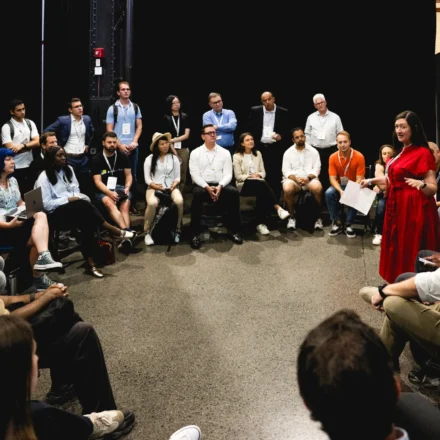
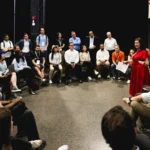
In October 2023, the Itasca Project celebrated its 20th anniversary with a high-profile event at St. Paul’s Union Depot titled "Catalyzing Civic Leadership." With over 300 leaders in attendance, the mood was one of renewal. Shortly thereafter, Steve Grove was appointed chair. At the time, Grove expressed enthusiasm for growing the impact of the work, calling the project a "national model."
The Seven-Month Deliberation (2024–2025)
Behind the scenes, however, a "period of careful deliberation" began. For seven months, leadership questioned whether a standalone organization was still the most effective way to serve the community. This strategic review ultimately led to the Friday memo and the decision to sunset the brand.
Supporting Data: A Legacy of Policy and Economic Impact
The Itasca Project’s legacy is defined by its data-driven "task force" model. By focusing on well-researched reports rather than political lobbying, the project was able to influence major state policies.
Transportation and Infrastructure
Perhaps the project’s most tangible success was its role in the 2008 transportation funding increase. An Itasca task force conducted a comparative study of how other states funded their roads and bridges, providing the business case that helped lead to the largest transportation investment in Minnesota’s history, including a significant gas tax increase.
Socio-Economic Disparities
The "Mind the Gap" and "Close the Gap" campaigns were instrumental in shifting the regional conversation toward racial and economic equity. By quantifying the "cost of the gap" to the regional economy, Itasca made socio-economic disparity a primary concern for the business community, long before such discussions were commonplace in corporate boardrooms.
Economic Development and Procurement
The Itasca Project was the foundational force behind the creation of Greater MSP in 2011, the region’s premier economic development group. Furthermore, it launched "Business Bridge," an initiative that encouraged the region’s largest employers—such as Target, UnitedHealth Group, and General Mills—to redirect their procurement spending toward local, small, and diverse businesses to stimulate the regional economy.
Official Responses: Shifting the Baton
The official narrative from leadership is one of "graduation" rather than "termination."
Jake Blumberg, in a reflective LinkedIn post, explained that the decision was rooted in a modern understanding of leadership. "The work of cross-sector civic engagement is best carried forward by numerous other organizations that have grown over the past two decades—especially those led by folks with different lived experiences and identities than those who have predominantly led those efforts historically," Blumberg wrote. This suggests a recognition that the "CEO-heavy" model of the early 2000s may no longer be the most inclusive or effective way to drive social change in the 2020s.
Lynn Casey, who remains a member of the leadership council, has pushed back against the idea that the business community is retreating from civic life. Earlier this year, she characterized the change as an "evolution driven by the complexity and intensity of the corporate environment." She noted that while CEOs may have less time for hands-on civic roles, their organizations remain deeply committed through other executive-level leaders.
The Executive Leadership Council, which includes heavyweights like David Mortenson (Mortenson Construction) and Audrey Lucas (McKinsey & Co.), emphasized that the "spirit of Itasca" lives on in the organizations it helped birth. They have scheduled a virtual meeting in the coming weeks to allow funders and partners to discuss the transition and voice concerns.
Implications: A New Era of Civic Leadership
The dissolution of the Itasca Project raises several critical questions about the future of civic leadership in Minnesota and the broader United States.
1. The "CEO Gap" and the Changing Corporate Mandate
The shutdown occurs amid growing concerns that modern CEOs are less engaged in local civic affairs than their predecessors. In the past, the "Dayton’s" or "General Mills" models of leadership saw CEOs as stewards of the community. Today, global pressures, ESG (Environmental, Social, and Governance) demands, and a more polarized political climate have made some executives more cautious about taking public stances on local issues.
2. Fragmentation vs. Specialization
By "graduating" its work to Greater MSP and the GroundBreak Coalition, the region is moving toward a more specialized model. Greater MSP focuses on economic competitiveness, while GroundBreak focuses on closing the wealth gap through targeted financial tools. The loss of the Itasca Project, however, means there is no longer a single, "over-the-horizon" entity dedicated solely to identifying the next big challenge before it becomes a crisis.
3. The Challenge of Regional Unity
The Itasca Project was one of the few tables where leaders from both Minneapolis and St. Paul, along with their respective suburbs, sat together with a unified regional focus. As the Twin Cities face significant fiscal challenges and population stagnation, the absence of a dedicated cross-sector alliance like Itasca may make it harder to build the broad-based coalitions necessary for large-scale public policy shifts.
4. A More Inclusive Table
The move toward organizations with "different lived experiences" reflects a broader societal shift. The Itasca Project was often criticized for being an "old boys’ club" of white male executives. By moving the work into more diverse coalitions like GroundBreak, the region may find more innovative solutions that resonate with a broader segment of the population.
Conclusion
The sunsetting of the Itasca Project is a bittersweet milestone for Minnesota. It represents the end of a legendary model of corporate-led civic activism that solved major problems and put the region on the map for collaboration. Yet, it also reflects a maturation of the local ecosystem. The tools, programs, and culture of collaboration that Itasca pioneered have been woven into the fabric of the Twin Cities.
As the leadership council prepares for its final virtual meetings, the focus remains on ensuring that the "spirit of Itasca"—the belief that the private sector has a moral and economic obligation to solve public problems—does not disappear along with the organization’s name. For the Twin Cities, the challenge will be proving that a decentralized network of leaders can be just as effective as the unified alliance that defined the last twenty years.