































The Cafesjian Art Trust (CAT) Museum in Shoreview has transformed its gallery space into a complex, verdant, and often unsettling landscape for its latest exhibition, Meet Me in the Forest. Opening September 3, 2026, and running through February 27, 2027, the exhibition serves as a profound meditation on the forest not merely as a physical location, but as a metaphorical sanctuary where memory, trauma, and identity collide.
Curated by Jill Ahlberg Yohe and Linnea Seidling, the exhibition marks a significant moment for the institution, incorporating five major recent acquisitions alongside an array of loans and permanent collection pieces. The result is a sprawling, multi-sensory experience that navigates painting, glass, ceramics, textiles, and photography, challenging the viewer to look past the pastoral beauty of the woods and confront the difficult histories buried beneath the canopy.
The Architecture of Reverie: From Drilling to Installation
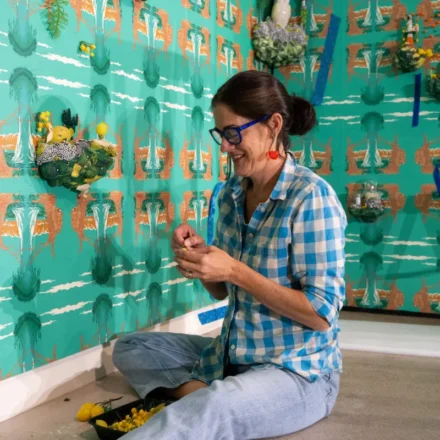
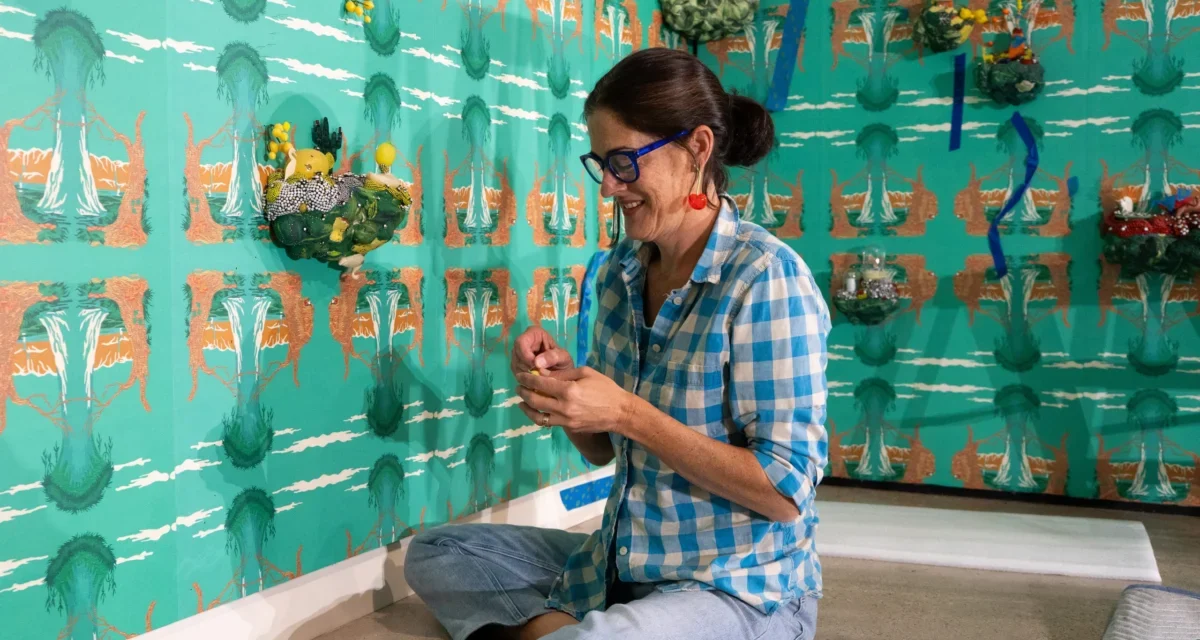
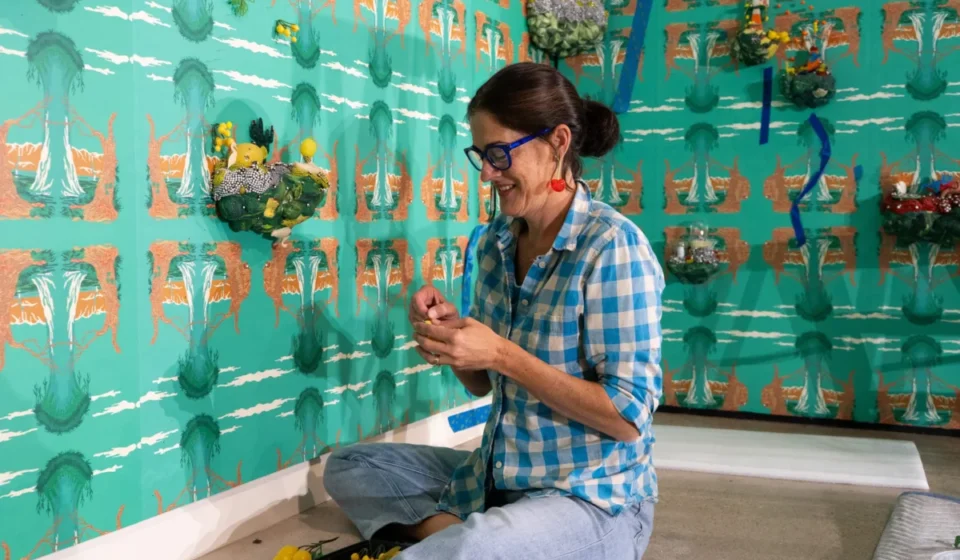
The preparation for Meet Me in the Forest began long before the doors opened to the public. To accommodate the ambitious, site-specific installations, museum staff undertook a rigorous physical alteration of the gallery architecture, drilling holes across three main walls to support the heavy, intricate weight of the featured works.
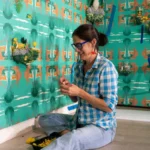
This mechanical preparation paved the way for artists like Erica Rosenfeld to execute their vision. Rosenfeld’s contribution, Welcome to Reverie Forest: Sanctuary for Strange Creatures (2026), is a meticulous labor of love. The piece serves as a physical habitat for a cast of bizarre, hybrid creatures constructed from glass, found objects, and sculpted elements. Rosenfeld’s work is a testament to the exhibition’s overarching theme: the creation of a "safe zone" outside of conventional societal constraints, where the "strange" and the "misfit" can find refuge.
A Chronology of Conflict and Comfort
The conceptual roots of Meet Me in the Forest stretch back nearly a decade. For artist Erica Rosenfeld, the process began in 2017, spurred by a critical examination of the mass-market "paint-by-number" kits that defined the aesthetic of the 1940s and 50s. During the McCarthy era, these kits provided a "sugar-coated reality"—depicting adorable animals and pristine landscapes—that was fundamentally unattainable for most Americans. Rosenfeld argues that this aesthetic was a psychological reaction to the era’s pervasive fear of outsiders and the erosion of civil liberties.
By subverting these nostalgic tropes, Rosenfeld’s modern installation acts as a critique of that historical artifice. Similarly, the other artists in the exhibition utilize the forest as a historical repository. Pao Houa Her’s work, Other Pictures of Paradise (2022–24), draws upon the traumatic legacy of the "Secret War" in Laos. Her’s lenticular prints, which shift between idyllic poppy fields and dark, threatening jungle terrain, force the viewer to reconcile the beauty of the landscape with the violent history of the CIA-led military operations that occurred there in the 1960s and 70s.
Supporting Data: The Duality of the Wild
The exhibition is structured around the inherent dichotomies of nature. Curators Ahlberg Yohe and Seidling have carefully placed works in dialogue to ensure that viewers are constantly confronted with the tension between "scary and beautiful."
The Aesthetics of Anxiety
The curators highlight how specific works use sensory input to trigger subconscious responses. Kate Clements’ Stain (2022), a recent museum acquisition, is a primary example of this calculated dissonance. Suspended by monofilament, the work’s glass textures evoke imagery of blood and scabs. As Seidling notes, the piece is designed to be "sparkly and colorful" from a distance, luring the viewer in before revealing its "terrifying" tactile qualities upon closer inspection.

Materiality and Social Commentary
The exhibition’s breadth is evident in the diverse range of materials used to interpret the forest:
- Textiles: Ebony G. Patterson’s …among the blades between the flowers… utilizes maximalism—glitter, applique, beads, and trim—to draw the viewer into discussions regarding colonial legacies and the vibrancy of Carnival.
- Ceramics: Amanda Michelle Smith’s Trust Issues and Trauma explore the psychological fallout of leaving tight-knit religious communities, mirroring the "outsider art" movement of Henry Darger.
- Mixed Media: Kelly Sinnapah Mary’s She taught me to listen to the wind (2023) juxtaposes eroticism with colonial violence, reflecting her family’s history as descendants of Tamil laborers in Guadeloupe.
Official Perspectives: Curating the Metaphor
For the curatorial team, the goal of Meet Me in the Forest was to move away from the reductive view of nature as a site of mere loss. "The forest has many dichotomies," notes Rosenfeld, a sentiment that echoes throughout the gallery.
Jill Ahlberg Yohe explains that the show was designed to present nature as a "realm where human creativity, activity, and memory happen." By grouping works that vary wildly in medium—from the delicate sheen of glass to the gritty texture of ceramics—the curators ensure that the exhibition remains "variable and layered." The intention is not to offer answers to the traumatic histories presented, but to create a space where, as Ahlberg Yohe puts it, "violence and beauty, terror and refuge" can coexist within the same room.
Implications: A Broader Dialogue on Landscape
The implications of the exhibition extend beyond the walls of the CAT Museum. By positioning the forest as a site of both historical trauma and individual healing, the show challenges the public to reconsider their relationship with natural landscapes.
This theme is further underscored by external programming coinciding with the exhibition. The Mississippi Park Connection is presenting a screening of Out There: A National Parks Story on September 14, 2026, at the Parkway Theater. Directed by Brenden Hall, the film captures the personal connections individuals have with America’s national parks. Much like the exhibition at the CAT Museum, the film serves as a call to action for the preservation of spaces that are currently viewed as "extremely vulnerable."
Exhibition Logistics and Access
The Meet Me in the Forest exhibition stands as a flagship event for the Cafesjian Art Trust Museum this season.
- Location: 4600 Churchill Street, Shoreview, MN.
- Dates: September 3, 2026 – February 27, 2027.
- Opening Reception: Thursday, September 3, 6:00 p.m. to 8:00 p.m. ($39 admission).
- External Screening: Out There: A National Parks Story, September 14, 7:00 p.m. at the Parkway Theater ($18 advance, $25 door).
Conclusion: A Sanctuary for the Future
Meet Me in the Forest is more than an art show; it is an interrogation of the American psyche and its relationship to the wild. By inviting visitors to navigate the forest not as a path of escape, but as a site of reckoning, the CAT Museum has solidified its position as a venue for intellectually rigorous and emotionally resonant contemporary art.
Whether it is through the obsessive, labor-intensive creature-nests of Erica Rosenfeld or the historical, haunting landscapes of Pao Houa Her, the exhibition succeeds in its primary mission: to provide a sanctuary where the complex, messy, and beautiful truths of the human experience can finally take root. As we move further into the 21st century, the ability to hold "terror and refuge" in the same space—as this exhibition does so masterfully—may be one of our most necessary human skills.