























































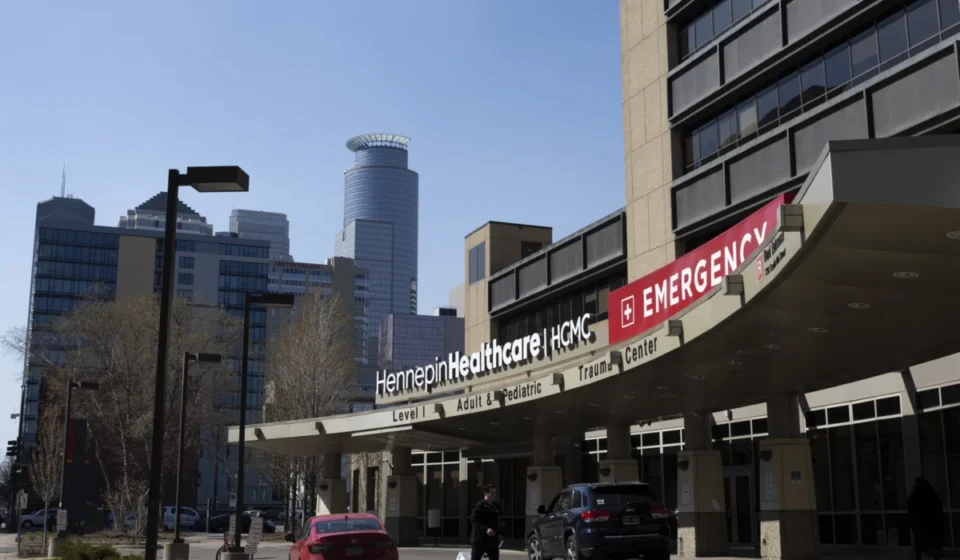

As the May 18 conclusion of the Minnesota legislative session looms, a high-stakes legislative drama is unfolding beneath the dome of the State Capitol. At the center of the debate is the survival of Hennepin County Medical Center (HCMC), the state’s busiest Level 1 adult and pediatric trauma center and a critical pillar of the regional healthcare infrastructure. Facing a staggering $1.7 billion projected deficit over the next decade, the hospital is now the subject of intense, often contentious, negotiations aimed at preventing what some officials warn could be an "irreversible" collapse of care in the Midwest.
The Main Facts: A Crisis of Unprecedented Proportions
HCMC operates as the primary "safety-net" hospital for the region, meaning it provides essential medical services regardless of a patient’s insurance status or ability to pay. This mandate, while morally vital, has become financially unsustainable in the current economic climate.
The hospital is currently bleeding funds due to a combination of rising costs for uncompensated care, looming federal Medicaid cuts, and a $115 million hole left in its balance sheet by the recent collapse of Minnesota-based health insurer UCare. According to projections presented to the Hennepin County Board’s budget committee in March, the facility is staring down a $1.7 billion shortfall over the next ten years.
Legislators are currently debating two primary tax-based recovery paths, both of which would leverage the existing 2007 Hennepin County sales tax—a mechanism previously used to fund the construction of Target Field.
The Competing Legislative Proposals
- The Senate Approach (SF 4986): Authored by Sen. Ann Rest (DFL-New Hope), this proposal seeks a more modest increase to the current 0.15% sales tax, raising it to 0.25%. A Minnesota Department of Revenue analysis suggests this would generate $84 million annually. Under this plan, $50 million would be earmarked for HCMC, $21 million would support North Memorial in Robbinsdale for uncompensated care costs, $9 million would go to Target Field, and $4 million would be allocated to local libraries and youth programs.
- The House Approach (HF 4841): Co-authored by Rep. Esther Agbaje (DFL-Minneapolis), this proposal calls for a much steeper 1% sales tax rate, projected to generate approximately $337 million annually. Under this framework, HCMC would receive the lion’s share—over $300 million—while North Memorial would receive $24 million and the Twins ballpark would receive $7 million.
Chronology: From Financial Strain to "Red Alert"
The path to the current legislative impasse was paved by years of rising operational costs and systemic instability in the healthcare market.
- Early 2026: Internal financial reviews at Hennepin Healthcare reveal the full extent of the $1.7 billion shortfall.
- March 2026: The Hennepin County Board receives a dire briefing on the facility’s outlook, sparking urgent calls for state intervention.
- April 2026: Legislators introduce a flurry of bills, including the Senate and House tax proposals and Rep. Danny Nadeau’s (R-Rogers) plan to redirect a 1.56% hospital surcharge from the state’s general fund to struggling providers.
- April 21, 2026: National Nurses United (NNU) issues a "Red Alert" status for HCMC. The union warns that the hospital’s potential closure would have a "drastic, irreversible impact on patients and healthcare workers across Minnesota and the Midwest."
- Late April 2026: The Senate Health and Human Services committee passes Sen. Melissa Wiklund’s (DFL-Bloomington) stabilization bill, which includes $150 million in one-time funding for HCMC.
- May 2026: With the session ending on May 18, bipartisan discussions have accelerated to reconcile these competing visions for long-term sustainability.
Supporting Data: The Anatomy of the Deficit
The financial peril facing HCMC is not the result of a single error, but a "perfect storm" of economic pressures. The hospital’s patient population consists predominantly of uninsured or publicly insured individuals—a demographic that requires high levels of care but provides the lowest reimbursement rates.
When combined with the $115 million debt owed by the defunct UCare and the projected federal Medicaid cuts, the math becomes untenable. According to Hennepin County Commissioner Angela Conley, if the Legislature fails to act before the end of the session, the hospital could begin the process of closure as early as June. Such a liquidation process is estimated to cost the county upwards of $100 million, effectively burning through resources that could have been used to stabilize the facility.
Furthermore, the debate has expanded beyond simple funding. As Rep. Danny Nadeau noted, many discussions now center on the hospital’s governance structure and its long-term financial management. The legislature is grappling with the question of whether a cash injection alone is enough, or if a structural overhaul of how Hennepin Healthcare is governed is a necessary prerequisite for state support.
Official Responses and Political Strategy
The response from the Capitol has been a mix of urgency and caution. Senator Ann Rest, defending her more modest tax increase, argued that the burden must be balanced against the taxpayer. "My bill still is going to be regressive, but I believe that it is a burden that can be absorbed by everyone," she noted.
Conversely, supporters of the House bill argue that the scale of the crisis requires a larger, more aggressive funding stream. Rep. Nadeau, while co-authoring the House bill, acknowledges that gridlock remains a significant hurdle. "Many discussions in the Legislature revolve around HCMC’s governance structure and the hospital’s shaky financial track record," he admitted, highlighting the political skepticism that still exists in some corners of the legislature.
Senator Melissa Wiklund has championed a "two-pronged" approach. Her bill (SF 4612) advocates for nearly $300 million in one-time stabilization funding, serving as a "shot in the arm" while long-term tax solutions are finalized. "I’ve been clear that one-time support alone won’t solve the underlying problem," Wiklund said in a statement to the press. "Senator Rest’s proposal takes an important step toward a long-term solution to the growing financial strain on hospitals like HCMC caused by uncompensated care."
Jeffrey Lunde, a Hennepin County commissioner, has been acting as a primary liaison between local government and the Capitol. "Getting a bill on the table is really important," Lunde said. "People undersell that… but if you can’t get a bill on the table, you got nothing to work with."
Implications: A System at the Breaking Point
The implications of an HCMC closure are difficult to overstate. As the primary trauma center for a large swath of the state, the hospital serves as the backbone for emergency services. Its closure would force other metropolitan hospitals to absorb a massive influx of patients, potentially overwhelming the entire regional healthcare system.
Beyond the immediate loss of services, there is the human cost. The "Red Alert" from the National Nurses United underscores the anxiety felt by the frontline staff who worry that their workplace—and the care they provide to the state’s most vulnerable populations—is being treated as a bargaining chip in a partisan budget negotiation.
As the May 18 deadline approaches, the legislative process remains fluid. Lawmakers are currently working to reconcile the competing visions of a 0.25% versus 1% tax, while also considering the redirection of existing surcharges and the allocation of emergency one-time funds.
Despite the gridlock, there is a prevailing sentiment of cautious optimism. Senator Rest and her colleagues across the aisle express confidence that, despite the difficulty of the task, the state will find a path forward. The cost of failure—a shuttered trauma center and a healthcare desert in the heart of Minneapolis—is viewed by most as an outcome that simply cannot be allowed to happen.
Whether through a complex tax restructuring or a significant emergency budget infusion, the message from the Capitol is clear: the era of "business as usual" for HCMC is over, and a sustainable, long-term funding model is the only way to ensure the safety net remains intact for the citizens of Minnesota.