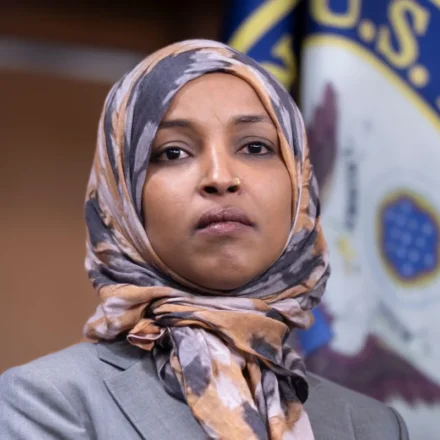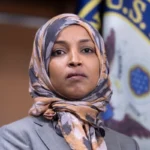















































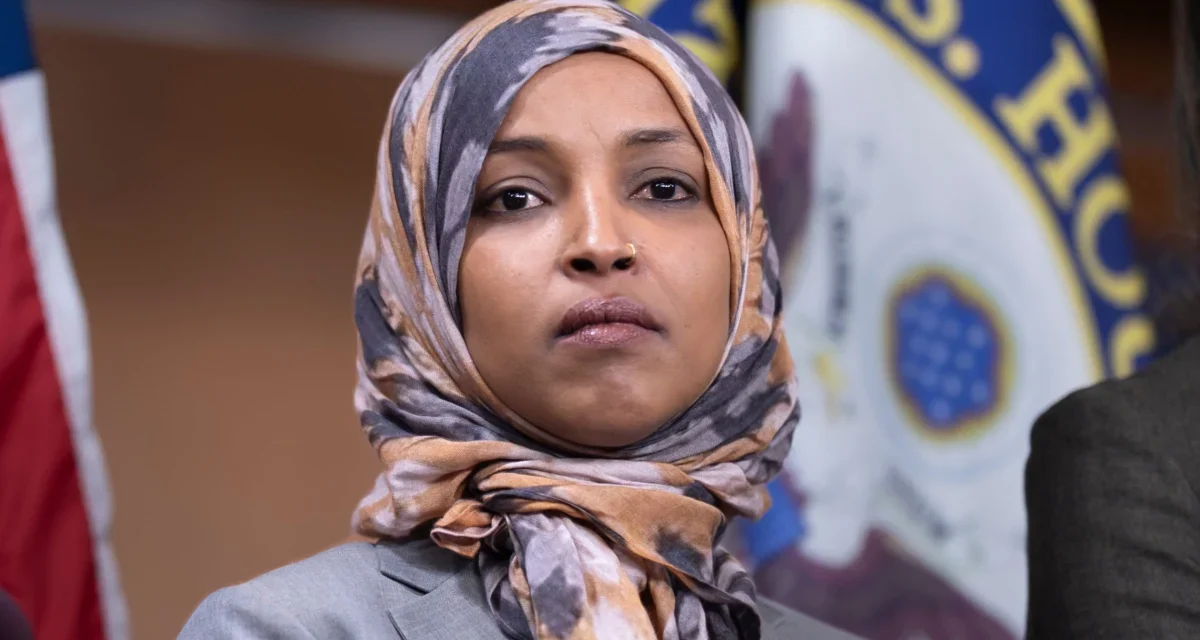





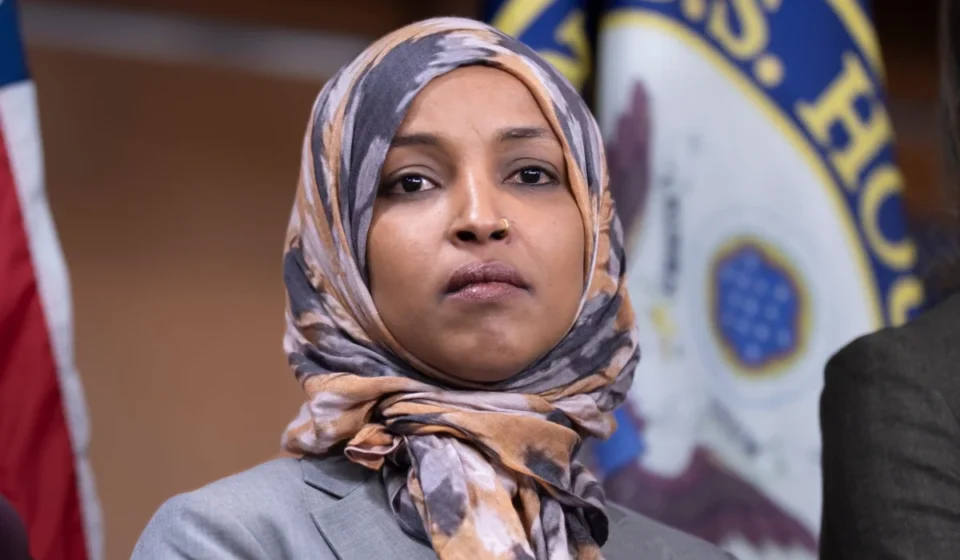

WASHINGTON D.C. – In a dramatic escalation of long-standing political hostilities, federal agents on Monday searched the Washington D.C. home of Democratic U.S. Representative Ilhan Omar, a prominent progressive lawmaker from Minnesota. The search, conducted by Homeland Security Investigations (HSI) agents, is part of an ongoing criminal investigation, according to sources familiar with the matter. The operation, occurring just three weeks before the critical November midterm elections, has ignited a fierce debate over the the weaponization of federal law enforcement and the timing of such high-profile actions.
The Justice Department confirmed that HSI agents executed a "judicially authorized search warrant" in the Washington, D.C., area, stating that the "enforcement action is part of an ongoing federal criminal investigation." However, officials declined to provide further details regarding the scope or specific focus of the inquiry. The lack of immediate clarity, coupled with the politically charged atmosphere surrounding Representative Omar, has fueled speculation and sharp condemnation from her allies.
The controversial search follows years of relentless public targeting of Omar by former President Donald Trump and senior Republican figures, including Vice President JD Vance and Homeland Security Secretary Markwayne Mullin. These officials have repeatedly hinted at or openly called for investigations into Omar, primarily focusing on unproven allegations of immigration fraud. Omar has vehemently denied all accusations, branding them as "baseless lies" and "smear campaigns" orchestrated for political intimidation.
A Chronology of Accusations and Escalation
The scrutiny surrounding Representative Ilhan Omar, a Somali-born Democrat representing Minnesota’s 5th Congressional District, did not begin with Monday’s federal raid but rather extends back years, even prior to her initial election to the House in 2018. Her status as an immigrant, her progressive political views, and her outspoken criticisms of the Trump administration and Israeli policies have made her a frequent target for conservative media and Republican leaders.
Early Allegations (Pre-2018): Questions about Omar’s background and personal life first emerged in conservative circles, asserting claims that she had married her brother to facilitate immigration fraud. These allegations, which Omar has consistently and forcefully denied as "disgusting lies," gained traction and became a recurring theme in right-wing media and political discourse.
Omar’s Rise and "The Squad" (2018-Present): Elected in 2018, Omar quickly rose to national prominence as a member of "The Squad," a group of progressive female lawmakers known for their bold policy stances and vocal opposition to Republican policies. This visibility further amplified the existing allegations against her, making her a symbol for both her supporters and detractors.
Trump’s Relentless Campaign (2019-Present): Former President Donald Trump made targeting Omar a staple of his rallies and public statements. He frequently criticized her immigrant background, her left-wing views, and her alleged past actions, often using inflammatory rhetoric. Trump’s sustained attacks not only kept the allegations alive but also imbued them with significant political weight. As recently as this past weekend, Trump brought up Omar at a rally in Tennessee, again attacking her upbringing and explicitly suggesting that Vice President JD Vance and "our people" were actively investigating her.
Vice President Vance’s Public Statements (May 2026): In May, Vice President JD Vance publicly signaled the administration’s intent to investigate Omar. Speaking to reporters, Vance stated, "It certainly seems like something fishy is there, but everybody’s entitled to equal justice under the laws. So we’re going to investigate it. We’re going to take a look at it. If we think there’s a crime, we’re going to prosecute that crime." In a separate interview with conservative podcaster Benny Johnson, Vance went further, asserting without offering evidence that "we actually think that Ilhan Omar definitely committed immigration fraud against the United States of America." He also revealed discussions with then-deputy White House chief of staff Stephen Miller about "what the remedies are" and "how to investigate her."
Homeland Security Secretary Mullin’s Confirmation (Last Month): Adding another layer to the narrative, Homeland Security Secretary Markwayne Mullin stated last month that there was an "ongoing investigation" related in part to whether Omar lied on her immigration forms, adding ominously that "something’s going to happen." These public pronouncements by high-ranking officials preceded the actual search warrant execution, creating a perception of a pre-determined outcome or politically motivated action.
Omar’s Financial Disclosure Filing (April 2026): In April, Omar had publicly responded to Trump and GOP charges of financial malfeasance and fraud by releasing a new financial disclosure filing. This action was an attempt to preemptively address and refute the ongoing accusations, demonstrating her commitment to transparency in the face of persistent attacks.
The House Foreign Affairs Committee Ousting (2023): When Republicans gained control of the House in 2023, they voted to remove Omar from the House Foreign Affairs Committee, citing her controversial remarks on Israel. This move was seen by many Democrats as a politically motivated retribution rather than a genuine concern for committee integrity, further illustrating the partisan animosity directed at Omar.
The Minneapolis Attack (January 2026): In January, hours after Trump publicly criticized Omar at an Iowa rally, an assailant sprayed the congresswoman with a substance during her town hall meeting in Minneapolis. The attacker was later sentenced to 14 months in prison. While unrelated to the current investigation, this incident highlighted the real-world dangers stemming from the heated rhetoric directed at Omar.
This extensive timeline demonstrates a sustained campaign of political targeting against Representative Omar, culminating in the federal search of her home, an unprecedented action against a sitting Member of Congress so close to an election.
Supporting Data and Contextual Deep Dive
The federal search of Representative Ilhan Omar’s home is not an isolated event but rather a highly significant development within a broader landscape of political contention and legal scrutiny. Understanding the context requires delving into the nature of the allegations, the political environment, and the historical conventions governing federal investigations.
The Immigration Fraud Allegations: At the heart of the long-standing accusations against Omar are claims of immigration fraud. Specifically, conservative media and Republican figures have asserted that Omar married her brother, Ahmed Nur Said Elmi, in 2009 to facilitate his immigration to the United States. They point to inconsistencies in her marital history and public records as purported evidence. Omar has consistently and unequivocally denied these allegations, calling them "fabricated," "disgusting lies," and "defamatory." Her office has previously stated that these claims are part of a deliberate smear campaign. It is crucial to note that these remain unproven allegations, and no official charges related to them have ever been brought against her prior to this investigation.
Homeland Security Investigations (HSI): The involvement of Homeland Security Investigations (HSI) is significant. HSI is the principal investigative arm of the U.S. Department of Homeland Security, responsible for investigating a wide range of transnational crime, including customs fraud, human trafficking, narcotics smuggling, and immigration fraud. Their mandate includes enforcing U.S. immigration and customs laws. While HSI is a legitimate law enforcement agency, its involvement in a politically charged investigation of a sitting congresswoman, particularly given the public statements from DHS Secretary Mullin, raises questions about potential political influence.
The "60-Day Rule" and Electoral Interference: A critical aspect of the controversy surrounding the search is its timing. The raid occurred just three weeks before the November midterm elections, in which Representative Omar is seeking re-election. The Justice Department has a long-standing, unwritten policy – often referred to as the "60-day rule" – to avoid taking public investigative actions that could influence an election within 60 to 90 days of a primary or general election. This policy is designed to prevent federal law enforcement from being perceived as politically motivated or interfering in democratic processes. The apparent disregard for this convention in Omar’s case has drawn sharp criticism from Democrats and ethics watchdogs, who argue it undermines public trust in the impartiality of federal agencies. Critics recall instances like the FBI’s investigation into Hillary Clinton’s emails in 2016, which was widely seen as having impacted the election.
Omar’s Role as a Progressive Icon and Republican Target: Ilhan Omar represents a new generation of progressive Democrats who are vocal on issues of social justice, foreign policy, and economic inequality. As a Muslim, a woman of color, and an immigrant from Somalia, she embodies demographic and ideological shifts within the Democratic party that have become anathema to the Republican base. Her left-wing views, particularly on issues like U.S. foreign policy and Israel, have made her a potent symbol for Republicans seeking to energize their base and portray Democrats as extreme. This political polarization has undoubtedly contributed to the sustained targeting and heightened scrutiny she faces.
The "Weaponization" Narrative: The search has immediately been framed by Omar and her Democratic allies as an example of the "weaponization" of federal law enforcement for political purposes. This narrative suggests that federal agencies, under pressure from a hostile administration, are being used to target political opponents, suppress dissent, and influence elections. This concern is not new, particularly given the Trump administration’s history of rhetorical attacks on the Justice Department and FBI when their investigations did not align with his political interests. The public statements by Vice President Vance and Secretary Mullin, explicitly foreshadowing an investigation into Omar, lend credence to this concern for many observers.
The confluence of these factors – unproven but persistent allegations, the involvement of a federal agency, the highly sensitive timing near an election, and a history of intense political animosity – creates a combustible situation that extends far beyond a typical criminal investigation, touching upon fundamental questions of democratic integrity and the rule of law.
Official Responses and Political Firestorm
The federal search of Representative Ilhan Omar’s home immediately triggered a wave of official statements, denials, and condemnations, highlighting the deeply polarized nature of American politics.
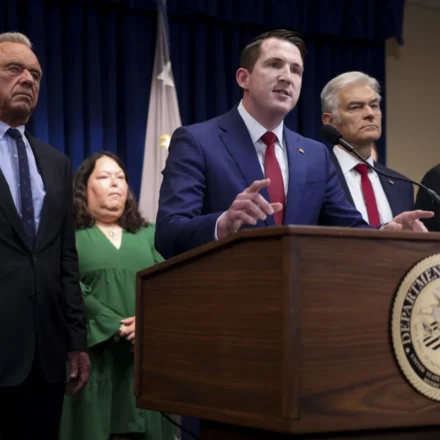
Justice Department and DHS: Both the Justice Department and the Department of Homeland Security have maintained a tight-lipped stance, offering minimal details. The Justice Department’s official statement merely confirmed that HSI agents executed a "judicially authorized search warrant" as part of an "ongoing federal criminal investigation," providing no specifics about the nature or focus of the probe. A spokesperson for the Department of Homeland Security referred all questions to the Justice Department, underscoring the sensitivity of the matter and the desire to avoid further public comment. This official silence, while standard practice in ongoing investigations, stands in stark contrast to the earlier public pronouncements by senior administration officials.
Representative Ilhan Omar’s Response: Representative Omar herself responded swiftly and forcefully to the search, issuing a statement on X (formerly Twitter) that directly challenged the motives behind the operation. She unequivocally labeled the search an "attempt to target political enemies and weaponize federal law enforcement." Omar asserted, "For ten years, Trump has targeted me with baseless lies and smear campaigns. This is just the latest escalation in his campaign of political intimidation. I will not be silenced." Her statement frames the incident not as a legitimate law enforcement action but as the culmination of a decade-long political vendetta aimed at silencing a prominent critic.
House Democratic Leadership: Top House Democratic leaders quickly rallied to Omar’s defense, issuing a joint statement that echoed her concerns about political persecution. Their statement condemned the action, saying, "For years, Donald Trump and far-right extremists have relentlessly targeted Congresswoman Omar with vile personal attacks and baseless accusations. Now, less than 30 days until the midterm election, his violent mass deportation machine has descended upon the home of a duly elected Member of Congress and her family." The language used, particularly "violent mass deportation machine," reflects the deep distrust and anger felt by Democrats regarding the Trump administration’s immigration policies and its perceived use of federal agencies. They emphasized the unprecedented nature of such an action against a sitting Member of Congress so close to an election.
Vice President JD Vance’s Prior Statements: While not commenting directly on the search itself, Vice President JD Vance’s previous statements provide crucial context for the administration’s posture. In May, Vance had told reporters, "It certainly seems like something fishy is there, but everybody’s entitled to equal justice under the laws. So we’re going to investigate it. We’re going to take a look at it. If we think there’s a crime, we’re going to prosecute that crime." He also openly discussed with conservative podcaster Benny Johnson his belief that Omar "definitely committed immigration fraud" and his discussions with Stephen Miller about "how to go after her" and "build the case necessary to get some, some, some justice for the American people." These explicit declarations of intent to investigate and prosecute Omar, made months before the search, lend significant weight to Omar’s claims of political targeting.
Omar’s Office’s Defense: Omar’s chief of staff, Connor McNutt, had previously dismissed Vance’s claims as "fabricated and defamatory" when they were made in March. McNutt sarcastically noted the source of the claims, stating, "This is rich coming from someone who literally said they were willing to ‘create stories’ to redirect the media." He further characterized Vance’s allegations as "a ridiculous lie and desperate attempt to distract from the pedophile protection party’s unpopular war of choice, increasing gas prices, and rapidly dropping polling numbers," directly linking the accusations to broader political maneuvering and criticism of the Republican party.
The stark contrast between the administration’s public signals and the Justice Department’s subsequent silence, coupled with the unified Democratic outcry, underscores the highly charged political environment surrounding this federal investigation. It transforms a legal action into a major political event, with significant implications for public perception and the upcoming elections.
Implications and Broader Ramifications
The federal search of Representative Ilhan Omar’s home carries profound implications that extend far beyond the immediate legal investigation, touching upon democratic norms, public trust, and the future of political discourse in the United States.
Impact on the Midterm Elections: The most immediate and tangible implication is the potential impact on the upcoming November midterm elections. The raid occurred just three weeks before voters head to the polls, a period during which the Justice Department traditionally avoids public investigative actions involving political candidates. This timing alone is highly controversial and could sway public opinion. For Omar, who is on the ballot for re-election in Minnesota’s 5th District, the search could either energize her base, who might view her as a victim of political persecution, or provide ammunition for her opponents, who could use the investigation to cast doubt on her integrity. The incident injects a significant, unpredictable factor into an already contentious election cycle.
Erosion of Trust in Federal Institutions: The perception that federal law enforcement agencies are being used to target political opponents, especially by an administration whose leaders have openly called for such actions, could severely erode public trust in institutions like the Justice Department and Homeland Security. For many, the "weaponization" narrative gains credibility when top officials publicly declare intent to investigate specific political figures, followed by federal agents acting on search warrants. This erosion of trust in the impartiality of law enforcement has long-term consequences for the rule of law and the stability of democratic governance.
Setting a Dangerous Precedent: The decision to conduct a high-profile search of a sitting Member of Congress’s home so close to an election could set a dangerous precedent. Future administrations might feel emboldened to use federal agencies to harass or intimidate political adversaries, particularly those from opposing parties or with dissenting views. This could normalize the use of law enforcement as a political tool, undermining the principles of fair play and equal justice.
Intensification of Political Polarization: The incident is almost guaranteed to further intensify political polarization. Democrats will likely double down on accusations of authoritarianism and political persecution, while Republicans will likely frame the investigation as evidence of Omar’s alleged wrongdoing and the administration’s commitment to accountability. This deepens the chasm between the two major parties, making constructive dialogue and compromise even more challenging. The language used by both sides—"weaponize federal law enforcement" versus "something fishy is there"—underscores this growing divide.
The Future of "The Squad" and Progressive Politics: As a prominent member of "The Squad," Omar’s experience could have broader implications for progressive lawmakers. If the investigation is seen as a successful tactic to intimidate or sideline a vocal progressive, it might encourage similar actions against others who challenge the status quo. Conversely, it could also galvanize progressive movements and strengthen their resolve against what they perceive as political oppression.
Legal and Ethical Questions: Beyond the political implications, the incident raises significant legal and ethical questions. Was the search warrant based on sufficient probable cause, independently reviewed, and free from political influence? Did the Justice Department adequately consider its long-standing policy regarding investigations near elections, and if not, what are the justifications? These questions will likely be scrutinized by legal experts, congressional oversight committees, and the public, irrespective of the investigation’s eventual outcome.
In conclusion, the federal search of Representative Ilhan Omar’s home is a watershed moment, not merely a routine law enforcement action. Its timing, the public pronouncements preceding it, and the fierce political reactions it has generated underscore a troubling trend in American politics where the lines between legitimate investigation and political targeting appear increasingly blurred. The ramifications will undoubtedly resonate through the upcoming elections and potentially reshape the landscape of political accountability and trust in federal institutions for years to come.
Associated Press writers Eric Tucker in Washington, Kathy McCormack in Concord, N.H., Mike Catalini in Morrisville, Pa., contributed.