


















































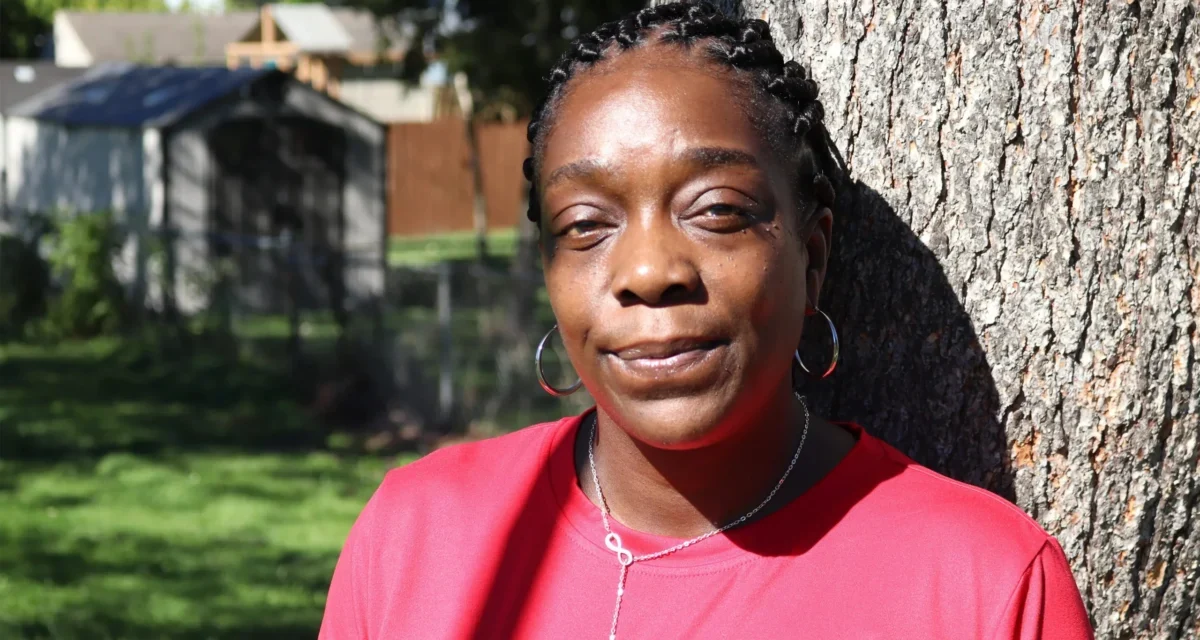





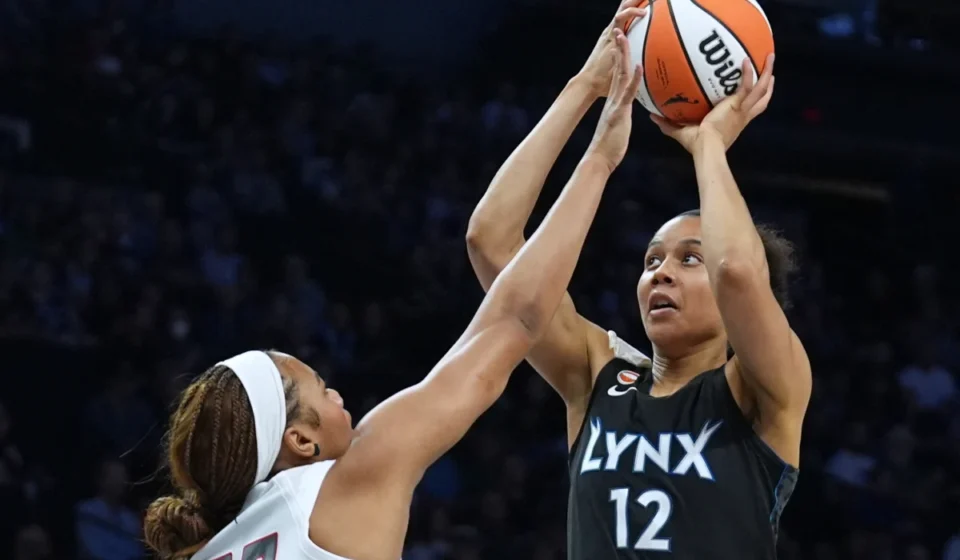

MINNEAPOLIS — In the high-stakes, transient world of the WNBA, ten years is an eternity. For forward Nia Coffey, the journey through the professional ranks has been a decade-long odyssey characterized by constant change, a suitcase lifestyle, and the relentless pursuit of a role that truly fits. Having played for five different franchises since being selected fifth overall in the 2017 WNBA Draft out of Northwestern, Coffey has finally found a destination that feels less like a stopover and more like a calling.
Returning to her home state to join the Minnesota Lynx, the 31-year-old veteran is not just playing basketball; she is anchoring the league-leading squad during a pivotal stretch of the 2026 season. Her emergence as a cornerstone of coach Cheryl Reeve’s rotation has been one of the most compelling narratives of the year, transforming her from a journeyman role player into a multifaceted force on a championship-contending team.
The Path Home: A Decade of Transition
Nia Coffey’s basketball pedigree is deeply rooted in Minnesota soil. Growing up in the Twin Cities, she was a standout at Hopkins High School—a program synonymous with excellence that later produced WNBA phenom Paige Bueckers. Her athletic DNA is undeniable; her father, Richard Coffey, was a former U.S. Army paratrooper who excelled at the University of Minnesota before a stint in the NBA, and her younger brother, Amir, has carved out a seven-year professional career of his own.
Despite this pedigree, the early years of Coffey’s professional career were defined by uncertainty. Between 2017 and 2026, she navigated the complexities of team-building, expansion drafts, and coaching turnover. Prior to arriving in Minneapolis, she struggled to find a consistent foothold, rarely averaging more than seven points per game. She was often viewed as a specialist—a defender or a hustle player—rather than the dynamic, two-way threat she has become under the tutelage of Reeve.
When the Lynx faced an offseason of significant upheaval—losing key contributors to free agency and the league’s expansion efforts—Reeve was tasked with a total rebuild of the rotation. Acquiring Coffey was not merely a depth move; it was a calculated gamble on a player whose skillset had been underutilized for years.
Statistical Dominance: A Breakout Performance
The impact of this partnership was on full display during Monday’s commanding 107-74 victory over Portland. Coffey didn’t just fill the stat sheet; she orchestrated a masterclass in efficiency. Registering 15 points, five rebounds, four assists, three steals, and three blocks, she became only the fifth player in the storied history of the Minnesota Lynx franchise to hit those minimum benchmarks in a single contest.
Her performance was the catalyst for a historic team effort, as the Lynx saw seven different players reach double-digit scoring—a testament to the balanced, high-octane system Reeve has implemented.
Season-to-Date Advancements
The numbers underscore a profound evolution in Coffey’s game. Through the first 14 games of the 2026 campaign, she is producing career-highs across the board:
- Minutes per game: 26.4
- Points per game: 8.7
- Rebounds per game: 5.9
- Assists per game: 2.1
- Field Goal Percentage: 50.0%
- 3-Point Percentage: 43.9%
This efficiency is particularly critical given the current circumstances in Minnesota. With star forward Napheesa Collier sidelined following ankle surgery, the team needed someone to step into the starting lineup and provide immediate, high-level production. Coffey has not only filled the void; she has thrived, providing the defensive tenacity and floor-spacing necessary to keep the Lynx at the top of the standings with an 11-3 record.
Coaching Synergy: The Art of Instruction
In the WNBA, the relationship between a coach and a veteran player is often the difference between a good season and a championship. Cheryl Reeve, a hard-nosed tactician known for her exacting standards, has found a unique dynamic with Coffey. Following the win over Portland, Reeve went as far as to present Coffey with the game ball—a rare honor that signaled the high regard in which she is held by the staff.
"Her level of compete, her ability to play so vertically, shot-blocking, rebounding — she gives you all that energy and sets the tone for us," Reeve remarked during the post-game press conference. "She’s such a big part of our defensive identity and our toughness, and then shooting the 3 as we’ve asked for. Happy for her. We do ask a lot from her at both ends."
Beyond the raw statistics, Reeve highlighted a quality that she finds rare in the modern game: active listening. "There are so many things. I think what I appreciate about her — probably because I don’t get it from the rest of the starters — is she listens. She really looks at you dead in your eye and receives the information and goes out there and does exactly what you’re asking her to do."
For her part, Coffey remains humble about the transition. "I like to do a good job, so you kind of have to know what they’re asking for," she said, laughing off the coach’s praise. "I’ve always known [Reeve] was a great coach from afar, so the fact that I can see it first-hand is really cool. I’m still learning a lot."
The Strategic Implications for the Lynx
The integration of Coffey into the starting rotation has profound implications for the Lynx’s title aspirations. By evolving into a reliable perimeter threat (shooting nearly 44% from beyond the arc), she has opened up the floor for her teammates, creating spacing that allows Minnesota’s offense to function at a historic pace.
The team’s fourth 100-point performance in 14 games is evidence of an offense that has moved past the reliance on a single superstar. While the eventual return of Napheesa Collier will undoubtedly shift the hierarchy of the team, the version of the Lynx currently on the floor is arguably more dangerous because of the versatility provided by veterans like Coffey.
Furthermore, Coffey’s defensive identity aligns perfectly with the "Minnesota standard." Her ability to play vertically and disrupt passing lanes has helped the Lynx maintain their status as the team to beat in the league. As the season progresses, the chemistry between Coffey and the rest of the roster will be tested by stiffer competition, but the early returns suggest that the front office’s decision to bring her home was one of the most impactful moves of the 2026 season.
Conclusion: A Future Unwritten
As the WNBA season moves into its summer heat, Nia Coffey finds herself in a position she has spent ten years working toward: a respected starter on a championship contender, playing in the city where her basketball journey began.
The story of the 2026 Minnesota Lynx will be defined by their ability to overcome roster turnover and injury, but the sub-plot of Nia Coffey’s resurgence may prove to be the most significant. She has proven that it is never too late to reinvent one’s game, and that for a player with the right mindset, the right system can turn a decade of searching into a season of triumph. Whether she is swatting away shots at the rim or knocking down corner threes, Coffey has finally found her rhythm—and for the fans at Target Center, it has been a long time coming.