



















































The 2026 Major League Baseball season has descended into a state of mediocrity that feels almost parody-adjacent, even by the expansive standards of the current wild-card era. As the calendar turned from June to July, the American League resembled a gridlocked highway during rush hour: of the 15 teams, only six boasted a record of .500 or better. The Minnesota Twins, mired in the muck of inconsistency, were not among them.
The current landscape of the AL wild-card race is, frankly, uninspiring. Five teams—the Twins included—found themselves within 4.5 games of the final postseason berth, yet none of these hopefuls could claim a winning record. This is not the stuff of which legends are made; it is the statistical equivalent of a participation trophy chase. For the Twins, a franchise still attempting to navigate the wreckage of a post-2023 identity crisis, this lack of urgency is a familiar, if painful, tune.
The State of the Franchise: A Legacy of Disillusionment
Nothing diminishes the luster of a "pennant race" faster than a collection of middling squads scrambling for a postseason slot that feels unearned. It did not require a sabermetric savant to predict the apathy surrounding this current iteration of the Twins. The team is flawed, uninspiring, and seemingly caught in a perpetual state of transition.
The ghosts of the 2025 trade deadline selloff still haunt the halls of Target Field. For the fanbase, that event served as a clear, albeit cold, signal: forget about 2026. Despite a flurry of front-office maneuvering—including a new manager, a revamped baseball operations department, and a change in the Pohlad family leadership—the needle has barely moved. Public sentiment remains stagnant, and the box office tells a sobering story.
Despite hosting a marquee series against the Los Angeles Dodgers in late June—a stretch that included a sellout of nearly 40,000 to witness Shohei Ohtani take the mound—overall attendance remains roughly 30,000 lower than at this same point last year, according to Baseball-Reference. While the front office continues to invest in the “fan experience”—happy hours, live music, and promotional giveaways—these are merely cosmetic band-aids on a deeper, structural wound. As chairman and CEO Tom Pohlad has stated, the club’s ultimate metric remains the same: the team must win.
The Defensive Disaster: A Chronology of Chaos
Winning, however, has become an uphill battle for a club hamstrung by a porous bullpen and an infield that has turned basic fielding into an adventure. The team’s defensive metrics are, quite frankly, appalling.
Entering July, the Twins ranked dead last in Major League Baseball in Defensive Runs Saved (DRS), with negative values at every single position except center field. Their inability to turn routine ground balls into outs has been the team’s undoing; they converted grounders into outs at a 69.9% clip, significantly lower than the league average of 73.4%.
The Positional Carousel
The team’s instability is best illustrated by the constant rotation of personnel. The four starting infielders from the Opening Day roster in Baltimore—Royce Lewis (3B), Brooks Lee (SS), Luke Keaschall (2B), and Victor Caratini (1B/C)—have been shuffled into a state of permanent flux.
Consider the data from Sports Info Solutions:
- Shortstop: The Twins finished with a -15 defensive rating at the position, with no other team in the league worse than -8. Both Tristan Gray and Brooks Lee recorded a -7 rating, placing them tied for last among 112 qualified shortstops.
- Second Base: Luke Keaschall fared little better, recording a -6 rating, placing him 134th out of 136 players.
This defensive instability is a symptom of a broader, “new-age” philosophy that prioritizes versatility over mastery. Manager Derek Shelton, while acknowledging the frustration, maintains a classic baseball perspective: "If you can play in the middle of the diamond, you can play anywhere."
However, the practical application of this philosophy has been disastrous. Unlike years past, where organizations provided players with full off-seasons and spring training periods to transition to new defensive homes, the modern Twins have been forced to learn on the fly. We see Royce Lewis at first base, Luke Keaschall in the outfield, and Brooks Lee at third—each experiment seemingly hindering the team’s ability to secure outs when the game is on the line.
Injuries and Economic Constraints
The on-field struggles have been exacerbated by a string of high-profile injuries. The loss of ace Pablo Lopez to season-ending Tommy John surgery was a body blow from which the rotation has struggled to recover. Furthermore, the absence of Bailey Ober (elbow inflammation) and catcher Ryan Jeffers (fractured hamate bone) stripped the team of its veteran core.
The root cause, however, often leads back to payroll management. Like many mid-market clubs, the Twins have attempted to fill critical voids with low-cost utility players or unproven prospects. With the exception of Kody Clemens, whose versatility is a genuine asset, these gambles have largely failed to pay off.
The Trade Deadline Dilemma: To Buy or Sell?
As the August 3 trade deadline approaches, the Twins find themselves at a crossroads. They are three games back of Cleveland in the AL Central and hovering just outside the wild-card conversation. The path forward is twofold: they need help in the infield and the bullpen.
While a solution for the infield is waiting in the wings—specifically, the rising prospect Kaelen Culpepper at Class AAA St. Paul—the bullpen remains a black hole. With talent at a premium, the cost of acquisition will be high.
This presents the organization with a binary choice: trade for immediate help, or lean into a rebuild. However, the fan base is weary of the "rebuild" narrative. Given the lingering resentment over the aborted sale of the team and the previous payroll cuts, the organization faces immense pressure to retain its core.
The Case for Retention
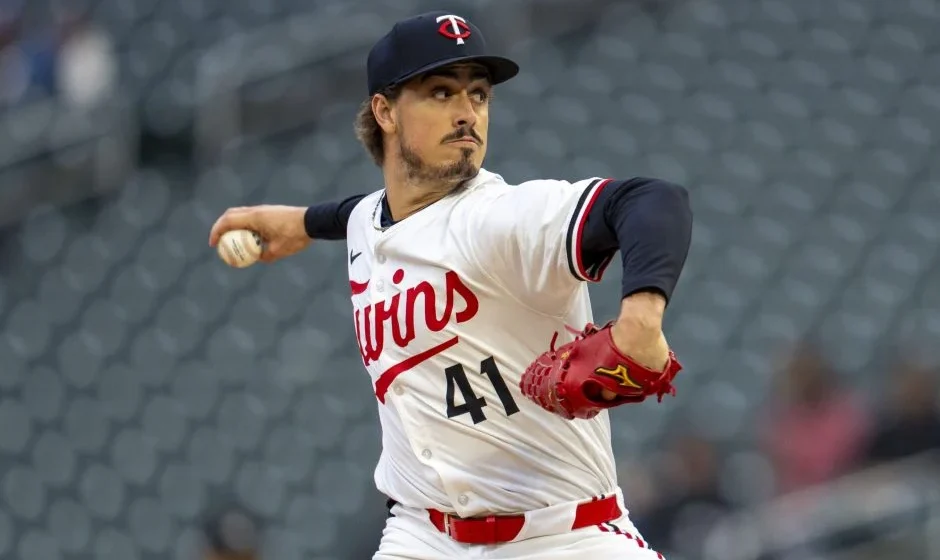
Two names dominate the conversation: Ryan Jeffers and Joe Ryan. Both are vital to the team’s future, yet both are natural targets for contending clubs.
- Ryan Jeffers: At 29, he is a cornerstone of the lineup and a rare home-grown product.
- Joe Ryan: A two-time All-Star and an intelligent, seasoned veteran who has been unafraid to challenge the front office’s decision-making in the past.
The temptation to trade these assets for prospects is clear, but it would be a strategic error that further alienates a bruised fan base. For once, the Twins must choose to build, not just sell. Extending these players would signal a shift in philosophy—a recognition that continuity and veteran leadership are the bedrocks of a championship culture.
Implications for the Future
The "Sell the Team" chants that echo through Target Field are more than just noise; they are the manifestation of a decade-long disconnect between the organization and its supporters. The transition to Tom Pohlad’s leadership was meant to signal a new dawn, but so far, it has felt like a continuation of the previous twilight.
If the Twins continue to cycle through veteran talent like disposable goods, they will continue to lose the emotional investment of their fans. Investing in Ryan and Jeffers is not just about wins and losses on the field; it is about establishing a narrative of stability. It is about proving that the organization values the players who have carried the load during lean times.
As the trade deadline passes, the question will remain: Was this a pivot toward sustainability, or just more of the same? For a franchise that relies so heavily on the loyalty of its gate, the answer to that question will define the next chapter of Minnesota Twins baseball. The era of excuses is over; now, the era of accountability must begin. Whether the front office has the courage to embrace that reality remains the defining uncertainty of the 2026 season.