



















































The High Price of Wellness: How "Medicare for All" Became the Defining Fault Line in Michigan’s Senate Race

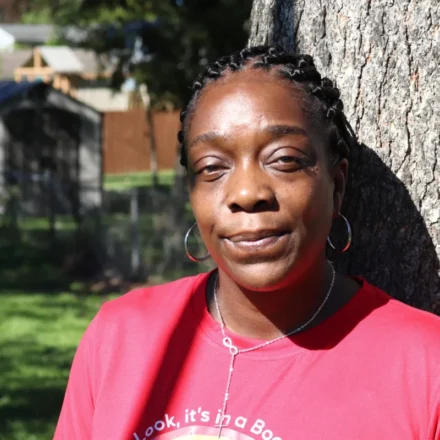
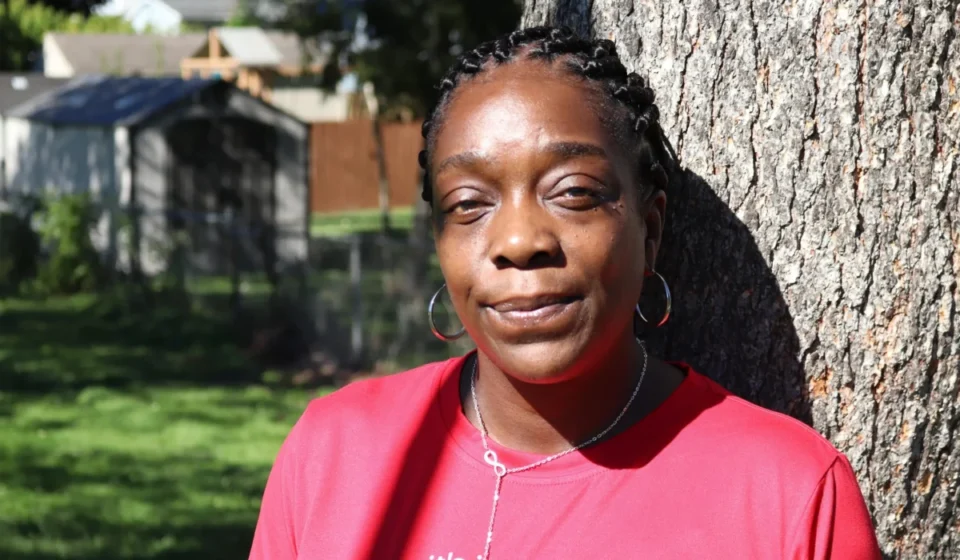
LANSING, Mich. — Christina Starks-Clay stood in the stifling September heat, clutching her smartphone like a shield. On the screen was a digital record of a $1,000 cashier’s check—money she had just withdrawn from her bank account to pay a portion of her son’s mounting dental bills. Despite being employed as an early childhood special education paraprofessional and possessing what is considered "good" dental insurance, she still faced a remaining balance of $389. Weeks earlier, a routine cleaning for herself had set her back $600.
"I’m trying to tell myself, ‘Tina, you were in a position to do this,’" she said, her voice steady but underscored by fatigue. "A lot of people couldn’t do what I had to do today. I couldn’t do it. But I did it. So, I need to hear: How are you going to make this better for everyone?"
Starks-Clay was one of hundreds gathered in downtown Lansing for a town hall hosted by U.S. Senate candidate Abdul El-Sayed. In Michigan, a state currently defined by deep political polarization and economic anxiety, the promise of "Medicare for All" has transcended policy jargon to become a visceral rallying cry. It represents a desperate demand for a system that no longer forces families to choose between medical survival and financial ruin.
The Human Cost of a Fractured System
The line stretching blocks through Lansing was a mosaic of the American healthcare crisis. Ahead of Starks-Clay, a man recounted the agonizing experience of watching his brother drown in thousands of dollars of medical debt. Nearby, a professor emeritus from Michigan State University expressed deep-seated fears for his grandchildren, noting that his adult children were struggling to manage a daunting $9,000 insurance deductible.
Healthcare workers in attendance offered a grim, professional perspective. They described patients who routinely skip doses of essential medication to afford groceries, and colleagues who have been personally decimated by sudden medical crises.
This collective anxiety is not anecdotal; it is structural. As the candidate took the stage, the crowd erupted into a chant that has become the heartbeat of his campaign: "Money out of politics! Money in your pocket! Medicare for All!"
A Chronology of Policy and Polarization
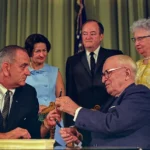
The trajectory of the "Medicare for All" movement has been a study in political cycles. While the concept of a single-payer, government-run health system has existed for decades, its public profile surged during the 2016 and 2020 presidential primaries, championed largely by Senator Bernie Sanders.
Following the 2010 passage of the Affordable Care Act (ACA), the United States saw a significant reduction in its uninsured rate. Insurance companies were prohibited from denying coverage for preexisting conditions, and 40 states, along with Washington, D.C., expanded Medicaid. For a time, the nation seemed to be trending toward broader accessibility.
However, recent years have signaled a sharp reversal. The expiration of enhanced tax subsidies, coupled with legislative shifts at the federal level, has left a void. In Michigan, the landscape has darkened significantly. With the expiration of subsidies, individual marketplace rates have spiked by an average of 20%. Furthermore, projections from the Urban Institute suggest that up to 355,000 Michiganders could lose Medicaid coverage by 2028 due to recent legislative cuts, creating a looming cliff for the state’s most vulnerable populations.
Data and Discontent: Why the Shift?
According to a recent KFF health tracking poll, support for expanding government-run health coverage is at its highest level in at least a decade. Two-thirds of Americans now favor the concept, yet there remains a persistent gap between the desire for reform and the public’s understanding of what "Medicare for All" entails.
"Too many people don’t have health insurance, too many people who do have insurance can’t afford medical care, and many people are terrified about the costs of being sick," explains Jonathan Oberlander, a professor at the University of North Carolina-Chapel Hill and an expert in healthcare policy.
Oberlander notes that the popularity of the term is largely symbolic. In an electorate disillusioned with the status quo, the term acts as a shorthand for "systemic change." However, polling also reveals that public support is fluid, often shifting based on how the policy is framed. When presented with the potential for higher taxes or the loss of private insurance, support often wavers.
Despite this, the demand for a concrete plan remains the driving force of the current election cycle. "When we ask people what they want to hear from candidates regarding healthcare, it’s a plan to bring down costs," says Ashley Kirzinger, director of survey methodology at KFF.
Official Responses and Political Rhetoric
The debate over healthcare in Michigan has crystallized in the Senate race between El-Sayed and Republican challenger Mike Rogers.
Rogers, a former congressman, has positioned himself as a staunch opponent of the Medicare for All model. During recent press appearances, he characterized the proposal as a dangerous, overreaching government experiment. "If the government is going to give you something, they have to take it away from someone else," Rogers stated. He argues that the $4 trillion price tag would be passed directly to taxpayers and would effectively destroy the private insurance market that many Americans currently rely on.
Conversely, supporters point to studies like the recent Yale University preprint, which suggests that while the implementation cost of universal coverage is high, it could yield $1 trillion in annual savings by eliminating the inefficiencies, administrative overhead, and profit-seeking motives of the private insurance industry.
The political reality, however, is that both sides are fighting a battle of perception. "It doesn’t matter if the fears that are being spread are actually accurate," Oberlander says. "Politically, what matters is if they can scare people."
The Human Experience: Stories from the Frontline
For voters like Darleana Ash, a diagnostics lab worker, the policy debate is secondary to the daily reality of her patients. She has watched, helpless, as elderly patients decide to forgo life-saving medication because their fixed incomes cannot stretch to cover both their prescriptions and their food.
The story of Cindy Lou Coolich serves as a haunting reminder of how fragile financial stability is in the current system. A former administrator who helped others navigate insurance enrollment, Coolich saw her own life upended by a bout of sepsis. The illness left her disabled, cost her a 15-acre farm, and reduced her income to a meager $900 in Social Security.
Her eventual relief—accessing her deceased ex-husband’s benefits—is a point of dark irony. "So now I’m doing quite well!" she said with a laugh that did not reach her eyes. For Coolich, the idea that a person must rely on the death of a spouse to achieve basic healthcare security is a damning indictment of the current American system.
Implications for the Future
Even if proponents of Medicare for All see electoral success in November, the path to implementation remains fraught with systemic hurdles. The influence of healthcare industry lobbyists, the resistance of moderate Democrats, and a deeply divided Congress make a wholesale transition to a single-payer system unlikely in the immediate future.
Activists like Thomas "Jermaine" Carey remain skeptical of the political machinery, even while they support the candidate. "It’s still America," he said, reflecting on the power of super PACs and special interests. "You still have the lobbyists that control everything."
The paradox of the current moment is clear: The appetite for radical change has never been higher, yet the levers of power remain locked in a cycle of incrementalism and intense lobbying. For residents like Christina Starks-Clay, the struggle is not just about a Senate seat or a policy white paper; it is about the basic dignity of being able to afford a trip to the dentist without choosing between health and home.
As Michigan goes to the polls, the "Medicare for All" debate serves as a mirror for the nation—reflecting a citizenry that is tired of the status quo, fearful of the future, and desperate for a system that treats health as a right rather than a luxury good. Whether the political system is capable of responding to that demand remains the great, unanswered question of the 2026 midterms.