























































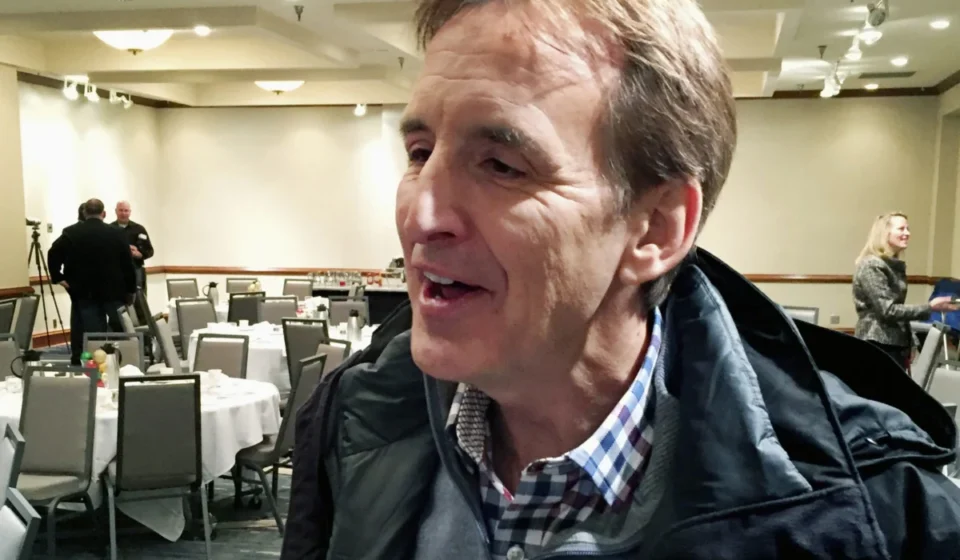
The Solar Pragmatist: Tim Pawlenty’s Mission to Rebrand Renewable Energy for a Redder Washington

By [Your Name/Journalistic Desk]
In the halls of Washington, the political winds have shifted with dramatic force. For the solar industry, the transition from the legislative high-water mark of the 2022 Inflation Reduction Act (IRA) to the current era of retrenchment has been nothing short of a "stinging political defeat." Yet, in the midst of this turbulence, the Solar Energy Industries Association (SEIA) has turned to a veteran of the conservative establishment to navigate the new reality.
Tim Pawlenty, the two-term former Republican governor of Minnesota and 2012 presidential candidate, stepped into the role of president and CEO of the SEIA this past June. His mission is as ambitious as it is difficult: to rebrand solar power not as a partisan climate crusade, but as an essential component of American national security, economic independence, and individual liberty.
The State of the Sector: A Turbulent Transition
The solar industry currently finds itself in a paradoxical position. On one hand, it remains the dominant force in American power generation, outstripping all other forms of energy in new construction capacity for several consecutive years. The business fundamentals—fueled by an "unbelievable, exploding demand for energy"—have never been more robust.
However, the political climate is decidedly less sunny. After years of riding the tailwinds of the Biden administration’s climate-forward policies, the industry faced a rude awakening when Republicans reclaimed full control of Washington in 2024. The subsequent passage of the "One Big Beautiful Bill" Act systematically gutted many of the climate-specific provisions that had been the bedrock of solar development strategies.
"The current state is relatively bleak," Pawlenty admitted during a keynote appearance at Canary Media’s Climate Week NYC summit. "But in politics, nothing stays the same. There is hope in the future, provided we adapt our narrative to the current facts."
Chronology of a Shifting Landscape
To understand Pawlenty’s strategy, one must look at the recent timeline of American energy policy:

- August 2022: The Inflation Reduction Act (IRA) is signed into law, providing long-term tax credits and incentives that trigger a massive surge in solar and battery storage deployment.
- November 2024: Republican electoral victories secure control of the White House and both chambers of Congress, signaling an immediate pivot in energy priorities.
- 2025: The "One Big Beautiful Bill" Act is passed, significantly rolling back clean energy tax credits while paradoxically maintaining domestic manufacturing incentives.
- June 2026: Tim Pawlenty assumes leadership of the SEIA, tasked with stabilizing the industry’s standing in a post-IRA environment.
- September 2026: Pawlenty makes his inaugural public policy addresses, emphasizing "durable" policies that can withstand the cycles of partisan turnover.
Data-Driven Growth: The Economic Argument
Despite the legislative setbacks, the sheer force of market demand keeps the solar industry afloat. According to recent industry data, 87% of all new clean energy generation in the United States is currently located in rural regions. This shift has turned the American heartland into the "power plant" of the nation.
However, Pawlenty notes that the bottleneck is no longer just technology or cost—it is political friction. "Solar and storage is the most cost-effective form of energy in the country, without question," he argues. "But policymakers have been operating on out-of-date scripts. If you bring them to the current story with current facts, the conversation changes entirely."
The "current facts" include the rapid decoupling of the U.S. solar supply chain from China. Contrary to common Republican critiques that the industry remains beholden to overseas manufacturers, Pawlenty points to a surge in domestic capacity. Through a combination of trade enforcement and manufacturing incentives preserved in the 2025 legislation, the U.S. has significantly reduced its reliance on Chinese imports.
Bridging the Ideological Divide: National Security and Property Rights
Pawlenty’s most significant contribution to the solar industry is his ability to speak the language of the modern conservative movement. He is moving away from the "climate change" lexicon, which often triggers reflexive opposition in right-leaning circles, and toward themes of national sovereignty and personal freedom.
National Security as a Catalyst
"Iran can’t block the sun," Pawlenty stated during the Climate Week summit. "If you are into national security—and I am—I like things that Iran, North Korea, China, or Russia can’t block. When you frame solar as a hedge against global instability, the political receptivity changes instantly."
By positioning solar as an "energy independence" tool, Pawlenty is attempting to align the industry with the "America First" ethos. It is a strategic pivot designed to make solar energy projects "durable"—or, in his words, policies that are likely to survive political turbulence and change.
The Land Rights Defense
The rural buildout of solar has faced significant resistance, often fueled by local concerns over the loss of farmland and, occasionally, by misinformation circulating on social media. Pawlenty views this through the lens of conservative values: private property rights.

"I’m from a farm state," Pawlenty said. "From a conservative standpoint, land rights are paramount. We want to ensure that farmers aren’t being told what they can’t do with their own land. If a farmer wants to host a solar array to secure a stable income for their family, that is an exercise of their property rights. The industry needs to be a defender of those rights."
Implications for Future Policy
As Pawlenty settles into his role, the implications for the energy sector are clear. The era of relying on climate-focused federal subsidies is over; the era of "durable" energy policy has begun.
For the SEIA, this means a shift in lobbying strategy:
- Turbocharging Manufacturing: Focusing on the manufacturing incentives that survived the 2025 budget cuts, emphasizing job creation in industrial states.
- Bipartisan Consensus: Identifying areas where energy security and local economic development overlap, such as grid modernization and domestic storage production.
- Local Engagement: Moving the battleground from Washington to local county boards, where the focus will be on property rights and economic development rather than global environmental mandates.
Conclusion: A New Era of Pragmatism
Tim Pawlenty’s emergence as the face of the solar industry is a calculated gamble. By leaning into his background as a mainstream Republican, he is betting that the economic and security arguments for solar energy are strong enough to transcend the current polarized environment.
Whether this "pragmatic pivot" can successfully shield the solar industry from further legislative erosion remains to be seen. However, Pawlenty’s confidence is rooted in the belief that facts, eventually, catch up to politics. "We have the good facts on our side," he concluded. "Now, we just need to make sure the policymakers see them."
As the U.S. energy landscape continues to evolve, the success of the solar sector may no longer depend on how many people are convinced by climate models, but on how many are convinced by the cold, hard logic of national security and the inviolability of the American farmer’s right to manage their own soil. In the hands of a veteran operator like Pawlenty, the industry is betting that this language will be the key to long-term survival.