
























































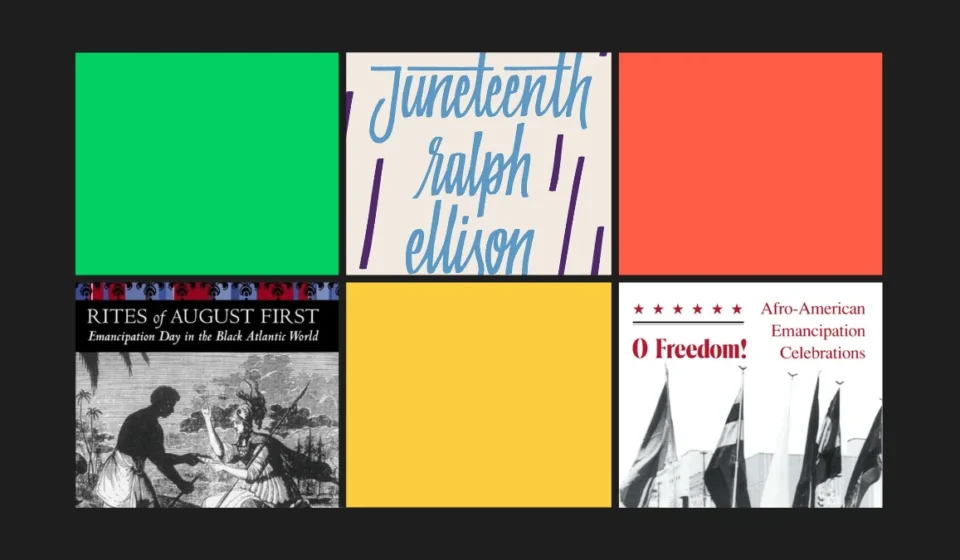

This feature article was curated in collaboration with insights from The Conversation and the academic research of Professor Corey D. B. Walker of Wake Forest University.
For over 150 years, Juneteenth was a day observed primarily in the hearts and homes of Black communities, particularly within Texas. It served as a sacred, localized anchor for memory—a bridge between the trauma of enslavement and the resilience of emancipation. However, since its formal designation as a federal holiday in 2021, the observance has shifted into the national spotlight, prompting a broader public inquiry into its origins, its complexities, and its enduring relevance to the American experiment.
To move beyond the superficial celebrations of the day, one must engage with the scholarship that documents the evolution of Black freedom. In honor of this ongoing national conversation, Professor Corey D. B. Walker, a scholar of the humanities at Wake Forest University, has identified six essential texts that provide a rigorous framework for understanding what it truly means to commemorate June 19, 1865.
The Chronology of Emancipation: A Multi-Layered History
The common narrative of Juneteenth centers on June 19, 1865, when Union General Gordon Granger arrived in Galveston, Texas, to announce General Order No. 3, which informed the people of Texas that all enslaved persons were free. While this is the foundational moment for the holiday, it is historically reductive to view it in isolation.
The history of emancipation in the United States is a mosaic of dates and regions. As documented in William H. Wiggins Jr.’s seminal work, O Freedom! Afro-American Emancipation Celebrations, Juneteenth is merely one thread in a much larger tapestry of liberation. Wiggins notes that for generations, Black Americans commemorated freedom on various dates: January 1 (Emancipation Day in North Carolina), April 3 (the fall of Richmond, Virginia), and April 16 (the date of emancipation in Washington, D.C.).
The Evolution of the Celebration
The transformation of Juneteenth from a local Texas observance to a federal holiday mirrors the evolution of the African American struggle for visibility. Historically, these celebrations were never monolithic. In the 1960s, the holiday took on a new, more militant character as students at Prairie View A&M University in Texas famously refused to attend classes, reclaiming the day as a political statement. Today, celebrations range from the iconic "Black Cowboys" parade in Milwaukee to community-led artistic performances, religious services, and, most importantly, intellectual forums.
Literary Lenses: Six Books That Define the Juneteenth Narrative
To grasp the nuance of the holiday, one must look to the literature that synthesizes memory, politics, and historical fact. Professor Walker’s recommended readings provide a comprehensive guide for those seeking to deepen their understanding.
1. On Juneteenth by Annette Gordon-Reed
Harvard historian Annette Gordon-Reed offers a work that is as much a memoir as it is a historical inquiry. Growing up in segregated Texas, Gordon-Reed provides an intimate portrait of how the holiday shaped the consciousness of Black youth in the South. Her essays invite readers to inhabit a world defined by the duality of slavery and the subsequent, arduous struggle for true freedom.
2. O Freedom! Afro-American Emancipation Celebrations by William H. Wiggins Jr.
This text is widely considered the academic gold standard for understanding emancipation festivities. By blending oral histories with meticulous archival research, Wiggins explains the emergence of Juneteenth not as an outlier, but as part of a structured cultural movement. It highlights how these celebrations were vital for maintaining collective memory.
3. Juneteenth by Ralph Ellison
The posthumously published novel by the author of Invisible Man explores the philosophical weight of the holiday. Ellison uses the fictional, tragic relationship between the racist Senator Sunraider and the Reverend A. Z. Hickman to posit that Juneteenth is a "freedom delayed." For Ellison, the holiday serves as a mirror reflecting the shared, often painful fate of all Americans as they attempt to reconcile the nation’s promise with its failures.
4. Festivals of Freedom: Memory and Meaning in African American Emancipation Celebrations, 1808-1915 by Mitch Kachun
Kachun provides a scholarly look at how these festivals shaped African American identity. He illustrates that emancipation celebrations were never just about looking back; they were "crucibles" for forging political culture. By examining celebrations as far back as 1808, Kachun reminds us that the quest for identity was a contested and evolving process.
5. Rites of August First: Emancipation Day in the Black Atlantic World by Jeffrey R. Kerr-Ritchie
Kerr-Ritchie expands the geographic scope of the conversation, looking at how "Emancipation Day" was adapted across the Black Atlantic, specifically following the abolition of slavery in the British West Indies. This book is essential for understanding how the concept of freedom traveled across borders and was localized by various diaspora communities.
6. Juneteenth: The Story Behind the Celebration by Edward T. Cotham Jr.
Cotham focuses on the military realities of 1865. He strips away the myth-making to focus on the logistical, legal, and violent context of the Civil War’s end in Texas. By centering on the "ordinary actions" of the people involved, Cotham humanizes the administrative act of emancipation.
Implications for the American Public
The elevation of Juneteenth to a federal holiday in 2021 was not merely a symbolic gesture; it was an acknowledgment of a debt owed to history. However, the implications of this status remain a subject of debate.
The "Freedom Delayed" Dilemma
As Ralph Ellison’s character Hickman famously remarked, "There’s been a heap of Juneteenths before this one and I tell you there’ll be a heap more before we’re truly free!" This sentiment serves as a sobering reminder that Juneteenth is not a celebration of a completed mission. Rather, it is a critique of the slow, stuttering progress of equality in America. The holiday forces a confrontation with the "hard history" of the United States—a history that involves systemic inequality, the legacy of segregation, and the ongoing struggle for civil rights.
A Call to Action
For the modern celebrant, Juneteenth is increasingly seen as a time to "regroup." It is a day that invites reflection on the current state of democracy. The academic consensus, supported by these six texts, is that Juneteenth is a "living" holiday. It is not static, nor is it relegated to the past. It is a day that requires the active participation of the citizenry to ensure that the promise of 1865 is finally realized for all.
Conclusion
The path from a local Texas gathering to a federal holiday has been long, complex, and contested. By engaging with the historical and literary works curated by scholars like Professor Corey D. B. Walker, Americans can move beyond the surface-level festivities. Juneteenth, at its core, is a profound invitation to engage in the work of national introspection. It serves as a reminder that history is not just what happened in the past; it is the foundation upon which we must continue to build a more just, equal, and informed society. As we mark the day, let us do so not with the complacency of achievement, but with the resolve to continue the quest for freedom that began, in earnest, on those shores in Galveston.