

















































In the modern American landscape, the "rural-urban divide" has become a shorthand for political polarization, economic disparity, and cultural friction. It is a narrative frequently fueled by pundits and policy experts who approach rural communities with a clinical, often condescending desire to "fix" them. However, Ben Durheim, an assistant professor of theology at the College of St. Benedict and St. John’s University, argues that this framework is not only flawed but fundamentally destructive.
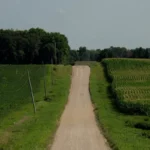
In his new book, Each in Our Own Language: Symbolization and Social Ethics in Rural America, Durheim challenges the prevailing discourse. He contends that the failure to bridge the gap between non-rural and rural populations stems from a lack of genuine understanding regarding how rural spaces shape identity, morality, and social interaction. By moving away from purely political definitions, Durheim invites us to explore the symbolic power of place—a force that dictates how communities flourish or falter.
The Architecture of the Divide: A Critical Chronology
To understand why our current discourse is failing, one must look at the evolution of the "rural problem" in American public life.
The Era of "Fixing"
For decades, the standard response from urban-centric policymakers toward rural decline—such as the shuttering of local manufacturing or the loss of agricultural autonomy—has been one of imposition. The prevailing logic has been: "If they would just do things our way, then things would be better." This approach assumes that rural inhabitants are either misinformed or resistant to progress, ignoring the deep-seated historical and cultural contexts that inform rural decision-making.
The Failure of Communication
In recent years, as political polarization has intensified, the strategy shifted toward "dialogue." The common refrain, "If we just understood each other, things would be better," became a hallmark of civic engagement efforts. Yet, Durheim observes that this has devolved into a hollow exercise. "It’s been flattened into: ‘If I just understand what people are saying, then I will understand what they mean and then if things go wrong, it’s their own fault,’" Durheim notes. This perspective maintains the power imbalance, placing the burden of change on rural populations to conform to urban-aligned standards of "correctness."
The Symbolic Turn
Durheim’s work marks a departure from this pattern. By focusing on symbolization, he moves the conversation toward the lived experience. He posits that we cannot bridge the divide through policy alone; we must engage with the symbols—the emotional anchors—that give rural life its meaning.
The Power of the Symbol: More Than Just Words
Durheim defines "symbols" not as static signs, but as immersive experiences that define human perspective. To him, a symbol is something that "takes hold of you."
The Depth of Experience
"If you have a really important and long relationship—either with a friend or place or even with a particular food—if you try to explain that to someone, it doesn’t convey the same depth of experience as if you would introduce them to your friend, or you would bring them to that place," Durheim explains.
This distinction is crucial. When rural communities grieve the closure of a local church, an outsider might see a logical, data-driven decision based on declining attendance and rising maintenance costs. To the community, however, that building is not just a structure; it is a repository of generational history, shared milestones, and a cornerstone of collective identity. When we view rural life only through the lens of logistics, we miss the human reality of what is being lost.
When Symbols Become Deceptive
Durheim is quick to point out that symbols are not inherently virtuous; they can, and often do, "lie."
- The Myth of the Safe Haven: The romanticized image of the "quaint, small town" suggests a place immune to the vices and violence of the city. While this symbol provides a sense of comfort, it obscures the reality of rural hardship, poverty, and social dysfunction.
- The Myth of Ethnic Stasis: Many rural communities cling to symbols of their founding heritage—the "German or Norwegian church," for instance—that suggest a frozen cultural past. When asked about the necessity of multicultural outreach, many community leaders will claim, "We don’t have a Hispanic population," even as that population grows around them. The symbol of the past effectively blinds the present, preventing the community from adapting to its own demographic reality.
Ethics and the Values of Rural Life
A central pillar of Durheim’s argument is that ethics in rural contexts is inextricably linked to local values, which are often misunderstood by external observers.

Defining "Interest"
A persistent narrative in national politics is that rural voters frequently "vote against their own interests." Durheim challenges this by asking a fundamental question: Who is defining those interests?
"It’s not clear to me that many rural spaces were consulted with regard to defining what exactly their interests are," Durheim states. "Ethics is not about just what’s right or wrong—though that’s certainly there—but it’s also about what is worthy, what is worth investment, what is worth time and energy and toil and hurt."
The Cornerstone of Stability
One of the most profound values identified by Durheim is local stability. While "stability" rarely appears as a primary category in academic ethics or political platforms, it is a dominant force in rural life. The longevity of a business, the continuity of a school, and the presence of multi-generational institutions are not merely economic markers; they are the bedrock of community identity. When policy decisions threaten this stability, the resulting outcry is not "irrational" or "backward"—it is a defense of the core values that define the community’s worth.
Implications for the Future of Rural-Urban Relations
If we are to move past the current impasse, the implications of Durheim’s research suggest a radical change in how we approach rural development and civic discourse.
1. Moving Beyond "Fixing"
The impulse to "fix" rural America must be replaced by a posture of "reckoning." If urban policy experts and political leaders wish to engage effectively, they must first identify the values operating within the specific space they are working with. This requires spending time, listening to stories, and observing what a community finds "worthy."
2. Acknowledging the "Lived Experience"
Policy must account for the emotional weight of place. Efforts to consolidate schools or close local hospitals, while potentially fiscally responsible, carry a symbolic cost that is rarely factored into the bottom line. Recognizing the pain associated with these changes is the first step toward building trust.
3. Deconstructing the Lies
We must be willing to challenge the symbols that hold communities back. When a symbol—such as the idea that a town is "homogeneous"—actively prevents a community from providing for its current residents, that symbol must be interrogated. This is not about erasing history, but about ensuring that the community’s identity is robust enough to include its current reality.
4. Shared Flourishing
Ultimately, Durheim’s goal is not to isolate rural and urban spaces, but to enable them to flourish together. This requires a recognition that the rural-urban divide is not a problem to be solved, but a relationship to be managed. It is a dialogue between two different ways of being in the world, both of which require the other to maintain a healthy, functioning society.
"We need to understand the rural contexts and the ways rural places shape the way we speak, act, and live together," Durheim concludes. By moving from a position of judgment to one of inquiry, we may find that the "divide" is not as insurmountable as it appears—provided we are willing to speak each other’s language.
For those interested in further reading on this subject, Ben Durheim’s book, "Each in Our Own Language: Symbolization and Social Ethics in Rural America," is available through Fortress Press. This dialogue was originally featured in The Daily Yonder, a premier source for reporting on rural American life.