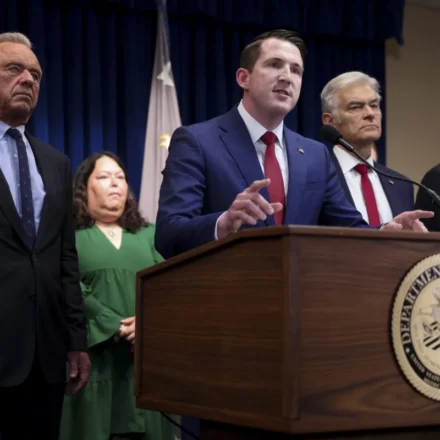




























































In an era of intense political scrutiny regarding federal spending, a massive, hidden crisis has unfolded within the American healthcare system. While the U.S. government—driven by the newly formed Department of Government Efficiency (DOGE)—has prioritized high-profile raids and investigations into supposed welfare fraud, a far more systematic and lucrative drain on public coffers has been occurring in plain sight.
A comprehensive investigation by The 74 into 275 million billing records reveals that private equity firms have aggressively colonized the autism therapy industry. Over the course of six years, these investment entities have siphoned an estimated $7 billion in taxpayer-funded Medicaid payments, often prioritizing profit extraction over the actual developmental needs of autistic children. The growth of this industry, built largely on a controversial and often criticized practice known as Applied Behavior Analysis (ABA), has created a "perfect storm" of unchecked financial expansion and potential harm to vulnerable patients.
The Mechanics of a $7 Billion Windfall
The core of this issue lies in the rapid, unregulated professionalization of ABA. Originally a niche behavioral intervention, ABA has been marketed as the "gold standard" for autism treatment. However, as demand grew—spurred by better diagnostic criteria and advocacy for insurance mandates—private equity firms identified the sector as a prime target for consolidation.
Unlike publicly traded companies, private equity funds operate in the shadows, unburdened by the same transparency requirements as traditional banks or corporations. They typically acquire existing, fragmented therapy centers, streamline operations to minimize costs, and maximize billing intensity. By pushing for the highest possible number of therapy hours—often up to 40 hours a week for toddlers—these firms have effectively transformed clinical therapy into a volume-based revenue stream.
The financial data is staggering: between 2019 and 2024, Medicaid claims for the six most common autism therapy billing codes surged by 381%, jumping from $400 million to nearly $2 billion annually. Of the top 50 largest providers by Medicaid billing, nearly half are backed by private equity.
A Chronology of Institutional Capture
The rise of the current ABA-industrial complex was not an accident; it was a decades-long evolution of lobbying and policy-making.

- 1960s-1980s: Psychologist Ole Ivar Lovaas develops the "Lovaas Method," a precursor to modern ABA. It is later revealed that Lovaas used similar conditioning techniques to develop gay conversion therapy.
- 2007: The passage of "Ryan’s Law" in South Carolina marks a turning point. Led by activist parents, the movement forces private insurers to cover ABA, framing it as a "cure" for autism.
- 2014: The Obama administration mandates that Medicaid must cover autism treatment under the Affordable Care Act, opening the floodgates for public funding.
- 2015-2024: Private equity firms aggressively enter the market, acquiring 574 sites across 147 providers.
- 2022-2025: A series of federal audits across both red and blue states reveals widespread improper billing, lack of clinical documentation, and the systematic denial of schooling for children trapped in full-time therapy centers.
- 2026: New legislation in states like Colorado attempts to regulate the industry but critics argue the laws serve only to "enshrine" existing practices rather than protect patients.
The Human Cost: ABA and the Trauma of Compliance
The primary clinical tool of this multi-billion-dollar industry, ABA, is facing a growing reckoning. While proponents argue that modern ABA has moved away from the controversial "shock" tactics of the mid-20th century, critics—including many autistic adults—maintain that the fundamental goal remains the same: "extinguishing" autistic traits to achieve forced compliance with neurotypical norms.
Recent research underscores the potential for profound harm. A 2018 study found that nearly half of those who underwent ABA therapy exhibited symptoms of post-traumatic stress. More alarmingly, a 2025 analysis involving researchers from the University of Wisconsin-Madison and the University of Texas at Austin found that individuals treated with ABA before age 18 were 30% more likely to require mental health hospitalizations compared to their peers who did not receive such intervention.
Experts like Ari Ne’Eman, a former director of the Autistic Self-Advocacy Network, argue that the system is fundamentally flawed. "Forty hours a week of therapy is a full-time job for a three-year-old," Ne’Eman states. "It’s not just a poor use of public funds; it is actively harmful to the development of the child."
The "School-to-Therapy" Pipeline
One of the most alarming findings of recent federal audits is the practice of keeping children in standalone therapy centers, sometimes for years, at the expense of their legal right to an education.
In Colorado and Indiana, auditors discovered children remaining in ABA centers for full-day sessions, five days a week, well past the age where they should have been enrolled in public school. Because Medicaid law prohibits therapists from providing academic instruction, these children effectively fall into a void where they receive neither therapy that addresses their needs nor the basic literacy and socialization skills guaranteed by federal special education laws.
When these students finally return to a classroom, they are often years behind their peers, having been conditioned to follow rigid, repetitive commands rather than engage in critical thinking or peer-to-peer social interaction.

Official Responses and Industry Defense
The response from the private equity sector and industry groups has been one of controlled damage management. Regarding the collapse of the Centers for Autism and Related Disorders (CARD)—once a massive chain sold to Blackstone for $700 million—the firm cited the "perfect storm" of COVID-19 and labor shortages as the cause of its bankruptcy. Blackstone stated they were "never involved in specific clinical treatment decisions."
Similarly, Centria Healthcare, another massive provider and Medicaid biller, has faced numerous allegations of abuse and billing fraud over the years, many of which have been documented in lawsuits and media investigations. In response, CEO David Harbour emphasized the company’s "commitment to ethical care," asserting that their services are "grounded in clinical quality."
Lorri Unumb, CEO of the Council of Autism Service Providers, maintains that the "bad actors" identified in federal audits are the exception rather than the rule. She insists that thousands of providers are doing important, life-changing work every day. However, critics argue that the structural incentives—the leverage of private equity and the lack of independent oversight—make "bad actor" behavior an inevitable outcome of the current business model.
Implications for the Future of Disability Care
As the second Trump administration takes a more aggressive approach to cutting Medicaid, disability advocates fear the pendulum is swinging in a dangerous direction. While the administration claims to be rooting out "fraud," the focus on political battles with state governors has distracted from the reality of the private equity capture of the sector.
The redirection of funds toward disproven "cures" and away from essential support services, such as occupational therapy or speech-language pathology, threatens to reverse decades of progress. The fear among the autistic community is that the current crisis will result in a "dark past" scenario: a future where the needs of autistic children are sacrificed for the sake of fiscal theater and the enrichment of private equity investors.
Ultimately, the crisis demands more than just audit-driven crackdowns. It requires a fundamental shift in how the United States treats autism—moving away from a "compliance-based" model that views autistic children as objects to be fixed, and toward a support-based model that prioritizes the dignity, autonomy, and civil rights of the individual. Until the structural conflicts of interest between private equity and pediatric care are addressed, the "gold rush" on autism services will continue to come at the expense of the very people it claims to serve.