






















































The Psychology of the Carousel: Why Your Long Walk to Baggage Claim Is a Calculated Design Choice

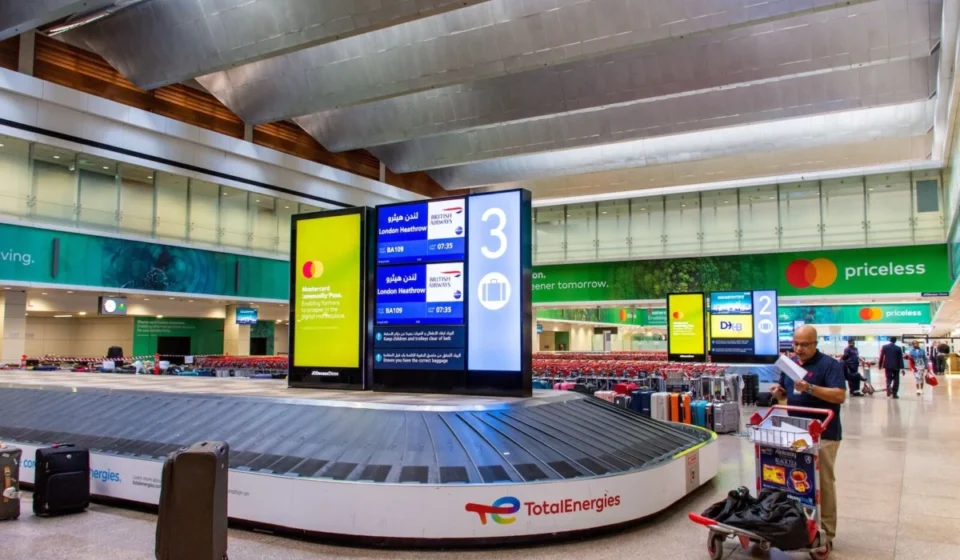
In the modern era of air travel, few experiences are as universally frustrating as the "baggage carousel shuffle." You deplane, weary from a flight, and immediately stand in a stagnant crowd, eyes glued to a black rubber belt, waiting for your suitcase to appear. For decades, airport executives have wrestled with how to mitigate this specific brand of passenger dissatisfaction. According to a persistent piece of industry lore, one major hub—Houston’s George Bush Intercontinental Airport—found a solution that had nothing to do with speed and everything to do with human psychology.
The claim, which has recently seen a resurgence on platforms like TikTok via the account @designsecretsss, suggests that the airport was plagued by complaints regarding baggage wait times. Despite hiring more staff to speed up the unloading process, the complaints persisted. The breakthrough came not from mechanical efficiency, but from a spatial intervention: moving the baggage claim terminals to the far side of the airport. By forcing passengers to endure a long walk from the gate to the carousel, the airport ensured that by the time travelers arrived, their bags were already waiting for them. The result, according to the anecdote, was a total cessation of complaints.
The Chronology of an Urban Legend
While this story has gained new life in the social media age, it is far from a new discovery. The narrative has been circulating in various forms since at least 2012, most notably appearing in a New York Times opinion piece titled "Why Waiting in Line Is Torture." In that essay, author Alex Stone explored the concept of "queuing psychology," using the airport example to illustrate the disparity between objective time and perceived time.
Over the last decade, the story has traveled through the ecosystems of psychology blogs, urban planning forums, and eventually into the short-form video loops of TikTok. With each retelling, the specific numbers have morphed. Some versions of the tale claim the walk was increased from one minute to six; others suggest a 12-minute round trip for those who wished to file a complaint at a customer service desk. Despite these shifting details, the core narrative remains consistent: the "farthest carousel" strategy serves as the ultimate masterclass in managing passenger expectations.
The Science of "Occupied Time"
The success of this design strategy lies in a fundamental principle of operations research: occupied time feels significantly shorter than unoccupied time.
Researchers at institutions like MIT have long analyzed the nature of queues to understand how humans perceive the passage of time. The data suggests that uncertainty, boredom, and a lack of visible progress are the primary drivers of frustration. When a passenger stands motionless at a carousel, they are experiencing "unoccupied time." They are trapped in a state of passive waiting, where their only activity is the repetitive monitoring of a belt. This creates a psychological vacuum that makes every second feel agonizingly slow.
Conversely, walking from the gate to the baggage claim constitutes "occupied time." Even though the passenger is moving toward a goal—getting their bags and leaving the airport—they are engaged in physical activity. Because they are distracted by navigation, navigating crowds, and moving toward a destination, their brain is less focused on the absolute duration of the wait. By the time they reach the carousel, the internal clock has been "reset" by the exertion of the walk, making the arrival of the luggage feel like a reward rather than the end of a delay.
Investigating the Evidence
Despite the ubiquity of this story, verifying its origins has proven to be an exercise in frustration. There is no official record, dated memo, or public case study confirming that Houston’s George Bush Intercontinental Airport—or any other major hub—deliberately redesigned its terminal layout solely to mitigate baggage complaints through walking distances.
The detail that "complaints dropped to zero" is widely viewed by industry experts as a narrative flourish—a hyperbolic ending designed to give the story a sense of closure. When approached for comment on the veracity of these claims, representatives from major airlines, including United and American, along with officials from the Houston airport system, have remained silent. This lack of official confirmation suggests that the story functions less as a verified case study and more as a piece of "design folklore"—a widely accepted narrative that, while potentially lacking in historical precision, accurately reflects the psychological principles used in modern infrastructure planning.
The Reality of Baggage Benchmarks
Beyond the folklore, the logistics of airport baggage handling are governed by a complex set of operational pressures. Currently, there is no federal mandate in the United States that dictates exactly how quickly an airline must deliver luggage to a carousel. However, the industry operates on an informal, self-imposed benchmark: roughly 20 minutes from the moment the aircraft parks at the gate.
This benchmark is rarely a guarantee. Alaska Airlines stands out as a notable exception, having turned the 20-minute target into a formal service commitment. For their elite-status flyers, if the bags do not arrive at the carousel within 20 minutes of the plane reaching the gate, the airline provides compensation in the form of frequent flyer points or discount codes.
For the rest of the industry, however, wait times are highly variable. The efficiency of a baggage delivery system is dictated by several factors:
- Airport Scale: Small regional airports with a few narrow-body aircraft can easily maintain 10-to-15-minute windows.
- Hub Complexity: Large international hubs face significant challenges. The logistics of offloading wide-body aircraft, managing thousands of connecting bags, and navigating massive tarmac distances often push wait times to 30 or 40 minutes, particularly during peak travel hours.
- The "Head Start" Effect: This is where the "farthest carousel" trick finds its practical utility. Regardless of whether it was a design choice or a consequence of architectural constraints, a long walk provides ground crews with a critical 5-to-10-minute head start. By the time the passenger completes the trek through the terminal, the baggage handlers have had enough time to unload the first wave of suitcases, effectively closing the "expectation gap" between the passenger’s arrival and the bag’s appearance.
The Broader Implications for Infrastructure Design
The endurance of this story speaks to a larger truth about how we design the spaces we inhabit. In an era that prioritizes instant gratification, the challenge for architects and urban planners is not just to make systems faster, but to make them more "palatable."
The lesson of the baggage claim is being applied in various sectors of public life:
- Disney Parks: The legendary "switchback" lines in theme parks are designed to ensure guests are constantly moving. Even if the line is long, the perception of progress created by the winding path makes the wait feel significantly shorter than standing in a single, straight, motionless queue.
- Elevator Banks: Modern office buildings often install mirrors near elevator banks. While the stated goal is to provide a service, studies have shown that giving people something to look at—or simply something to do—reduces the perceived wait time by up to 30%.
- Digital Interfaces: Software companies use progress bars, even when the underlying process is finished, because the presence of a visual indicator provides the user with a sense of control and progress, reducing the urge to close the application or report a "freeze."
Conclusion: A Well-Traveled Myth
While we may never confirm the specific origins of the Houston airport story, its persistence is proof of its psychological resonance. Whether the airport intentionally moved the carousels to appease frustrated travelers or whether it was simply a byproduct of terminal expansion, the result is the same: the walk serves as a buffer.
As travelers, we are subject to these nudges every day. When we walk through an airport, we are not just moving through a transit hub; we are moving through a carefully curated sequence of psychological interventions designed to keep us calm, occupied, and, above all, patient. So the next time you find yourself on a ten-minute trek to the baggage claim, take comfort in the fact that you aren’t just walking to your suitcase—you are participating in a grand experiment in behavioral design. The walk may feel like an inconvenience, but for the airport, it is the most effective tool in their kit for ensuring that when you finally do reach that carousel, your bags are already there waiting for you.