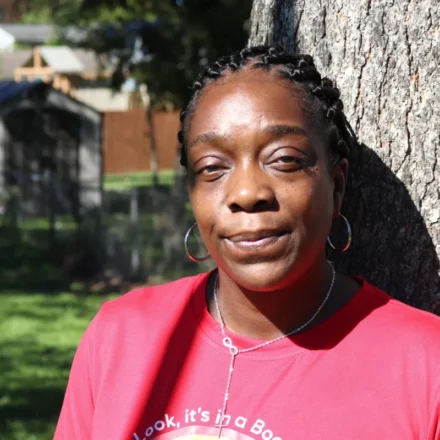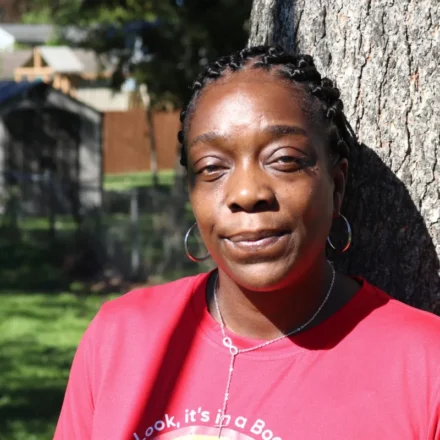



































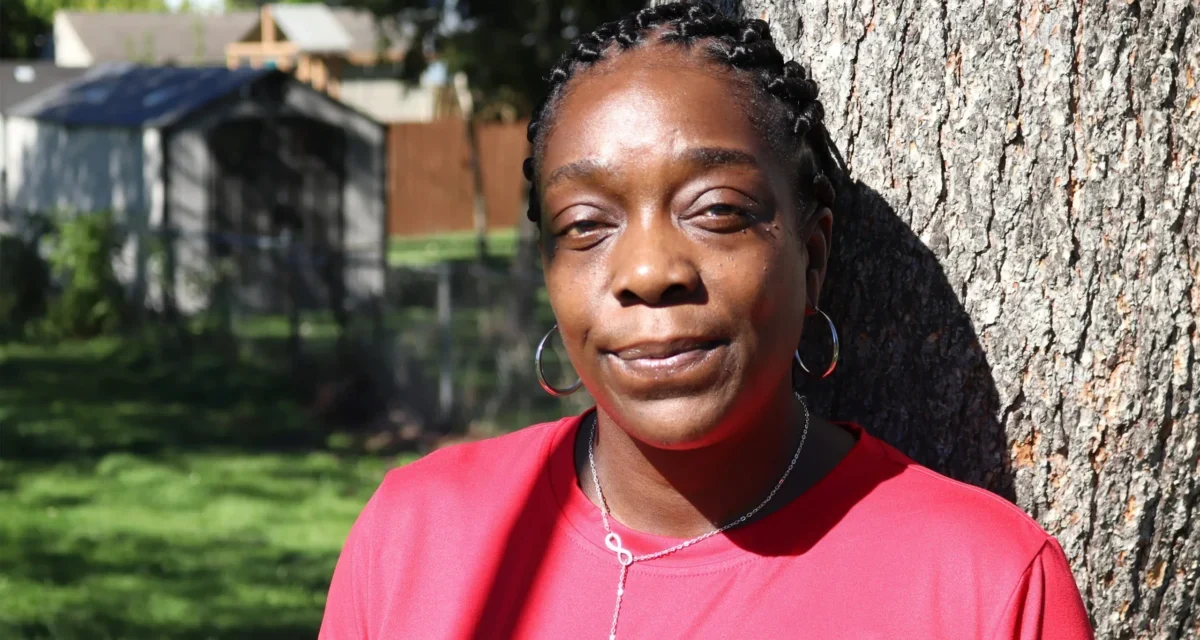


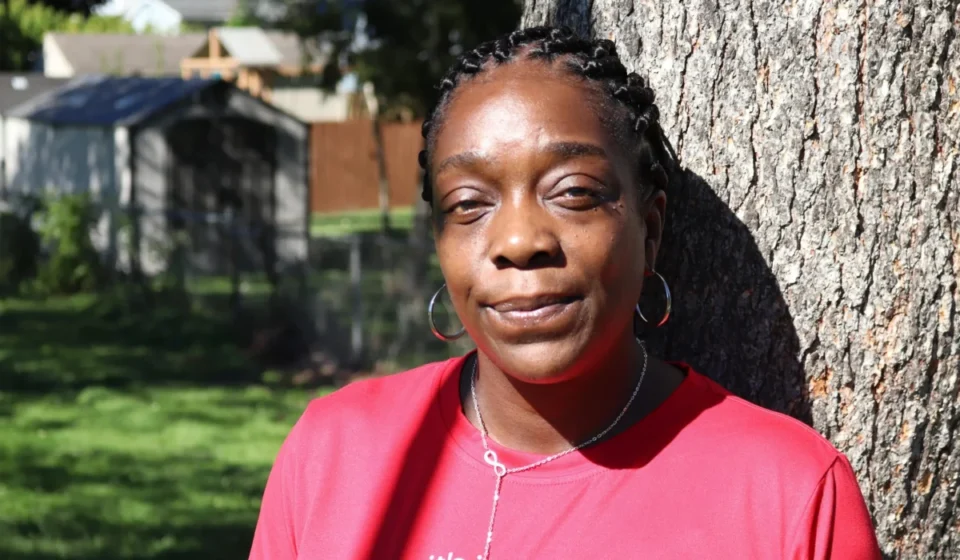

LANSING, Mich. — For Christina Starks-Clay, a childhood special education paraprofessional, the American healthcare system is not an abstract political debate—it is a series of cashier’s checks and lingering invoices. Standing in a sweltering line at a downtown Lansing town hall this September, Starks-Clay pulled out her smartphone to show a screenshot of a $1,000 payment she had just processed at her bank. It was a partial settlement for her son’s mounting dental bills. Even with private insurance, she remained in the red for $389. Her own routine dental cleaning, performed just weeks prior, had cost $600.
"I’m standing there telling myself, ‘Tina, you were in a position to do this today,’" she recalled, her voice heavy with the exhaustion of the working class. "A lot of people couldn’t do what I had to do today. I couldn’t do it. But I did it. So, I need to hear from these candidates: How are you going to make this better for everyone?"
Starks-Clay is one of thousands of Michiganders turning to U.S. Senate candidate Abdul El-Sayed, whose campaign has become the focal point of the state’s movement for "Medicare for All." As the cost of living climbs and the safety net frays, the rallying cry—"Money out of politics! Money in your pocket! Medicare for All!"—has moved from the fringes of progressive activism to the center of the midterm election discourse.
The Anatomy of a Healthcare Crisis: Main Facts
The urgency surrounding the healthcare debate is driven by a stark reality: fewer than half of all Americans now report that they can afford their healthcare costs, according to recent Gallup polling. In Michigan, this has manifested in a palpable sense of abandonment.
The legislative landscape has shifted dramatically. Following the passage of the Affordable Care Act (ACA) in 2010, the nation saw a historic drop in the uninsured rate. However, recent years have marked a period of regression. In Michigan, the expiration of enhanced tax subsidies led to a 20% average spike in individual marketplace insurance premiums. Furthermore, projections from the Urban Institute suggest that up to 355,000 Michiganders could lose Medicaid coverage by 2028 due to recent policy shifts and legislative cuts.
For many, the system is no longer a safety net; it is a source of financial trauma. At the Lansing town hall, attendees shared stories of medical debt that spanned generations. One professor emeritus from Michigan State University expressed deep anxiety over his grandchildren’s future, noting that his adult children were struggling to meet a $9,000 insurance deductible. Healthcare workers in the crowd reported a rising trend of patients choosing between life-sustaining medications and basic nutrition.
Chronology: From Legislative Progress to Policy Regression
To understand the current volatility, one must look at the trajectory of American healthcare over the last fifteen years:
- 2010: The Affordable Care Act (ACA) is signed into law, effectively banning insurers from denying coverage based on pre-existing conditions and significantly lowering the uninsured rate.
- 2010–2020: Forty states and the District of Columbia expand Medicaid, providing a crucial lifeline to low-income residents and those with disabilities.
- 2020–2024: The momentum begins to stall. With the introduction of the "One Big Beautiful Bill Act" (OBBBA) and subsequent policy shifts under the Trump administration, subsidies that supported the ACA marketplace are allowed to expire.
- 2025–2028: Michigan becomes a focal point for the consequences of these changes. As premiums rise and Medicaid enrollment drops, the political divide over healthcare deepens, leading to the current intensity of the midterm election cycle.
Supporting Data: The Numbers Behind the Narrative
The debate over Medicare for All is fueled by conflicting economic forecasts and public sentiment. A new KFF poll reveals that two-thirds of Americans now support expanding the government health program. However, "Medicare for All" remains a fluid term, with public support fluctuating wildly depending on how the policy is explained to voters.
The economic argument is equally polarized. Opponents, including Republican Senate candidate Mike Rogers, cite the massive price tag of a single-payer system, often pointing to estimates that such a program would cost roughly $4 trillion per year. Conversely, proponents highlight a recent Yale University preprint study, which estimated that while the implementation cost would be $4.2 trillion, the transition would save the nation $1 trillion in total healthcare spending by eliminating administrative waste and lowering drug prices.
The disconnect between these figures and the lived experience of the voter is where the political battle is won or lost. As Ashley Kirzinger, director of survey methodology at KFF, notes: "When we ask people what they want to hear from candidates in regard to healthcare, it’s a plan to bring down costs. That is the singular, non-negotiable demand."
Official Responses and Political Posturing
The response from the political establishment has been as varied as the electorate’s fears. Abdul El-Sayed, a physician and former public health official for the city of Detroit, has remained steadfast in his support for Medicare for All since his 2018 gubernatorial bid. His campaign argues that the current system is not broken—it is functioning exactly as designed to prioritize profit over patient care.
Republican challenger Mike Rogers has taken a different approach, releasing a healthcare platform that emphasizes market-based solutions. At a recent press conference, Rogers characterized Medicare for All as a "government takeover" that would inevitably strip millions of their private coverage. "If the government is going to give you something, they have to take it away from someone else," Rogers stated. "People pay for that."
The strategy from the GOP side is clear: leverage the fear of systemic disruption. Jonathan Oberlander, a professor at the University of North Carolina-Chapel Hill, argues that this is a highly effective political tactic. "It doesn’t matter if the fears that they’re spreading are factually precise," Oberlander said. "Politically, what matters is if they can scare people. For a voter who has private insurance and is terrified of losing it, the word ‘disruption’ is a potent motivator."
Implications: The Long Road to Reform
The path toward a single-payer system remains fraught with structural, financial, and political obstacles. Even if candidates like El-Sayed were to secure victory, the institutional barriers to a complete overhaul of the U.S. health system are formidable.
The influence of the healthcare and insurance lobbies, combined with a deeply divided Congress, suggests that even with a strong mandate, change will be incremental. This reality has left many voters feeling cynical. Thomas "Jermaine" Carey, a Detroit-based activist, voiced a sentiment common among those who have spent years fighting for policy shifts.
"Medicare for All sounds good on a stage," Carey said during a town hall. "But do I believe it? It’s still America. You still have super PACs, the lobbyists that control everything. I’ve been told ‘change is coming’ before."
For people like Cindy Lou Coolich, a retiree who lost her horse farm and her savings after a bout of sepsis left her disabled, the debate is secondary to the immediate, brutal experience of the status quo. She survives now on $900 a month from Social Security, a situation she describes as a "saving grace" only because it was made possible by the death of her ex-husband.
"It’s not right that someone had to die for me to have access to care," Coolich said. "That’s not a healthcare system. That’s a lottery."
As the election approaches, the discourse in Michigan reflects a nation at a crossroads. The demand for universal coverage is at an all-time high, but the political mechanics to achieve it remain as elusive as ever. For voters in Lansing and beyond, the upcoming election is not just about choosing a representative; it is about deciding whether the American healthcare system will continue to be a source of financial ruin, or if it will finally evolve to provide the security that citizens like Christina Starks-Clay are fighting for.
The promise of Medicare for All remains a powerful symbol of hope for a system that is failing. Whether it can transcend the cycle of political fear-mongering and corporate influence to become reality is the central, unanswered question of this generation.