























































The vision of a humanoid robot seamlessly navigating a factory floor, performing delicate assembly tasks alongside human workers, has long been a staple of science fiction. For years, the concept remained tethered to the experimental labs of robotics pioneers like Boston Dynamics and the ambitious, headline-grabbing prototypes teased by Tesla’s Elon Musk. However, the narrative has shifted from theoretical potential to a high-stakes industrial race. Today, a new cohort of heavyweights is entering the fray: global automakers, with a particular surge of interest from China.
The promise of "embodied AI"—the integration of sophisticated artificial intelligence directly into physical, humanoid hardware—has reached a tipping point. As Large Language Models (LLMs) provide a framework for robots to learn, adapt, and reason in complex environments, the automotive sector sees an opportunity to solve two problems at once: increasing manufacturing efficiency and diversifying revenue streams in an era of razor-thin profit margins on electric vehicles (EVs).
The Main Facts: A New Industrial Gold Rush
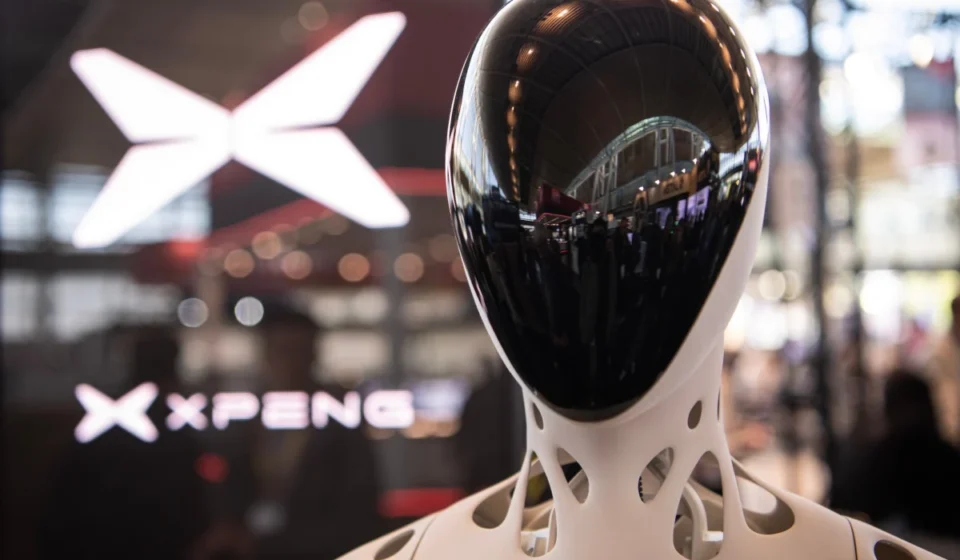
The robotics landscape is currently defined by a massive influx of capital and a desperate scramble for technical dominance. The most significant indicator of this shift came earlier this week, when Xpeng’s robotics unit secured a staggering $900 million in a single-round private financing, pushing its post-money valuation north of $6.3 billion.
This funding, led by IDG Capital with participation from heavy hitters like Tencent, Alibaba, and Gaorong Ventures, marks the largest private financing round in China’s burgeoning embodied AI sector. This is not merely a research project; it is a clear-eyed commercial strategy. Xpeng has pinned its hopes on "Iron," a humanoid robot designed specifically for scalable, commercial deployment.
The momentum extends far beyond Xpeng. The entire Chinese automotive landscape is pivoting toward robotics. AiMOGA, the robotics arm of Chery Automobile, is already preparing for an IPO, while BYD has unveiled its own humanoid, "Xiao Di." Meanwhile, industry giants such as Changan, GAC, Li Auto, SAIC, and Seres are actively developing their own robotic workforces.
Chronology: From Lab Experiments to Factory Floors
To understand the current velocity of this sector, one must look at the progression of technology and strategy over the past few years:
- The Early Hype (2020–2023): The era was dominated by viral videos of Boston Dynamics’ Atlas performing parkour and Tesla’s early, somewhat rudimentary iterations of the Optimus robot. During this period, the technology was largely viewed as a proof-of-concept rather than an industrial utility.
- The AI Breakthrough (2024–2025): The integration of transformer-based AI models into robotics changed the game. Suddenly, robots were no longer just executing pre-programmed code; they were learning from observation, mimicking human movement, and adapting to task variation in real-time.
- The Strategic Pivot (2025–2026): Automakers realized that their existing manufacturing expertise—chassis design, motor control, and mass-scale production—provided a significant head start.
- November 2025: Rivian creates "Mind Robotics," a spinout focused on non-humanoid automation, signaling that while the goal is automation, the form factor is still under debate.
- January 2026: Mobileye acquires Mentee Robotics for $900 million, underscoring the massive premiums being paid for AI-ready robotic startups.
- Mid-2026: Hyundai announces plans to deploy Boston Dynamics’ next-gen Atlas in its Georgia factory, backed by a partnership with Google DeepMind. This represents the first major real-world implementation of advanced humanoid robotics in a high-volume automotive production environment.
Supporting Data: Why the Shift to Robotics?
The economics of the automotive industry are driving this transition. As Michael Dunne, CEO of the advisory firm Dunne Insights, notes, the traditional automotive model is facing a "near-horizon" crisis of profitability.
"He [He Xiaopeng] sees razor-thin profit in cars on the near horizon. Robots look much more promising," Dunne explained. This assessment is shared by the leadership of Xpeng; founder He Xiaopeng and co-president Brian Gu have demonstrated their confidence by personally investing $100 million into their own company’s robotics unit.
The competitive landscape is a battle of two distinct advantages:
- The Manufacturing Edge: Traditional automakers have the supply chains, the mechanical engineering talent, and the factory infrastructure to produce hardware at scale. This is where companies like Xpeng, Hyundai, and BYD hold an advantage over pure-play robotics startups.
- The AI Edge: The primary hurdle remains software. As Dunne puts it, "They have all the hardware to get the job done. The question is if they can catch Tesla on the AI side of the equation." Tesla’s massive head start in neural networks, collected from millions of self-driving vehicles, gives them a unique data pipeline that few other companies can match.
Official Responses and Strategic Stakes
The industry’s response to the rise of humanoid robotics has been one of aggressive integration. Hyundai’s "Robot Metaplant Application Center," opening this year, serves as the blueprint for how this transition will function. By teaching robots how to map human movements—such as specific lifting, turning, and assembly sequences—Hyundai is effectively creating a library of "digital muscles" that can be deployed across its global manufacturing network.
The rationale behind these investments is twofold:
- Operational Resilience: Robots can operate 24/7 without the fatigue or safety risks associated with high-intensity manual labor.
- Scalability: Once a task is learned by one robot, the "brain" of that task can be uploaded to thousands of others, creating an instantaneous workforce expansion.
However, not all industry leaders are convinced that the humanoid form factor is the end-all-be-all. Rivian’s approach, which favors functional automation over mimicking human anatomy, highlights a persistent debate: Is it better to build a robot that looks like a human to fit into a human-designed world, or to redesign the factory to accommodate specialized, non-humanoid machines?
Implications: A Fundamental Economic Shift
The rise of the humanoid robot signals a potential shift in the global labor economy. If these companies succeed in achieving commercial scale, the "factory of the future" will look radically different.
1. The Death of the "Razor-Thin" Margin
By replacing high-cost human labor in repetitive, dangerous, or high-precision tasks with humanoid units, automakers aim to stabilize their production costs. If robots can operate at a fraction of the cost of human labor once development costs are amortized, the automotive sector could see a return to higher profit margins.
2. The AI Arms Race
The convergence of the automotive industry and the AI industry is nearly complete. We are no longer just looking at companies that build cars; we are looking at technology platforms that happen to produce vehicles. The companies that win will be those that successfully marry the physical reliability of heavy industry with the cognitive flexibility of modern LLMs.
3. Regulatory and Social Challenges
As humanoid robots move from controlled laboratory settings into the public or semi-public sphere of factories and distribution centers, the regulatory landscape remains largely uncharted. Issues of workplace safety, liability in the event of accidents, and the inevitable displacement of traditional labor will likely become major policy topics in the coming years.
Conclusion: The Horizon
The race to build the functional humanoid is officially on. With the backing of billions in capital, the manufacturing might of the global automotive sector, and the rapid evolution of generative AI, the transition from "hyped-up prototype" to "essential factory worker" is likely to accelerate throughout the remainder of the decade.
Whether it is Xpeng’s Iron, Boston Dynamics’ Atlas, or a dark-horse competitor, the successful deployment of these machines will mark one of the most significant industrial shifts since the introduction of the assembly line itself. The automakers are no longer just building machines for people to drive; they are building machines that can drive the industry forward.