


























































Executive Summary: A Record-Breaking Farewell
In what marked his 19th and final earnings call as Chief Executive Officer, Tim Cook presided over a fiscal third quarter of 2026 that perfectly encapsulated his tenure: record-shattering financial performance tempered by the complex, high-stakes realities of global supply chain management. Apple reported a staggering $109.4 billion in revenue for the quarter ending in June, a 16% year-over-year increase, resulting in a net profit of $29.8 billion.
Yet, despite these historic figures, the mood on Wall Street was tempered by caution. Apple shares dipped approximately 9% in mid-day trading following the announcement. The market’s reaction stems from a paradox that defined the quarter: Apple is selling products faster than it can build them. As Cook prepares to pass the torch to incoming CEO John Ternus in September, the company finds itself grappling with a "demand forecast mishap" and a memory-pricing environment that Cook described as a "100-year flood."
Chronology: The Last Quarter of an Era
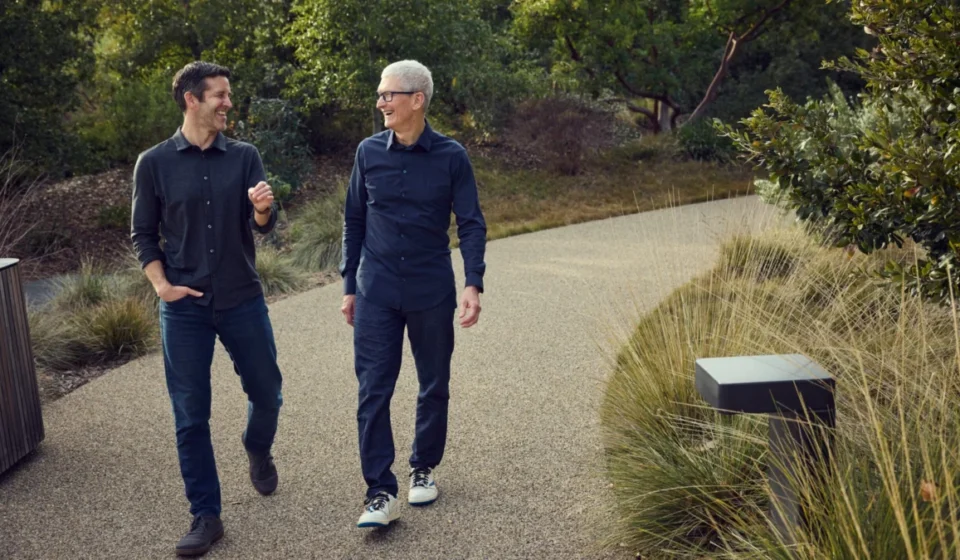
The transition of power at Apple is perhaps the most significant leadership change in the tech industry since Steve Jobs handed the reins to Cook in 2011. The timeline of this transition is meticulously orchestrated:
- July 31, 2026: Apple releases its Q3 2026 financial results, confirming a record June quarter.
- The Earnings Call: Tim Cook delivers his final remarks to analysts, introducing his successor, John Ternus, to the financial community.
- Late August 2026: Final operational adjustments under Cook’s direct supervision conclude.
- September 1, 2026: John Ternus officially assumes the role of Apple CEO, marking the beginning of the "post-Cook" era.
This transition period has been characterized by both internal stability and external market volatility, with the company’s recent performance providing a massive, albeit challenging, foundation for the incoming leadership.
Supporting Data: The Anatomy of the Revenue Surge
The strength of Apple’s Q3 performance was not uniform, revealing a company in the midst of a significant hardware pivot.
The Mac’s Remarkable Resurgence
The standout story of the quarter was the Mac, which saw an astonishing 28.7% jump in sales. This growth is being driven by a powerful "halo effect" where the integration of the iPhone ecosystem, combined with the successful launch of the MacBook Neo and the refreshed MacBook Pro line, is winning over a new demographic.
CFO Kevan Parekh highlighted that roughly 50% of large-scale Mac acquisitions in the US education sector represented "switchers"—users abandoning Windows PCs and Chromebooks for Apple’s hardware. Furthermore, corporate adoption is accelerating, evidenced by Morgan Stanley’s deployment of 20,000 iPhones as part of a strategic shift toward managed, corporate-owned device fleets.
Gross Margins and the Memory "Flood"
While revenue grew, Apple’s gross margin trajectory has become a point of contention. The reported gross margin was 50.1%, but this figure was artificially buoyed by a two-point contribution from tariff refunds. Excluding these, the sequential adjusted gross margin fell from 49.3% in March to 48.1% in June.
The culprit is the DRAM market. Cook’s description of a "100-year flood" in memory pricing underscores a structural weakness: Apple relies on only three primary DRAM suppliers. This lack of supply chain diversity forced Apple to raise prices on iPads and Macs, yet even those price hikes have not fully offset the rising costs of components.
Official Responses and Strategic Pivot Points
During the call, the tension between Apple’s immense popularity and its ability to deliver hardware was palpable.
The Demand Forecasting Gap
"It’s not a regular supply issue. It’s a demand forecast issue, to be candid," Cook admitted. "The iPhone and the Mac are both doing remarkably better than we thought they would."

This acknowledgment is critical. By underestimating demand, Apple now faces a situation where the supply chain lacks the flexibility to scale production quickly. Consequently, the company has warned investors that the impact of supply constraints will likely increase in the coming quarters, potentially dampening the momentum of the holiday season.
The Services Segment: A Complex Landscape
Apple’s services revenue passed the $30 billion mark for the first time in a June quarter. While this reflects success in cloud services and payment platforms, the segment is under pressure. Currency fluctuations, economic volatility, and a softening mobile gaming market have all acted as headwinds. Additionally, Apple acknowledged that regulatory changes to the App Store business model are beginning to show a quantifiable, negative impact on revenue—a trend that investors are watching closely.
Implications: The Road Ahead for John Ternus
As John Ternus prepares to take the helm, his agenda is already being defined by three major pillars: AI integration, the new leasing economy, and supply chain diversification.
The AI Challenge
Apple’s "Siri AI" remains a polarizing subject. While Cook remains "off the charts excited," the technology faces significant regulatory hurdles in the EU and China. While there is progress in China via partnerships with Alibaba and Baidu, the monetization of AI remains speculative. Cook hinted that "heavy" users of Siri AI may eventually be asked to pay for an upgraded iCloud+ tier to cover the computational costs, signaling that Apple intends to turn AI into a distinct, high-margin service revenue stream.
The "Apple-as-a-Service" Model
The recently announced Klarna product leasing deal is a strategic masterstroke designed to stabilize revenue. By allowing 1.5 billion potential users to pay for devices on a monthly basis, Apple aims to decouple hardware ownership from the initial purchase price. This could effectively shorten replacement cycles and ensure a predictable, recurring income stream that is less sensitive to the macroeconomic downturns that currently plague the one-off hardware purchase model.
Analyst Perspectives and Market Sentiment
Market analysts are divided on the long-term outlook. Morgan Stanley’s Erik Woodring expressed concern that Apple’s legendary control over its supply chain is being tested, questioning whether AI will provide a tangible boost to the bottom line or remain a costly R&D sinkhole. Conversely, analysts at Wells Fargo remain bullish, suggesting that despite current supply-side bottlenecks, the underlying consumer demand is strong enough to carry the company through the transition to the new 18 Pro series of devices.
However, speculation from GF Securities’ Jeff Pu suggests a potential hurdle: the next generation of iPhones (the 18 Pro) may see a price increase of roughly $300. While the Klarna leasing deal may mitigate the "sticker shock" for consumers, it remains to be seen if the market will absorb such a significant price hike in an environment where Apple’s supply is already constrained.
Conclusion: A Legacy Defined
Tim Cook leaves Apple in a position of unprecedented financial strength, yet he also leaves behind a set of structural challenges that his successor must navigate with precision. The transition is described as "seamless," and the company is undeniably in better shape than when Cook took over in 2011.
However, the "100-year flood" of memory costs, the regulatory pressures on the App Store, and the complex challenge of scaling AI services suggest that the next era of Apple will be defined by how it manages these external pressures. As shareholders reflect on the record-breaking quarter, the primary question is no longer about whether Apple can generate demand—it is whether it can navigate the complexities of a world where its own popularity is occasionally its greatest obstacle.
John Ternus inherits not just a company, but a machine that is running at full capacity. His ability to diversify the supply chain and successfully transition the company to an AI-first, service-heavy model will ultimately determine if the record-breaking quarters of the Cook era were a peak, or merely a preamble to the next phase of Apple’s evolution.