
























































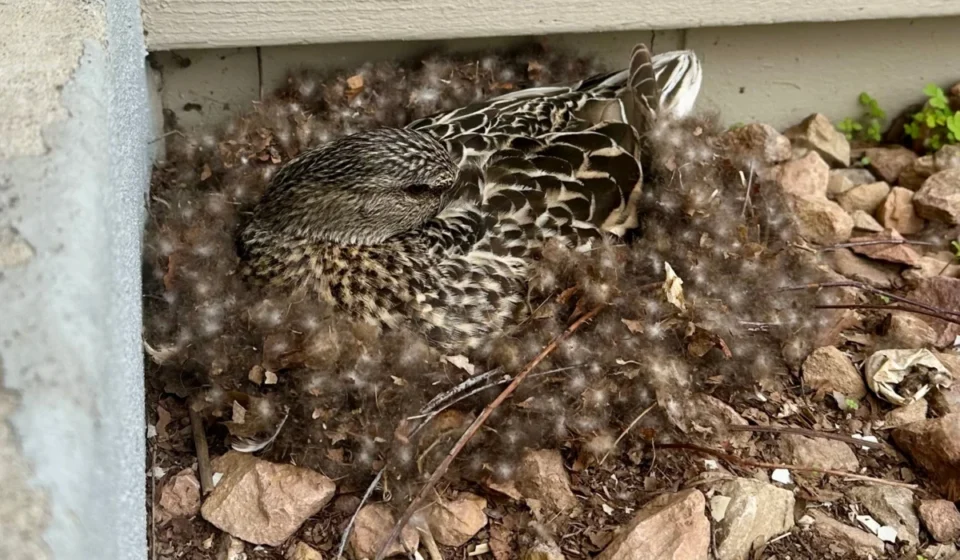

As the frost recedes and the landscape of the upper Midwest transforms into a vibrant canvas of green, the arrival of spring signals more than just the return of warmer weather. It marks the commencement of the nesting and birthing season for countless wild species. For Caitlin Deal, a resident of a quiet, tree-lined suburb in Eagan, Minnesota, this seasonal cycle has become an intimate family tradition. For four consecutive years, a female mallard—affectionately dubbed "Martha"—has returned to the same modest bush near the Deal family’s front door to incubate her clutch of eggs.
For Deal and her four-year-old son, Owen, whose first spoken word was "Duck," this recurring visitation has provided a front-row seat to the wonders of the natural world. It serves as a poignant, living lesson in environmental stewardship and the delicate art of human-wildlife coexistence. However, as suburban development continues to push into natural habitats, such encounters are becoming increasingly common, prompting experts to issue guidance on how to manage these delicate interactions safely and ethically.
The Seasonal Surge: Understanding the Nesting Phenomenon
Spring is an inherently busy time for wildlife. From the subtle movements of songbirds to the hidden dens of mammals and the aquatic activity of reptiles, the ecosystem is in a state of rapid reproduction. While these animals are biologically programmed to seek out secure environments to bear their young, the expansion of human infrastructure often places these natural nurseries in conflict with residential living.
Experts at organizations like the Wildlife Rehabilitation Center of Minnesota (WRCM) emphasize that while finding a nest in a gutter, under an air conditioning unit, or nestled within a decorative shrub can be startling, it is rarely cause for alarm.
"My two biggest pieces of advice are: Stay away from the nest or the family as much as possible, and stay curious," says Brittney Yohannes, a spokesperson for the WRCM. This philosophy of "benign neglect" is the cornerstone of modern wildlife management. By minimizing human interference, homeowners can allow the natural lifecycle to proceed without causing unnecessary stress or abandonment of the young.
The Chronology of Coexistence
The story of Martha the mallard follows a predictable, seasonal timeline that mirrors the experiences of many suburban homeowners.
- Early Spring (March-April): As temperatures climb, female ducks begin scouting for nesting sites. These locations are chosen for protection from predators and proximity to water sources.
- Incubation (April-May): Once the eggs are laid, the female enters a period of intense incubation, lasting approximately 28 to 30 days. During this time, the hen is highly vulnerable and relies on her camouflage and the relative safety of the chosen site.
- The Hatch (Mid-May): Around Mother’s Day, the eggs hatch. Within a day or two, the ducklings are ready to travel. This is a critical period where the mother leads her brood to the nearest body of water.
- Departure: Once the ducklings have left the nest, the site is abandoned. The cycle concludes, leaving behind a brief but impactful memory for the human observers.
For the Deal family, the presence of the duck required a modest change in their household routine. Because they own a dog named Piper—an animal with a high prey drive—the family had to be vigilant. They kept Piper on a leash during the month-long incubation period, ensuring the mallard remained undisturbed. This level of mindfulness is exactly what experts suggest is required to turn a potential nuisance into a successful wildlife observation.

The Myth of Abandonment: When to Intervene
One of the most common mistakes made by well-meaning citizens is the assumption that a baby animal found alone is an orphan. This is rarely the case, particularly with deer fawns.
Beth Quillian, a spokesperson for the Oregon Department of Fish and Wildlife, notes that does frequently leave their fawns hidden in tall grass or near man-made structures for hours at a time while they forage. "That is to protect the fawn," Quillian explains. "The doe will come back to that fawn; that is natural and normal."
The same principle applies to rabbits. In the Midwest, rabbits are incredibly prolific, often nesting in the middle of open lawns. The mother rabbit typically visits the nest only at dawn and dusk to feed the kits, leaving them unattended for the majority of the day to avoid attracting predators. If a homeowner finds a rabbit nest, they can implement simple temporary measures, such as placing a laundry basket over the nest during the day to protect it from pets, and removing it at night to allow the mother access.
Protective Instincts: Recognizing the Risks
While most backyard wildlife is timid, not all species are docile. The transition from observer to participant requires a keen understanding of animal behavior. Wildlife experts caution that while small birds and mammals are generally harmless, larger species can be dangerous when protecting their young.
John Coluccy, a researcher with the conservation group Ducks Unlimited, warns that waterfowl like Canada geese and swans possess a fierce defensive instinct. "They’re very, very aggressive," Coluccy says. "They’re long-lived and they protect their reproductive investment very vigorously." A territorial goose can pose a genuine physical threat, capable of causing injury to unsuspecting pedestrians.
The same caution applies to larger mammals. In the Pacific Northwest, residents may encounter cow elk with calves. Weighing upwards of 500 pounds, a protective mother elk is a formidable force. Similarly, in Florida, alligator nesting season—which runs from April to June—requires strict adherence to safety protocols. Female alligators often create mounds of vegetation near water bodies and will defend these nests with extreme aggression. Keeping pets leashed and staying well away from water shorelines during these months is critical.
Technological and Mechanical Solutions
When wildlife chooses a location that is truly untenable—such as inside a boat, an attic, or under a deck—there are non-invasive ways to encourage them to relocate. Tami Vogel, executive director of the Wildlife Rehabilitation Center of Minnesota, suggests that homeowners avoid the immediate urge to hire pest control or use live traps, which can often be illegal or ineffective.

Instead, she recommends environmental modification. "If an animal has nested in an inconvenient spot, such as a shed, installing a shop lamp to flood the area with light can be highly effective," Vogel says. Many wildlife mothers prefer dark, secluded areas for their young; by introducing constant, bright light, the mother will often interpret the space as insecure and move her litter to a more suitable location within 48 hours.
Other preventative measures include:
- Exclusion: Installing heavy-gauge metal mesh to block access points under decks and sheds before the nesting season begins.
- Education: Recognizing that the period of cohabitation is temporary. Most nesting seasons last only a few weeks.
- Community Sharing: Passing on knowledge to neighbors so that the local wildlife population is treated with consistent, respectful boundaries.
Legal and Ethical Implications
It is important for residents to remember that, in many jurisdictions, wildlife is protected by state and federal laws. In the United States, the Migratory Bird Treaty Act, for instance, makes it illegal to disturb or remove the nests of most native bird species during the active season.
"Removing a nest can be illegal under federal law," notes Quillian. If a situation becomes dire or if a homeowner is unsure of the legal status of an animal, the standard protocol is to contact a local wildlife agency. These agencies serve as the primary resource for advice on how to legally and ethically manage problematic wildlife encounters.
Conclusion: A Lesson in Tolerance
The experience of the Deal family in Eagan illustrates the profound shift that occurs when we view our yards not merely as private property, but as shared habitat. By exercising patience and respecting the boundaries of the natural world, humans can derive significant educational and emotional benefits from their wild neighbors.
"It feels nice that she trusts that area, that she trusts us to be able to come back year after year," Deal says of the mallard. This sentiment captures the essence of modern wildlife management: success is not defined by how efficiently we can remove nature from our doorsteps, but by how skillfully we can create the space for it to thrive alongside us. As spring unfolds, the message from experts remains clear—observe, respect, and when in doubt, leave it alone. The beauty of the season is fleeting, and the opportunity to witness the quiet resilience of the natural world is a privilege that, with a little care, can be preserved for generations to come.