










































A Pivotal Primary Looms in Minnesota’s 2nd District: Angie Craig’s Absence Casts a Long Shadow

WASHINGTON – The political landscape of Minnesota’s 2nd Congressional District is currently a crucible of Democratic ambition, with three candidates vying to inherit the mantle of Representative Angie Craig. As the incumbent, Craig, a four-term Democrat who famously wrestled the district from Republican control, has declared her neutrality in the fiercely contested August 11 primary. Her decision not to endorse a successor, while seemingly hands-off, paradoxically casts a long and complex shadow over the race, forcing each candidate to navigate her legacy of moderation in an increasingly polarized political climate.
Craig, who has represented the district since 2019, is now setting her sights on a higher office, challenging Lieutenant Governor Peggy Flanagan for retiring Senator Tina Smith’s seat. Her strategic withdrawal from the primary endorsement process for CD-2 underscores the delicate balance she must maintain in her own statewide campaign, where alienating either moderate or progressive factions could prove costly. This leaves a vacuum in CD-2 that three distinct Democratic voices are eager to fill: former state senator Matt Little, state senator Matt Klein, and state representative Kaela Berg. Each offers a unique blend of experience and ideology, all while grappling with the defining characteristics of a district often dubbed the most "purple" in Minnesota.
The "Purple" Heart of Minnesota: CD-2’s Unique Political Landscape
Minnesota’s 2nd Congressional District is a geographical and ideological mosaic, stretching across the Twin Cities’ southern suburbs and reaching into vital rural farm areas. This diverse composition has historically made it a swing district, where electoral outcomes can pivot dramatically with national political tides and candidate appeal. Craig’s success in holding this seat for four terms since 2019 has been largely attributed to her centrist approach, a pragmatic moderation that resonated with a broad spectrum of voters, including independents and disaffected Republicans. She demonstrated an ability to bridge partisan divides, a critical skill in a district where outright ideological purity often falls short.
However, the political currents within the Democratic-Farmer-Labor (DFL) Party, particularly in the wake of significant events like "Operation Metro Surge," have shifted. This recent period, marked by heightened progressive activism and a demand for more definitive action on social and economic issues, has introduced new complexities for candidates seeking to replicate Craig’s moderate success. Voters, energized by calls for systemic change, are scrutinizing candidates’ platforms with a sharper progressive lens, potentially challenging the very blueprint that allowed Craig to thrive. The district, while currently leaning Democratic, remains highly competitive, demanding a nuanced understanding of its evolving electorate.
The Shadow of a Moderate: Angie Craig’s Complex Legacy
Angie Craig’s tenure in CD-2 is a testament to her political acumen and ability to connect with diverse constituents. Her ascent began with a hard-fought victory that flipped the district from Republican control, a feat she repeated three more times. Her moderate stance was not merely a political strategy but a reflection of her commitment to practical governance, often transcending strict party lines to deliver tangible results for her constituents. This approach broadened her appeal, allowing her to build a formidable political machine capable of raising substantial campaign funds – a testament to her widespread support. In her last bid for reelection in 2024, Craig raised an impressive $8.3 million, securing a nearly 14-percentage-point victory over Republican Joe Teirab, illustrating the formidable electoral force she became.
Yet, this very moderation, once her strength, has become a point of contention within the DFL, especially as she seeks a statewide Senate seat. Craig has faced increasing scrutiny from progressive Democrats for her voting record, which has occasionally included support for GOP-sponsored legislation. Before the transformative impact of "Operation Metro Surge" reshaped the state’s political discourse, these votes often pertained to issues such as police funding and stronger border security. While intended to appeal to the district’s more conservative-leaning segments and project a bipartisan image, these actions have since drawn the ire of the DFL’s more activist wing.
The Laken Riley Act Controversy: A Defining Moment
The most significant flashpoint in Craig’s recent political history has been her vote in favor of the Laken Riley Act. This piece of legislation proved particularly contentious, drawing sharp criticism from progressives. The act empowers the Department of Homeland Security to detain and deport noncitizens who are charged with – rather than solely arrested for or convicted of – certain offenses, including burglary, shoplifting, or assault on a law enforcement officer. For many progressive advocates, this provision represents an overreach, potentially infringing on due process and disproportionately impacting immigrant communities.
Craig has since publicly acknowledged the controversy, stating in May 2026 that she regrets her vote for the bill. This admission highlights the difficult tightrope she walks as she campaigns for Senate, attempting to assuage progressive concerns without alienating the moderate base that has been key to her past successes. The Laken Riley Act vote, in particular, has become a litmus test for some DFLers, and its shadow extends to the CD-2 primary, influencing how candidates position themselves relative to Craig’s legacy.

The Contenders: Ideological Divides and Strategic Plays
The August 11 primary presents CD-2 voters with a clear choice among three Democratic candidates, each offering a distinct vision for the district and a unique relationship to Angie Craig’s political blueprint.
Matt Little: The DFL’s Endorsed Progressive
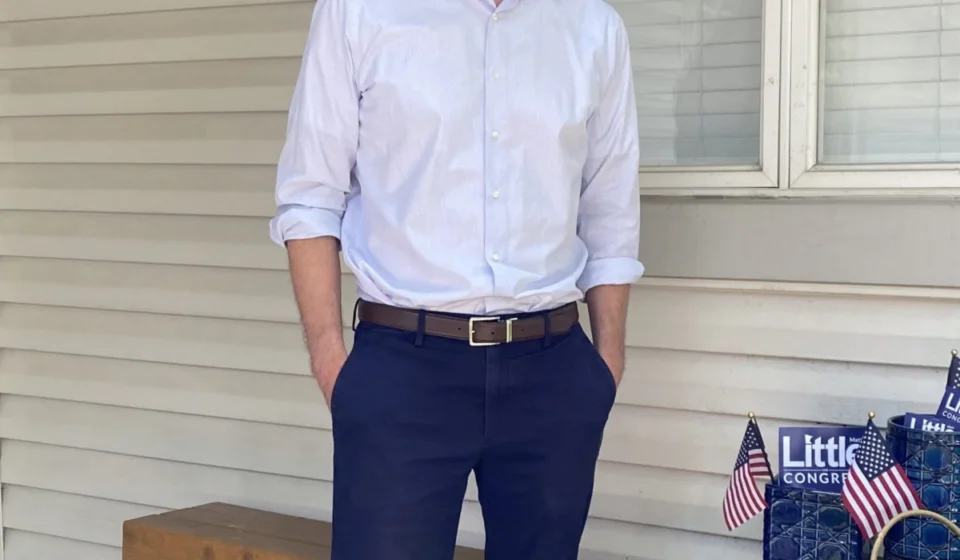
Matt Little, a former state senator and one-time mayor of Lakeville, represents the most progressive wing of the DFL primary field. His platform emphasizes robust social programs, environmental protection, and economic justice, aligning with the increasingly vocal progressive base within the party. Little has successfully secured the official DFL Party endorsement for the district, a significant advantage in mobilizing party activists and resources.
However, his progressive stance also dictates his approach to Angie Craig’s non-endorsement. Little has explicitly stated that he is not seeking Craig’s backing, a calculated move to distance himself from her more moderate record. Hamline University political science professor David Schultz observes, "Little is trying to run as the candidate furthest to the left. And he’s concerned that because of (Craig’s) support for the Laken Riley Act, progressives may not support him if he has her endorsement." This strategic avoidance underscores the deep ideological rift that the Laken Riley Act controversy has created within the DFL, particularly among its most energized progressive voters. Little’s campaign appears focused on consolidating this progressive vote, believing it to be the path to victory in the primary.
Financially, Little’s campaign has shown solid, albeit not overwhelming, strength. According to the latest Federal Election Committee (FEC) filings as of June 30, he has raised nearly $900,000. This figure includes a substantial $155,000 personal loan to his campaign, indicating a significant personal investment in his electoral prospects. While respectable, these numbers fall short of the fundraising juggernaut that Craig herself built during her time in office.
Matt Klein: The Moderate Standard-Bearer
State Senator Matt Klein, a physician at the Mayo Clinic in Rochester, positions himself as the natural successor to Angie Craig’s moderate legacy. Like Craig, Klein emphasizes a pragmatic, results-oriented approach, believing that bridging partisan divides is essential for effectively representing CD-2. He actively sought Craig’s endorsement, stating, "I would be honored to have it." His alignment with Craig’s political philosophy is deliberate, viewing it as the proven formula for success in a swing district.
Klein firmly believes that the 2nd District’s "purple" nature necessitates a moderate approach. "This is the last swing district in Minnesota," he asserts. "To hold it, you have to bridge a (partisan) divide." His strategy is predicated on appealing to a broad coalition of voters, including independents and moderate Republicans, mirroring Craig’s successful blueprint. He aims to demonstrate electability beyond the primary, emphasizing that the eventual Democratic nominee will need to pivot to the center to defeat the Republican challenger. "We need a Democrat who can win every cycle," Klein stresses, cautioning against an overly progressive primary campaign that could jeopardize the general election.
Klein’s fundraising efforts reflect a strong competitive spirit. His campaign has raised over $1 million by June 30, outstripping his progressive rivals and demonstrating significant donor confidence in his moderate message and electability. His ability to attract substantial financial backing reinforces his claim as a viable centrist candidate.
Kaela Berg: The Progressive Woman of Labor
State Representative Kaela Berg, who represents Burnsville in the Legislature and works as a flight attendant, offers another progressive voice in the primary, but with a distinct emphasis on gender and working-class solidarity. Like Klein, Berg actively sought Craig’s endorsement, expressing eagerness to highlight her close working relationship with the congresswoman on various legislative initiatives, including securing funding for critical infrastructure projects.

Berg also strategically leverages her identity as the sole woman in the race, drawing a direct line to Craig’s tenure. "I’m the only woman in the Blue Collar Brigade, and the only woman in the race," Berg states. "That matters right now. I love an ally and a great dude, but women’s voices are needed right now." This argument resonates with a significant portion of the electorate, particularly given Craig’s groundbreaking role as the district’s first openly LGBTQ+ woman in Congress. University of Minnesota political science professor Larry Jacobs notes that due to Craig’s impact, many voters in CD-2 now "view it as a female seat." This perception could be a powerful advantage for Berg.
Berg is a prominent member of the "Blue Collar Brigade," a joint fundraising initiative comprising five House candidates with strong ties to organized labor. This group, which includes firefighters, teachers, ironworkers, and union leaders from across the country, aims to empower working-class voices in Congress. Her affiliation with this movement further solidifies her progressive and labor-friendly credentials.
Her campaign has also garnered significant external support. Berg has received the backing of Emily’s List, a powerful political action committee that supports female candidates who champion abortion rights. Emily’s List provides not only financial contributions but also strategic campaign advice and has produced advertisements promoting Berg’s candidacy, significantly amplifying her message and reach.
Despite these endorsements and her unique positioning, Berg’s fundraising lags behind her male counterparts. As of June 30, her campaign had raised $355,000, indicating a tougher battle for financial resources compared to Little and Klein.
Official Responses and Expert Perspectives
Craig’s decision to remain neutral in the primary is a carefully calculated political maneuver. While she publicly states that "that choice belongs to 2nd District voters," political analysts point to a deeper strategic rationale. As David Schultz explains, endorsing a candidate carries inherent risks for Craig in her own Senate primary against Peggy Flanagan. Backing the "wrong" candidate – particularly one who alienates a significant portion of the DFL base – could cost Craig crucial votes in her statewide bid. This non-endorsement allows her to maintain a veneer of impartiality while preserving her appeal across different DFL factions.
Larry Jacobs agrees, noting that it’s "not unusual for an incumbent to avoid endorsing a possible successor. I think there’s a sense of ‘letting the voters decide.’" This narrative of empowering voters serves both as a democratic principle and a pragmatic shield for Craig.
The presence of two progressive candidates, Matt Little and Kaela Berg, introduces a significant dynamic: the potential for vote splitting. Matt Klein openly expresses his hope that this scenario will "open a path for Klein" to win the nomination. Jacobs concurs, acknowledging this as a "possible scenario." If the progressive vote is divided between Little and Berg, Klein, as the sole moderate, could consolidate a plurality of votes, securing the nomination even without a majority. This strategy is critical for Klein, whose strength lies in appealing to a broader, less ideologically rigid segment of the DFL and unaffiliated voters.
The eventual Democratic nominee will face state Senator Eric Pratt, the Republican candidate from Prior Lake, whose district encompasses much of Scott County. Klein frequently reminds voters of the necessity to pivot to the center for the general election. While analysts indicate that CD-2 currently leans Democratic, the extent of this lean remains uncertain. "The question is, ‘Can a progressive candidate win in parts of the district that are not progressive?’" Klein asks, highlighting the core challenge facing Little and Berg. Schultz, weighing in on Berg’s position, notes that while she benefits from Craig’s efforts in the district, an endorsement from Craig might "alienate the progressive voters she needs now." However, Schultz adds, "But saying, ‘Let’s keep this seat in a woman’s hand’ won’t hurt her."

The Road Ahead: Implications for CD-2 and Minnesota Politics
The August 11 primary in Minnesota’s 2nd Congressional District is more than just a contest for a House seat; it is a significant indicator of the DFL Party’s ideological direction and its strategy for maintaining control in crucial swing districts. The outcome will reveal whether a moderate, Craig-like approach still holds sway, or if the wave of progressive activism, exemplified by "Operation Metro Surge" and the backlash against votes like the Laken Riley Act, has fundamentally reshaped the electorate.
Beyond the Primary: The Challenge of Uniting the Party
Regardless of who emerges victorious from the Democratic primary, the nominee will face the immediate challenge of uniting the party’s disparate factions. A primary battle, especially one marked by ideological differences, can leave scars that are difficult to heal before the general election. The ability of the winning candidate to bring together progressive and moderate wings of the DFL will be paramount in fending off the Republican challenger, Eric Pratt, who will undoubtedly seek to exploit any lingering divisions.
Fundraising Realities: A New Era for CD-2 Campaigns
Craig’s legacy in CD-2 is also defined by her extraordinary fundraising prowess, transforming the district into one of the most expensive congressional races in the nation. Her ability to consistently raise millions of dollars was crucial to her sustained success. The current fundraising figures for the Democratic primary candidates – Little at nearly $900,000, Klein over $1 million, and Berg at $355,000 – while respectable for a primary, pale in comparison to Craig’s general election war chests. This disparity suggests that the next representative of CD-2 will need to rapidly scale up their fundraising efforts to match the financial demands of holding such a competitive seat. It also raises questions about whether the party or external PACs will step in to fill the financial void left by Craig’s departure from the district race.
The Future of the DFL in Swing Districts
The CD-2 primary is a microcosm of a larger debate within the DFL and the Democratic Party nationally: what is the optimal strategy for winning and holding swing districts? Is moderation still the key, appealing to the broadest possible electorate, or is a bolder, progressive agenda capable of energizing the base and attracting new voters? The answer from CD-2 will have significant implications for how the DFL approaches future elections in other competitive areas across Minnesota and potentially beyond.
As the August 11 primary approaches, all eyes will be on Minnesota’s 2nd Congressional District. The outcome will not only determine who will seek to represent this vital, dynamic area but will also offer profound insights into the evolving identity of the Democratic Party and the enduring power of Angie Craig’s complex political legacy. The stakes are high, not just for the candidates, but for the future direction of Minnesota politics.