























































The Digital Colosseum: How a World Cup Final Sparked a Historic 23-Million-Signature Backlash Against Argentina

1. Main Facts: An Unprecedented Wave of Global Hostility
The 2026 FIFA World Cup concluded with Spain hoisting the trophy, but the tournament’s defining off-pitch legacy may well be an unprecedented explosion of digital anger directed at the runner-up, Argentina. Within three days of the final whistle, an online campaign titled "Argentina Out" amassed an astonishing 23,316,108 signatures from 170 countries. The petition, which demanded that Argentina be permanently banned from future World Cups, fell just 1,003,073 signatures short of the Guinness World Record for the largest petition in human history.
PETITION COMPARISON (Signatures in Millions)
┌──────────────────────────────────────────────────────────┐
│ Jubilee 2000 (Debt Relief)                │ 24.32M       │
├───────────────────────────────────────────┼──────────────┤
│ "Argentina Out" (2026 World Cup Ban)      │ 23.32M       │
├───────────────────────────────────────────┼──────────────┤
│ Australian Population (Ref. Context)      │ ~26.00M      │
└───────────────────────────────────────────┴──────────────┘
The scale of this mobilization is virtually unmatched in the history of sports. To put the figure into perspective, the petition garnered nearly as many signatures as the entire population of Australia. While FIFA has no mechanism—nor any intention—to ban a member association based on an online petition, the campaign serves as a stark barometer of the deep-seated resentment that accumulated against the Argentine national team before, during, and after their 1-0 extra-time defeat to Spain.
The campaign accused FIFA and match officials of systemic bias in favor of Lionel Messi and the Argentine team, a narrative that spread rapidly across social media platforms. Although no credible evidence has been presented to support claims of match-fixing, the petition highlights a growing chasm between traditional sporting governance and the volatile, highly coordinated nature of modern online fan culture.
2. Chronology of Controversy: From Group Stages to the Post-Match Brawl
The hostility that culminated in the "Argentina Out" petition did not materialize overnight. Instead, it was the product of a steadily escalating series of controversies that spanned the entire month-long tournament.
CHRONOLOGY OF ESCALATION (2026 World Cup)
┌────────────────────────────────────────────────────────────────────────┐
│ QUARTERFINALS                                                          │
│ • Controversial refereeing decisions favor Argentina vs. Egypt.         │
│ • Allegations of racism spark international outcry.                    │
├────────────────────────────────────────────────────────────────────────┤
│ SEMIFINALS                                                             │
│ • Argentina defeats England.                                           │
│ • Players display politically charged "Las Malvinas" banner.            │
├────────────────────────────────────────────────────────────────────────┤
│ THE FINAL                                                              │
│ • 106th Minute: Ferran Torres scores for Spain.                        │
│ • Post-match: Physical altercations break out on the pitch.            │
├────────────────────────────────────────────────────────────────────────┤
│ AFTERMATH                                                              │
│ • "Argentina Out" petition launches; gains 23M+ signatures in days.    │
│ • FIFA launches formal ethics investigation into Argentine squad.      │
└────────────────────────────────────────────────────────────────────────┘
The Quarterfinal Flashpoint: Egypt vs. Argentina
The first major wave of widespread criticism occurred during Argentina’s quarterfinal match against Egypt. A series of highly contested refereeing decisions went in favor of the South American side, leading to immediate accusations of favoritism from neutral observers. The tension was further exacerbated by reports of racist chants from portions of the crowd, drawing condemnation from anti-discrimination groups and putting Argentina under an intense media spotlight.
The Semifinal Escalation: Geopolitics and England
Following their semifinal victory over England, the Argentine team became embroiled in a geopolitical dispute. During their post-match celebrations on the pitch, players and supporters displayed a banner reading "Las Malvinas son Argentinas" (The Falkland Islands are Argentine). The display re-ignited historical diplomatic tensions between the United Kingdom and Argentina, violating FIFA’s strict regulations regarding political statements during sanctioned matches and drawing formal complaints.
The Final: Spain’s Victory and the Subsequent Brawl
The tournament reached its sporting climax at the final, where Argentina faced reigning European champions Spain. After a grueling, scoreless 90 minutes of regulation play, Spain broke the deadlock in the 106th minute of extra time when forward Ferran Torres converted a clinical chance. Spain held on to secure the 1-0 victory and the World Cup title.
However, the sporting narrative was immediately overshadowed by chaotic scenes after the final whistle:
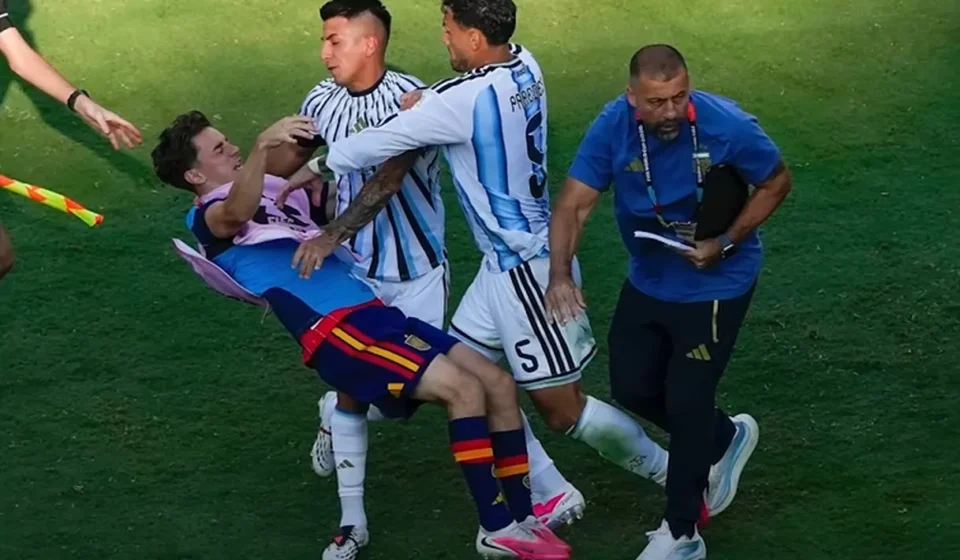
- Nahuel Molina was seen striking out at Spain captain Rodri as the Spanish players celebrated.
- Leandro Paredes became involved in a heated physical altercation with Spanish defender Eric Garcia.
- Thiago Almada and assistant coach Roberto Ayala were both prominently named in official reports regarding the post-match disorder.
These altercations provided immediate, visual ammunition for critics, transforming the pre-existing online grumblings into a coordinated, record-breaking digital campaign within hours of the match’s conclusion.
3. Supporting Data: The Anatomy of a Record-Breaking Campaign
The sheer volume of the "Argentina Out" petition warrants close statistical analysis. The current Guinness World Record for the largest petition stands at 24,319,181 signatures, established by the Jubilee 2000 campaign. Launched in the late 1990s, Jubilee 2000 was a highly organized, multi-year international movement led by coalition groups, religious organizations, and political figures aimed at canceling the crushing debts of the world’s poorest nations.
CAMPAIGN COMPARISON: MOBILIZATION VELOCITY
┌──────────────────────────┬──────────────────────────┬──────────────────────────┐
│ Campaign                 │ Time to Reach Peak       │ Core Objective           │
├──────────────────────────┼──────────────────────────┼──────────────────────────┤
│ Jubilee 2000             │ Several Years            │ Global Debt Relief       │
│ "Argentina Out"          │ Less than 7 Days         │ Ban Argentina from FIFA  │
└──────────────────────────┴──────────────────────────┴──────────────────────────┘
In contrast, the "Argentina Out" campaign gathered 23,316,108 signatures in less than a week. This rapid accumulation highlights the speed and power of modern social media algorithms, which can amplify outrage and coordinate global actions at a pace that was impossible during the analog era.
The Argentine Counter-Petition
The digital battlefield was not entirely one-sided. In response to the global backlash, Argentine supporters launched their own counter-offensive. By July 22, a petition demanding that FIFA order a complete replay of the 2026 World Cup final had gathered over 61,500 signatures, according to reports by beIN Sports.
This counter-campaign focused its grievances on the performance of Slovenian referee Slavko Vinčić, alleging that several of his key decisions during the 120-minute match unfairly disadvantaged Argentina. While this petition represents a fraction of the scale of the "Argentina Out" movement, it underscores how both sides of the final have turned to digital petitions to litigate sporting outcomes.
4. Official Responses: FIFA’s Position and Legal Realities
Despite the massive volume of digital signatures, FIFA’s regulatory framework operates independently of public opinion polls. The governing body of world football has made it clear that no team can be expelled or suspended based on external online petitions.
POTENTIAL DISCIPLINARY OUTCOMES FOR ARGENTINA
┌──────────────────────────┬──────────────────────────┬──────────────────────────┐
│ Action                   │ Target                   │ Likelihood               │
├──────────────────────────┼──────────────────────────┼──────────────────────────┤
│ Expulsion from FIFA      │ National Association     │ Extremely Low            │
│ Financial Fines          │ AFA (Argentine FA)       │ Highly Likely            │
│ Player/Staff Suspensions │ Specific Individuals     │ Virtually Certain        │
└──────────────────────────┴──────────────────────────┴──────────────────────────┘
The Ethics Investigation
FIFA has officially appointed an ethics prosecutor to review the events that transpired immediately following the final whistle. The investigation is strictly focused on the conduct of individual players and coaching staff during the post-match brawl.
The probe is examining potential violations of:
- Article 12 of the FIFA Disciplinary Code (Misconduct of players and officials).
- Article 13 (Offensive behavior and violations of the principles of fair play).
- Article 14 (Violence and physical altercations).
The likely outcomes of this investigation include substantial financial fines for the Argentine Football Association (AFA) and multi-match suspensions for individual players, such as Nahuel Molina and Leandro Paredes, as well as assistant coach Roberto Ayala.
Confirmation of Spain’s Title
FIFA’s official tournament report has formally confirmed Spain as the 2026 World Cup champions. Football authorities have reiterated that a match replay can only be ordered under extraordinary circumstances, such as a major procedural failure by the refereeing crew (e.g., misapplying the laws of the game in a way that directly alters the match) or if a match is abandoned before completion. Disagreements over subjective refereeing decisions, such as those cited by the Argentine counter-petition regarding Slavko Vinčić, do not meet the legal threshold required to overturn a result or mandate a replay.
5. Implications: The Intersection of Sport, Politics, and Digital Culture
The fallout from the 2026 World Cup final signals a shift in how major sporting events are consumed, analyzed, and contested in the digital age. The "Argentina Out" campaign is a case study in how sports-related anger can quickly scale into a global cultural phenomenon.
THE ANATOMY OF MODERN FAN OUTRAGE
┌────────────────────────────────────────────────────────────────────────┐
│ 1. REAL-TIME INCIDENT                                                  │
│    A controversial referee decision or physical clash occurs on pitch. │
├────────────────────────────────────────────────────────────────────────┤
│ 2. ALGORITHMIC AMPLIFICATION                                           │
│    Edited video clips and AI-generated content circulate on TikTok/X.  │
├────────────────────────────────────────────────────────────────────────┤
│ 3. COALESCENCE OF GRIEVANCES                                           │
│    Unrelated political, social, and sporting complaints merge.         │
├────────────────────────────────────────────────────────────────────────┤
│ 4. MASS DIGITAL ACTION                                                 │
│    Millions sign petitions, creating a real-world public relations     │
│    crisis for governing bodies.                                        │
└────────────────────────────────────────────────────────────────────────┘
The Amplification of Conspiracy and Outrage
A notable aspect of the campaign was the speed with which unverified claims, edited footage, and AI-generated images gained traction on social media. By the time the final was played, objective analysis had largely been replaced by partisan narratives. The petition became a repository not just for those angry about the final, but for fans frustrated with broader systemic issues in football, including:
- High ticket pricing and accessibility issues during the North American tournament.
- The perceived over-commercialization of the sport.
- The public relationships between FIFA leadership, including President Gianni Infantino, and controversial political figures.
Reputational Consequences for Argentine Football
While Argentina will not face expulsion from international football, the reputation of the national team has suffered significant damage. The transition from the widely celebrated, romantic narrative of their 2022 World Cup victory in Qatar to being labeled the "most hated" team of the 2026 tournament highlights how quickly public sentiment can shift. The combination of political provocations, physical altercations, and perceived arrogance has alienated neutral fans, leaving the AFA with a complex public relations challenge as they look ahead to future tournaments.
Ultimately, while the "Argentina Out" petition will not alter the record books or strip Argentina of their competitive status, it has permanently etched itself into the history of the 2026 World Cup. It stands as a powerful reminder that in the modern era, the drama of the World Cup no longer ends when the players leave the pitch—it merely migrates to a global, digital arena where millions of fans now demand a voice in how the sport is governed.