

























































The Carbon Paradox: Amazon’s Texas Data Center Plans Spark Environmental and Policy Firestorm

As the global race for artificial intelligence supremacy intensifies, the physical infrastructure required to sustain the computational revolution is beginning to cast a long, dark shadow over the environment. Amazon, the e-commerce and cloud computing behemoth, finds itself at the center of a brewing controversy in Pecos County, Texas. Plans for a massive new data center complex—powered by an on-site, dedicated natural gas power plant—have ignited a fierce debate over the tech industry’s climate commitments and the sustainability of the AI gold rush.
According to reporting by The New York Times, this proposed facility is slated to become the largest single source of climate-altering pollution in the United States. While the tech sector has long marketed itself as a clean, digital alternative to industrial manufacturing, the raw reality of the “AI factory” suggests a return to high-emission energy dependence.
The Facts: A Massive Industrial Footprint
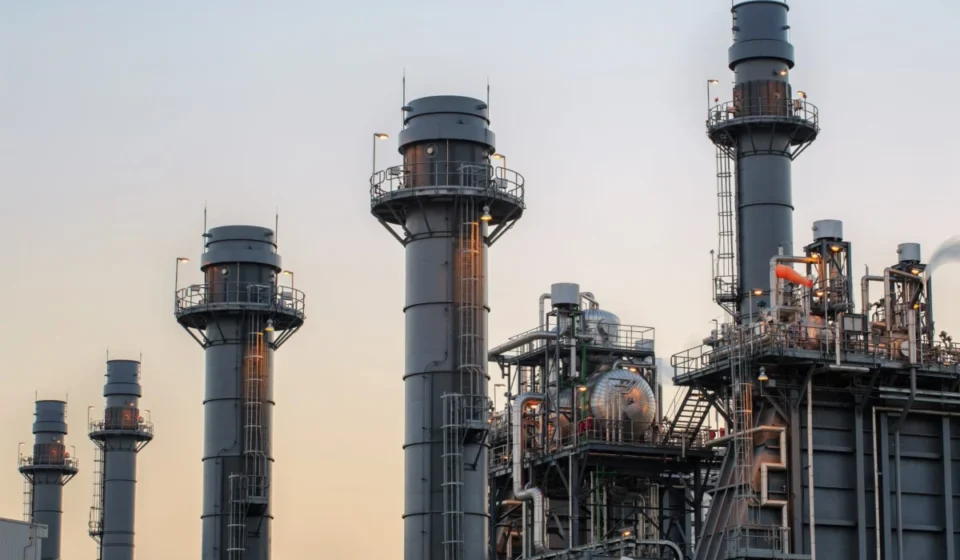
The core of the dispute lies in the sheer scale of the energy demand required by modern AI models. To support the massive processing power of its data centers, Amazon has secured permits for an on-site power generation facility in the remote landscapes of West Texas.
Current projections indicate that this plant is permitted to emit approximately 33 million tons of carbon dioxide annually. To put this figure into perspective, it would eclipse the emissions of any other single power plant in the United States, effectively turning a facility designed for "cloud computing" into one of the country’s most significant carbon emitters.
Unlike facilities that draw power from the grid—which is increasingly supplemented by renewable sources like wind and solar—this on-site plant is designed to burn natural gas continuously. This "behind-the-meter" strategy allows Amazon to bypass grid constraints, but it also creates a localized industrial hub with a carbon footprint that defies the company’s own corporate sustainability pledges.
Chronology: The Road to the Pecos County Project
The trajectory toward this controversial development has been years in the making, reflecting a broader shift in how Big Tech approaches energy procurement.
- 2019: The Climate Pledge: Amazon co-founds "The Climate Pledge," a public commitment to reach net-zero carbon emissions across its entire business by 2040. At the time, the company positioned itself as a leader in corporate environmental responsibility.
- 2024-2025: The AI Explosion: The sudden, rapid commercialization of Generative AI creates an unprecedented surge in demand for compute power. Data centers, previously viewed as manageable industrial sites, begin to balloon in size, requiring gigawatts of constant, reliable "base load" power.
- Early 2026: Grid Strain and Public Backlash: As tech companies vie for energy, public opposition begins to mount. In July 2026, New York State takes the drastic step of halting the construction of all new data centers, citing concerns over grid stability and rising electricity costs for residential consumers.
- July 2026: The Emissions Warning: Amazon releases its annual sustainability report, which reveals a 16% increase in carbon emissions compared to the previous year—a sharp deviation from its 2040 goal.
- August 2026: The Texas Revelation: The New York Times reveals the specific scale of the Pecos County project, triggering national scrutiny regarding the compatibility of AI growth with climate targets.
Supporting Data: The Rising Cost of Intelligence
The tension between digital innovation and environmental health is increasingly backed by empirical data. The 16% rise in Amazon’s carbon emissions is not an anomaly; it is a direct consequence of the energy intensity of LLMs (Large Language Models).
The Energy Intensity of AI
Training a single advanced AI model can consume as much electricity as thousands of homes use in a year. Once these models are "live" and answering millions of queries a day, the power requirement becomes constant. Industry analysts have noted that renewable energy—while growing—is often intermittent. Tech giants, faced with the need for 24/7 reliability, are increasingly returning to fossil fuels to ensure that their servers never flicker.
Comparing Industrial Impact
When comparing the Pecos County plant to other industrial polluters, the numbers are stark. By centralizing the generation of power, Amazon is creating a "super-emitter." If this facility reaches its permitted 33-million-ton threshold, it will effectively undo the carbon reductions achieved by millions of the company’s electric delivery vehicles and renewable energy investments elsewhere. The efficiency gains in server hardware are currently being outpaced by the sheer volume of data center expansion.
Official Responses: Navigating a Changing Reality
Amazon’s response to the growing criticism has been a careful exercise in corporate messaging, attempting to balance the need for rapid technological expansion with the optics of its climate pledges.
An official spokesperson for the company stated: "The data center will be powered by new on-site generation that won’t raise electricity costs for Texas families." This justification addresses one of the primary points of political friction: the fear that tech companies will monopolize the grid, driving up utility bills for the average consumer. By building its own power source, Amazon argues it is insulating the local community from the "energy crunch" caused by its own massive load.
However, when confronted with the discrepancy between this project and the 2040 Climate Pledge, the spokesperson offered a more philosophical defense: "The world looks different now than when we co-founded the climate pledge. Our commitment hasn’t changed."
This response highlights a growing divide in the corporate world: the belief that the "new" reality of AI—which is viewed as a foundational technology for the next century—requires a temporary suspension of previous carbon-reduction timelines. Critics, however, argue that climate change does not offer the same flexibility.
Implications: The Future of Big Tech and the Environment
The Amazon project in Texas is a bellwether for the future of the technology industry. It raises profound questions about the social contract between Big Tech and the public.
1. The Regulatory Landscape
Governments are starting to realize that data centers are not merely "offices" or "warehouses." They are industrial powerhouses. The move by New York State to halt construction could be the beginning of a broader legislative trend. If states begin to treat data centers like power plants or refineries, the permitting process could become significantly more rigorous, potentially slowing the pace of AI development.
2. The Credibility Gap
Amazon’s reputation is currently caught in a credibility trap. If a company claims to be a leader in sustainability while simultaneously building the largest carbon-emitting power plant in the country, public trust in corporate ESG (Environmental, Social, and Governance) reporting may collapse. Investors and consumers are increasingly scrutinizing whether "net-zero" goals are meaningful or merely marketing facades.
3. The Renewable Energy Dilemma
The reliance on natural gas highlights the failure of the current energy transition to scale quickly enough to meet the demands of the AI age. If tech companies cannot get the clean energy they need from the grid, they will continue to build their own fossil-fuel-burning infrastructure. This creates a vicious cycle: the more the world turns to AI to solve climate change, the more carbon the industry emits to support that AI.
4. Localized Environmental Justice
Pecos County, a region already familiar with the oil and gas industry, is now home to a new, high-tech version of the same phenomenon. The local impact of such a massive facility—including water consumption for cooling, land use, and localized pollution—will be felt by residents long after the tech industry has moved on to the next generation of hardware.
Conclusion
The situation in Pecos County is a stark reminder that the "cloud" is physically anchored in the earth. Every search query, every AI-generated image, and every automated email has a physical cost. As Amazon moves forward with its Texas project, it faces a defining moment: it must either prove that it can decouple AI expansion from carbon emissions, or accept that its technological ambitions may come at the permanent expense of its environmental legacy.
For the tech sector at large, the lesson is clear: the era of "invisible" digital growth is over. The coming years will be defined by a hard-fought struggle to reconcile the limitless demands of artificial intelligence with the finite capacity of our planet. Whether Amazon succeeds in this reconciliation remains to be seen, but the 33 million tons of carbon hanging in the balance suggests that the stakes have never been higher.