






















































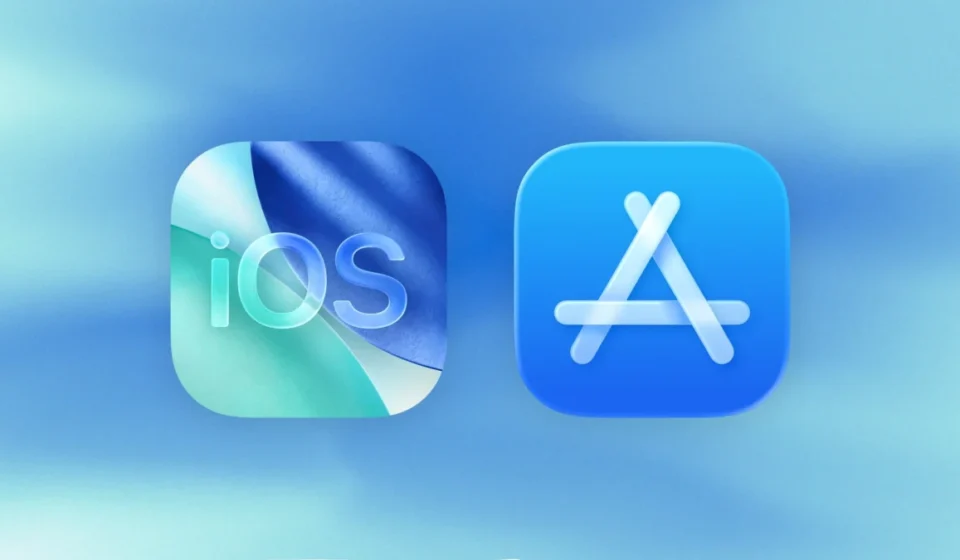

In a move that marks a pivotal chapter in the ongoing tug-of-war between Silicon Valley tech giants and European regulators, Apple has unveiled a significant restructuring of its App Store fee architecture within the European Union. These changes, designed to align more closely with the stringent mandates of the Digital Markets Act (DMA), represent a calculated attempt by Cupertino to mollify authorities while preserving the integrity of its walled-garden ecosystem. While the European Commission has signaled a cautious welcome to these adjustments, the battle over the future of app distribution is far from settled, with major industry players already preparing for potential legal skirmishes.
Main Facts: The New Economic Landscape
The core of Apple’s latest proposal involves a simplification of its financial model. Moving away from a convoluted web of legacy charges, Apple is introducing a more streamlined approach for digital transactions involving apps distributed outside the official App Store.
At the heart of this shift is a universal 5% "Core Technology Fee." This fee, which applies to transactions processed through alternative payment systems or outside the App Store environment, replaces a series of more complex levies, including the previous initial acquisition and store services fees. By effectively lowering the barrier to entry for third-party marketplace operators, Apple is attempting to address the European Commission’s concerns regarding monopolistic behavior.
These changes, which are slated to take effect on October 1, are not merely cosmetic. They reflect a broader shift in how Apple interacts with the developer community in Europe. Developers will now have the flexibility to offer Apple’s native In-App Purchase (IAP) system alongside third-party payment gateways, providing them with greater autonomy over their revenue streams. Furthermore, Apple has expanded the criteria for developers to operate their own alternative app marketplaces, theoretically lowering the hurdles for competitors to establish their own distribution channels on iOS.
Chronology: A Conflict Years in the Making
The path to this regulatory compromise has been long and contentious. The saga began years ago with initial antitrust complaints filed by developers like Epic Games and Spotify, who argued that Apple’s 30% commission and strict control over app distribution constituted an abuse of market dominance.
- 2020-2022: The emergence of the "Coalition for App Fairness" and the high-profile Epic v. Apple litigation brought the "walled garden" debate into the global spotlight.
- Late 2022: The European Union finalized the Digital Markets Act, setting a clear deadline for "gatekeepers" to open their ecosystems to competition.
- Early 2024: Apple initially proposed a "Core Technology Fee" model that drew immediate ire from the developer community, who labeled it a "junk fee" structure designed to make alternative distribution financially non-viable.
- Mid-2024: Intensive negotiations between Apple’s legal teams and the European Commission ensued. The Commission exerted pressure on Apple to reduce friction for alternative payment processors and to clarify its stance on "linked-out" transactions.
- August 2026 (Current Developments): Apple announces the updated fee structure, seeking to find a middle ground that satisfies the DMA’s requirements for "fair, reasonable, and non-discriminatory" access while maintaining its own revenue security.
Supporting Data: Understanding the Financial Shift
To understand the implications, one must look at the math. Under the previous structure, developers operating outside the App Store were often forced to pay multiple, overlapping fees that made third-party distribution cost-prohibitive.
By consolidating these into a 5% fee, Apple has arguably made a concession to the EU, but the company has simultaneously reinforced its "Notarization" service. This service acts as a mandatory security layer for all apps, regardless of whether they are downloaded via the App Store or a third-party marketplace. Apple maintains that this is a critical security measure to prevent malware and payment fraud.
For the vast majority of small-to-medium-sized developers, the base commission remains at 15%. This figure has become the industry standard for Apple’s "Small Business Program," and it serves as a critical anchor in the company’s argument that its platform services—including hosting, security, and payment infrastructure—provide inherent value that warrants a percentage of revenue.
Critics argue that when compared to the 12% fee charged by the Epic Games Store, Apple’s model remains expensive. However, Apple counters that the Epic Games Store lacks the massive, integrated infrastructure—including hardware optimization, OS-level integration, and global customer support—that Apple provides.
Official Responses: A Tale of Two Perspectives
The reaction to these changes has been predictably polarized.
The European Commission’s Stance
The European Commission has adopted a position of "cautious optimism." While they have acknowledged that Apple’s latest proposal addresses several key requirements of the DMA, they have also made it clear that "compliance is a process, not a state." The Commission plans to monitor the implementation phase closely, ensuring that the new fees do not act as a disguised barrier to entry.
The Developer Backlash
The "Coalition for App Fairness," representing heavyweights like Spotify and Epic, remains unconvinced. Their official stance is that Apple is merely "rearranging the deck chairs."
Tim Sweeney, CEO of Epic Games, has been particularly vocal, characterizing the new terms as a "junk fee structure" that mirrors previous restrictive models in other jurisdictions. According to Sweeney, Apple continues to impose "unlawful" charges on transactions that occur outside their ecosystem, and the added friction in the payment flow is designed to manipulate users into choosing Apple’s native—and higher-fee—payment systems.
Implications: The Future of the Walled Garden
The implications of these changes extend far beyond the borders of the EU. If Apple succeeds in convincing European regulators that this new model constitutes full compliance with the DMA, it is highly probable that the company will look to export this business model to other regions, including the United States, Japan, and Brazil.
The "Détente" Scenario
There is a growing sentiment among industry analysts that a form of "détente" is emerging. Apple has successfully navigated the most aggressive regulatory challenge in its history by making incremental, yet legally significant, concessions. By settling with the EU, Apple creates a blueprint for how to remain a "gatekeeper" while technically adhering to open-market principles.
The Legal Frontier
However, the silence from the courts is likely temporary. If the European Commission declares the current changes sufficient, it is almost certain that companies like Epic Games will challenge that determination. Such a court battle would shift the focus from regulatory compliance to a fundamental debate over the definition of a "fair" business model in the digital age.
The Consumer Impact
For the average user, these changes may result in a slightly more fragmented experience. As alternative app stores emerge, users will need to navigate a landscape where app security and privacy may no longer be managed exclusively by a single entity. The mandatory Notarization process is Apple’s attempt to mitigate this, but it raises questions about how much power Apple should retain over software it does not distribute.
Conclusion: A New Chapter
Apple’s decision to revise its EU fee structure is a calculated move to preserve its business model in the face of an evolving global regulatory environment. By lowering fees and providing a clearer path for alternative marketplaces, Apple has moved the goalposts in a way that may prove difficult for its detractors to dismantle.
As we look toward the October 1 implementation date and beyond, the focus will shift from the high-level rhetoric of the DMA to the day-to-day reality of developers and users. Will these changes foster a new era of competition, or will they simply solidify Apple’s position as the primary architect of a slightly more open, yet still firmly controlled, ecosystem? Only time—and likely several more courtrooms—will tell.