





















































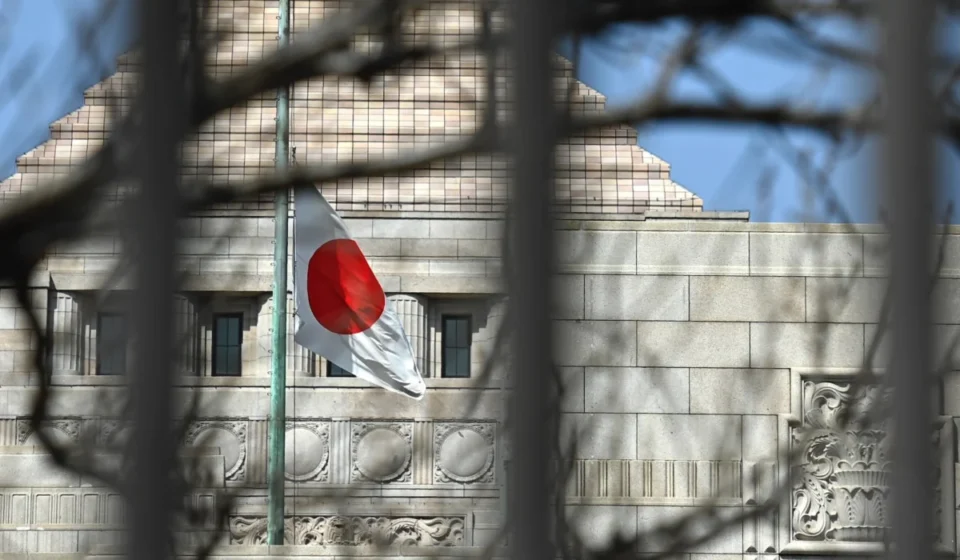

In a whirlwind two-day tour of Tokyo on July 15 and 16, Nvidia CEO Jensen Huang effectively signaled the commencement of a new industrial epoch. Following high-profile strategic alignments in Taiwan and South Korea, Huang’s mission to Japan was not merely a corporate visit—it was a definitive integration of the world’s most advanced AI architecture into the heart of the Japanese manufacturing machine.
By the time Huang departed Tokyo, he had secured a comprehensive suite of agreements that span the entire breadth of Japan’s technology sector. From the creation of a national "AI factory" to deep-seated partnerships with robotics titans and critical agreements with the specialized chip-material suppliers that feed Nvidia’s production lines, the message was unequivocal: the next chapter of the artificial intelligence revolution will not be written in chatbots or text generators, but on the factory floor.
A Legacy Renewed: From Sega to Sovereign AI
The relationship between Nvidia and Japan is storied. Thirty years ago, a pivotal $5 million investment from Sega served as a lifeline to a then-struggling, near-bankrupt Nvidia. Today, the dynamic has shifted, yet the codependence remains. As Nvidia looks to scale "Physical AI"—the application of foundation models to control robots, autonomous vehicles, and automated production lines—it has found its most capable partner in Japan’s industrial elite.
The collaboration is built upon the recognition that while the software "brain" of future automation will be increasingly sophisticated, the physical "body" of the industry—the hardware, sensors, and robotics—is Japan’s historic stronghold. Huang’s visit served as the catalyst to merge these two worlds.
The Three Pillars of Japan’s AI Transformation
1. Noetra: The Sovereign AI Factory
At the center of this alliance is "Noetra," Japan’s ambitious sovereign-AI initiative. Driven by a desire to avoid reliance on foreign AI infrastructure, the Japanese government has orchestrated a massive public-private coalition. Approximately 44 domestic powerhouses, including SoftBank, Sony, NEC, and Honda, have aligned to build a home-grown ecosystem for robots and autonomous machinery.
The scale of the ambition is matched by its financial backing. Tokyo has committed roughly 1 trillion yen ($6.2 billion) over five years to foster "Physical AI." This project is anchored by a state-of-the-art "Vera Rubin AI factory." Scheduled for launch in 2028, this massive data center will be powered by a formidable array of 13,750 Vera CPUs and 27,500 Rubin GPUs, delivering a staggering 140 megawatts of compute power.
Noetra’s development roadmap is categorized into three distinct phases:
- Fiscal 2026: Launch of a reasoning model optimized for the complexities of the Japanese language.
- 2028: Introduction of an omni-modal version capable of processing text, images, video, and audio.
- 2030: The realization of "Real-world Native AI," designed specifically to govern autonomous robotics, to be released to third-party developers in phases.
2. The Robotics Coalition: Building on Cosmos
Nvidia’s strategy to infiltrate the factory floor has been met with widespread adoption among Japan’s robotics giants. Fanuc, Yaskawa, Kawasaki Heavy Industries, Fujitsu, Hitachi, NEC, Sony, and SoftBank have all committed to building their future applications on Nvidia’s "Cosmos" model framework.
During his visit, Huang unveiled "Cosmos 3 Edge," a specialized iteration of the model designed to run locally on Jetson Thor chips embedded within the robots themselves. This edge-computing capability is critical; it allows machines to process information in real-time without the latency or security risks of relying on remote cloud connectivity. As Honda R&D and Omron begin integrating these tools into their development pipelines, the promise of intelligent, autonomous manufacturing moves from theoretical research into active production testing.
3. Toyota: The Automotive Integration
Toyota, the world’s largest automaker, remains the keystone of Nvidia’s automotive strategy. While Toyota has long utilized Nvidia chips, the new agreements significantly broaden the scope. Beyond the "Drive" platform—which supports advanced driver assistance systems (ADAS)—Nvidia is now deeply embedded in Toyota’s manufacturing simulations. These digital twins allow Toyota to design and optimize entire production lines before a single physical component is installed.
While competitors like Tesla and Waymo pursue aggressive, full-self-driving goals, Toyota continues to adopt a more conservative, safety-first approach. By leveraging Nvidia’s infrastructure, Toyota is creating a robust, intelligent architecture that assists the human driver, ensuring that the transition to autonomous transport remains tethered to stringent quality and safety protocols.
Supporting Data and Strategic Goals
The urgency behind these deals is driven by Japan’s demographic reality. Facing a rapidly shrinking workforce, Japan views AI-equipped robotics as an existential necessity. The government’s official "AI Robotics Strategy" aims to deploy 10 million such robots across 18 industrial sectors by 2040.
The financial stakes are equally massive. Japan has earmarked $65 billion in public and private investment toward physical AI by 2040. The goal is clear: Tokyo intends to capture more than 30% of the global AI robotics market, a sector valued at approximately 20 trillion yen ($133 billion). By training trillion-parameter models in the Nvidia-powered Noetra factory, Japan believes it can utilize its unique manufacturing data to become the global leader in physical AI, effectively creating a "moat" that software-only firms cannot easily cross.
Official Responses and Political Momentum
The political alignment behind these initiatives is ironclad. Prime Minister Sanae Takaichi’s administration has positioned AI and semiconductors as the cornerstone of its national growth strategy, which targets 370 trillion yen ($2.3 trillion) in public-private investment by 2040.
On July 16, Huang appeared alongside Trade Minister Ryosei Akazawa to formally launch the physical-AI initiative, with Prime Minister Takaichi delivering a remote address. "The next frontier of AI is in the physical world," Huang noted, "and this is a once-in-a-generation opportunity for Japan. Japan invented modern manufacturing. Now, it has the opportunity to reinvent it for the age of intelligent industries."
For the Takaichi administration, this is as much about economic growth as it is about national sovereignty. In an era where large-scale AI is dominated by the U.S. and China, Tokyo is determined to own its own data and its own infrastructure, even while acknowledging that for the immediate future, this sovereignty must be built upon the foundation of American silicon.
Implications: The Long-Term Vision
The implications of Huang’s visit extend far beyond quarterly earnings or individual project launches. By embedding Nvidia technology into the foundational fabric of Japan’s industrial sector, Huang has ensured that the "Physical AI" era will be built on the Nvidia stack.
However, the strategy is not without risks. Japan’s push for independence remains heavily dependent on American supply chains. Should global geopolitical tensions escalate, the "sovereign" nature of this infrastructure could be tested. Yet, for now, the marriage of Japan’s manufacturing expertise and Nvidia’s computational power seems to be the most viable path forward for both parties.
Huang’s "izakaya diplomacy"—spending time with CEOs and supply-chain chiefs in local establishments—highlights his personal commitment to this partnership. Just as he did in Taipei and Seoul, Huang is working the room to ensure that when the next generation of industrial robots hits the global market, they will be powered by the hardware he is building today.
As Japan moves toward its 2040 targets, the world will be watching to see if the "Silicon Samurai" strategy can revitalize the nation’s industrial base. If successful, the transformation will serve as a blueprint for how legacy manufacturing powers can pivot to meet the challenges of the AI-dominated 21st century. The factory floor is no longer just a place of mechanical labor; it is becoming the most sophisticated theater of the artificial intelligence revolution.