
























































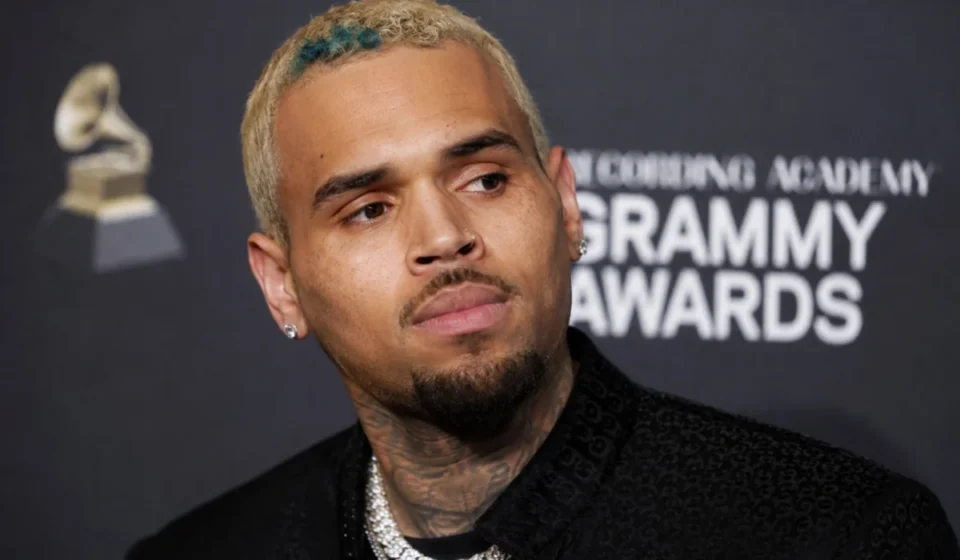

LONDON — American R&B singer Chris Brown has avoided a high-profile criminal trial in the United Kingdom by pleading guilty to a charge of affray. The plea, entered at Southwark Crown Court, stems from a violent confrontation inside a Mayfair nightclub in early 2023.
While the legal resolution brings an end to the prospect of a sensationalized trial, it marks a significant development in the singer’s long history of legal entanglements. By admitting to the charge, Brown has accepted criminal responsibility for unlawful violence, concluding months of speculation regarding the incident. However, the plea deal also saw prosecutors drop several of the most severe charges originally leveled against him, sparking intense debate among legal analysts, critics, and his global fanbase.
1. Main Facts of the Case
On Friday, Chris Brown, 37, appeared before a judge at Southwark Crown Court in London. Alongside his vocal coach and co-defendant, Omololu Akinlolu, Brown entered a formal guilty plea to the charge of affray.
The Nature of the Charge
Under English law, affray is a public order offense involving the use or threat of unlawful violence that would cause a bystander of "reasonable firmness" to fear for their personal safety. The charge carries a maximum sentence of up to three years in prison, though actual sentencing outcomes vary widely based on mitigating and aggravating circumstances.
The Incident
The conviction originates from a violent clash during the early hours of February 19, 2023, at Tape, an exclusive nightclub located in London’s affluent Mayfair district. According to the official case file presented by the Crown Prosecution Service (CPS):
- Chris Brown engaged in an unprovoked altercation with British music producer Abraham Diaw.
- During the confrontation, Brown struck Diaw on the head with a glass bottle.
- Following the initial blow, Diaw was subjected to further physical assault, including being punched and kicked by those associated with Brown’s entourage, including co-defendant Omololu Akinlolu.
- The entire incident occurred in a highly crowded environment and was captured on the nightclub’s high-definition surveillance cameras.
The Plea Agreement
In exchange for the guilty pleas to affray from both Brown and Akinlolu, the prosecution agreed to discontinue more severe indictments. Brown had previously pleaded not guilty to:
- Attempting to cause grievous bodily harm (GBH) with intent.
- Assault occasioning actual bodily harm (ABH).
- Possession of an offensive weapon.
Had Brown been convicted of grievous bodily harm with intent, he would have faced a maximum sentence of life imprisonment, with sentencing guidelines indicating a starting point of several years in custody. The discontinuation of these charges represents a significant legal compromise, allowing the defense to mitigate the singer’s exposure to severe custodial sentences while ensuring the prosecution secured a guaranteed conviction on a violent offense.
2. Chronology of Events
The path from the Mayfair nightclub altercation to the Southwark Crown Court plea spans more than three years, involving international travel, a high-stakes arrest, and an unprecedented financial bail package.
[Feb 19, 2023]  Nightclub Altercation at Tape, Mayfair
       │
       ▼
[May 2025]     Brown arrested at a Manchester hotel; initially denied bail
       │
       ▼
[May 2025]     Released on an unprecedented £5 million financial guarantee
       │
       ▼
[July 2026]    Pleads guilty to affray at Southwark Crown Court
       │
       ▼
[Oct 26, 2026] Scheduled sentencing hearing
February 19, 2023: The Altercation
During a visit to London, Chris Brown and his entourage attended Tape nightclub in Mayfair. An altercation erupted inside the VIP section, resulting in the assault of music producer Abraham Diaw. London’s Metropolitan Police launched an investigation, reviewing CCTV footage and interviewing eyewitnesses. Brown left the United Kingdom shortly after the incident, before formal charges could be laid or arrests made.
May 2025: Arrest and Detention
After a two-year absence from the UK, Brown returned to the country for a series of scheduled performances. Upon his arrival, police executed an outstanding warrant, arresting him at a luxury hotel in Manchester.
At his initial court appearance, the prosecution argued that Brown posed a severe flight risk due to his vast financial resources and lack of ties to the jurisdiction. The presiding magistrate initially refused bail, remanding Brown in custody. The singer spent several days in a British holding facility while his legal team prepared an appeal.
Mid-2025: The £5 Million Bail Package
A High Court judge subsequently approved Brown’s release on bail, but under extraordinarily strict conditions. The court demanded a £5 million financial guarantee—one of the largest bail figures in recent British legal history.
The bail conditions permitted Brown to travel internationally to fulfill lucrative touring contracts in Europe and North America, provided he returned to London for all scheduled court appearances. This arrangement allowed the singer to maintain his professional schedule while a trial loomed in the background.
Friday (July 2026): The Guilty Plea
Brown returned to Southwark Crown Court for what was scheduled to be a pre-trial preparation hearing. In a swift turn of events, his legal team indicated a change of plea.
Within minutes, Brown formally pleaded guilty to affray. The prosecution formally accepted the plea and announced they would not seek a trial on the charges of GBH, ABH, and possession of an offensive weapon. The judge released Brown on continued bail pending a formal sentencing hearing.
October 26, 2026: Upcoming Sentencing
The court adjourned the case to allow for the preparation of pre-sentence reports. Both Chris Brown and Omololu Akinlolu are ordered to return to Southwark Crown Court on October 26, 2026, where a judge will hand down their punishments.
3. Supporting Data and Legal Context
To understand the mechanics of this legal outcome, it is essential to examine the statutory definitions and guidelines governing the English justice system.
Understanding "Affray" under English Law
Affray is prosecuted under Section 3 of the Public Order Act 1986. The offense is unique because it focuses not only on the harm inflicted upon a specific victim, but also on the terror inflicted upon the public.
| Legal Element | Description |
|---|---|
| Statutory Definition | Using or threatening unlawful violence towards another, where the conduct is such as would cause a person of reasonable firmness present at the scene to fear for their personal safety. |
| Jurisdiction | Can be tried in either the Magistrates’ Court or the Crown Court (an "either-way" offense). |
| Maximum Penalty | Up to 3 years of custody when sentenced in the Crown Court, alongside unlimited fines. |
| Evidentiary Threshold | Does not require an actual bystander to be present; the threat of violence in a public or private space is sufficient. |
Comparative Severity of Charges
The decision by the Crown Prosecution Service to drop the more serious charges drastically altered Brown’s legal jeopardy:
- Section 18 Grievous Bodily Harm (GBH) with Intent: This is the most serious form of non-fatal assault under English law. It requires proof that the defendant intended to cause really serious harm. It carries a maximum sentence of life imprisonment and is classified as a "significant risk of serious harm" offense, which often carries mandatory minimum terms.
- Section 47 Assault Occasioning Actual Bodily Harm (ABH): Requires proof of an assault that caused some level of hurt or injury (e.g., bruising, cuts, or concussions). It carries a maximum sentence of 5 years.
By pleading guilty to affray, Brown avoided the risk of a jury finding him guilty of intentional, severe bodily harm (Section 18), which would have almost certainly resulted in an immediate, multi-year prison sentence.
4. Official Responses
The resolution of the pre-trial phase has drawn formal statements from the prosecution, legal representatives, and court officials.
The Crown Prosecution Service (CPS)
Following the hearing, the CPS released a statement detailing why they accepted the plea agreement, highlighting the strength of the evidence:
"The violence displayed by Chris Brown and his associate inside a crowded nightclub was entirely unprovoked and unacceptable. The use of a glass bottle as a weapon in a crowded public venue carries an inherent risk of devastating injury.
Because the entire incident was captured clearly on surveillance cameras, the prosecution was equipped with irrefutable objective evidence. By securing a guilty plea to affray, we have ensured that Mr. Brown is held criminally accountable for his actions, without subjecting the court system or witnesses to a prolonged trial."
The Defense Team
Representatives for Brown emphasized that the singer had taken responsibility for his role in the disturbance, while pointing out that the most severe allegations of intent to cause grievous harm had been dismissed:
"Mr. Brown has cooperated with the legal process and chosen to resolve this matter constructively. By pleading guilty to the single charge of affray, he accepts his part in the public disturbance that occurred in February 2023.
We are pleased that the Crown has discontinued the highly serious charges of attempted grievous bodily harm and assault causing actual bodily harm. We look forward to presenting mitigating circumstances to the court ahead of the sentencing hearing in October."
The Judiciary
The presiding judge at Southwark Crown Court made it clear that the court’s acceptance of the plea deal does not guarantee a lenient sentence. Addressing the defendants, the judge stated:
"You have pleaded guilty to a serious public order offense involving violence and the use of an object as a weapon. I am ordering the preparation of comprehensive pre-sentence reports.
Let me make it entirely clear to both defendants: all sentencing options remain open to the court on October 26. The fact that you have been granted bail to return on that date should not be interpreted as an indication of the final sentence."
5. Implications
The legal outcome of this case carries wide-ranging consequences for Chris Brown’s career, personal mobility, and public standing.
International Travel and Visa Restrictions
A criminal conviction for a violent offense presents severe obstacles for international touring artists. Many countries enforce strict immigration policies regarding individuals with criminal records:
- United Kingdom: Under UK Home Office rules, individuals sentenced to custodial terms or those convicted of serious violent crimes can face long-term or permanent bans on entry.
- Canada, Australia, and New Zealand: These countries maintain highly stringent character requirements. A conviction for affray—especially one involving a weapon like a glass bottle—can lead to automatic visa denials, requiring complex and uncertain waiver applications.
- Sponsorships and Venues: Corporate sponsors and international arena venues often include moral turpitude clauses in their contracts, which can be triggered by criminal convictions.
The Polarization of Public and Fan Perception
The outcome of the Southwark Crown Court hearing has highlighted the deep divide in public perception surrounding high-profile artists:
                  CHRIS BROWN'S GUILTY PLEA
                             │
            ┌────────────────┴────────────────┐
            ▼                                 ▼
      FAN NARRATIVE                    CRITIC NARRATIVE
  "The singer was cleared"          "He escaped justice again"
  Points to dropped charges.        Points to the admission of
  Views the resolution as a         violence and history of
  complete vindication.             behavioral issues.
Legal experts note that neither narrative is entirely accurate. While Brown was not convicted of the most severe charges, a guilty plea to affray is a formal admission of unlawful violence recorded in a court of law.
Precedent for Celebrity Justice
The case also revives debates regarding whether wealthy defendants receive preferential treatment. The £5 million bail package that allowed Brown to remain free and tour the world for over a year is an option completely unavailable to the vast majority of criminal defendants.
While the legal system treats bail as a mechanism to ensure court attendance rather than a punishment, the stark contrast between a wealthy celebrity performing in arenas while on bail and an average defendant awaiting trial in custody remains a point of significant public contention. The final measure of how the justice system handles this case will ultimately be determined on October 26, when the court decides whether Brown’s sentence will involve community service, financial penalties, or active custody.