















































By [Your Name/Journalistic Desk]
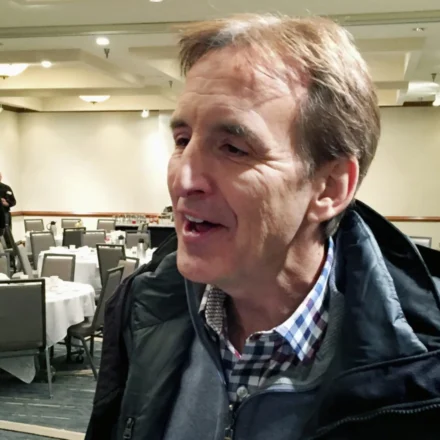
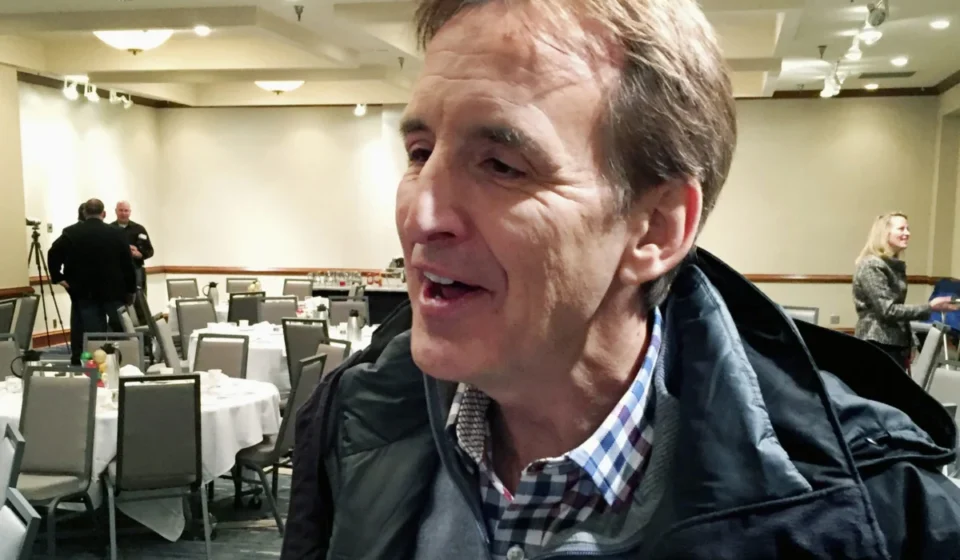
In the halls of Washington, the political winds have shifted dramatically, and few individuals are better positioned to navigate the turbulence than Tim Pawlenty. A former two-term Republican governor of Minnesota and a veteran of the 2012 presidential primary, Pawlenty has spent his career mastering the art of the political pivot. Now, he has emerged as the nation’s most prominent advocate for the solar industry—a sector that currently finds itself at a defining crossroads.
As the newly appointed president and CEO of the Solar Energy Industries Association (SEIA), the nation’s largest solar-specific trade group, Pawlenty is tasked with steering the industry through a period of profound legislative uncertainty. His appointment in June marks a departure for the association, signaling an attempt to bridge the divide between the green energy sector and a Republican-led government that has recently signaled a pivot away from the climate-centric policies of the previous administration.
The State of the Industry: A Turbulent Transition
To understand the challenge ahead, one must first recognize the current climate in Washington. For years, the solar industry was bolstered by the ambitious incentives contained within President Joe Biden’s 2022 Inflation Reduction Act (IRA). These policies acted as a massive catalyst, drawing billions in private investment and sparking a manufacturing boom across the American heartland.
However, the political landscape underwent a seismic shift in 2024 when Republicans secured control of the federal government. By last year, the legislative landscape had been fundamentally altered by the passage of the "One Big Beautiful Bill Act," which systematically dismantled core provisions of the former administration’s climate framework.
“The current state is relatively bleak,” Pawlenty acknowledged during an interview at Canary Media’s Climate Week NYC summit. Despite his blunt assessment, he remains characteristically optimistic about the long-term trajectory. “But history teaches us that nothing stays the same in politics. There is inherent hope in what’s to come, provided the industry can effectively articulate its value proposition to a new generation of policymakers.”
A Chronology of Conflict and Consolidation
The evolution of solar power in the United States has not been a linear path. Following the post-2022 surge in deployment, the industry faced an aggressive, multifaceted opposition.
- 2022: The enactment of the Inflation Reduction Act provided the most substantial federal support for renewable energy in American history. Developers accelerated project timelines, and supply chains began to diversify.
- 2024: The federal elections resulted in a Republican sweep. The incoming legislature prioritized domestic energy independence, which led to the introduction and eventual passage of the “One Big Beautiful Bill Act.”
- 2025: The implementation of the new legislative agenda saw the rollback of several key climate-related tax credits, creating immediate, stinging financial headwinds for many utility-scale solar projects.
- 2026: Tim Pawlenty assumes the helm of SEIA. His mandate: move the conversation from "climate change" to "energy security, domestic manufacturing, and property rights."
Data-Driven Growth: The Resilience of Solar
Despite the legislative setbacks, the underlying business fundamentals for the solar sector remain remarkably robust. According to industry reports, solar is currently the leading source of new electricity generation in the United States, a title it has held for several consecutive years.

The demand for electricity is surging, driven by the expansion of data centers, artificial intelligence infrastructure, and the electrification of the industrial base. As Pawlenty noted, “We are witnessing an unbelievable, exploding demand for energy in our country.” Because solar and battery storage systems have become the most cost-effective forms of new capacity, the economic logic of the industry remains difficult to refute.
Crucially, the industry has also shed a significant vulnerability: its reliance on Chinese-made components. Through a combination of trade policy and the rapid scaling of domestic manufacturing capacity, the U.S. solar industry has largely decoupled itself from its previous dependence on Chinese supply chains. This shift aligns perfectly with the current political appetite for "America First" manufacturing.
The Strategy: Reframing the Narrative
Pawlenty is keenly aware that the solar industry has, at times, struggled to translate its technical achievements into political wins. He believes the sector often gets lost in jargon, failing to communicate with those who sit outside the climate advocacy bubble. His strategy involves speaking to conservative values that resonate across the aisle.
National Security as a Cornerstone
When speaking with skeptical lawmakers, Pawlenty avoids the environmental rhetoric that historically characterized the sector. Instead, he focuses on the geopolitical implications of energy independence.
“Iran can’t block the sun,” he argued during his NYC appearance. “If you’re into national security—as I am—you want assets that cannot be throttled by foreign adversaries. Whether it’s North Korea, China, or Russia, the volatility of global oil and gas markets poses a direct threat to our national interest. Domestic solar, paired with robust storage, is a strategic asset for a sovereign nation.”
Defending Private Property Rights
The most significant friction point for solar developers today is the "rural backlash." With 87% of clean energy generation occurring in rural areas, the industry is increasingly perceived as a threat to traditional agricultural land use.
Pawlenty, drawing on his experience as a governor from a farm state, intends to reframe the debate around the sanctity of private property. He argues that government restrictions on solar installations—often pushed under the guise of local control—are an infringement on a farmer’s right to manage their own land for profit.
“From a conservative standpoint, land rights are paramount,” Pawlenty stated. “We need to ensure that the farmer’s ability to generate revenue from their own property is not lost in the political shuffle. If a landowner wants to host solar panels as a crop, the government shouldn’t stand in the way of their economic liberty.”

Building Durable Policy
Perhaps the most vital component of Pawlenty’s vision is the push for "durable policy." He is wary of the boom-and-bust cycle that has characterized energy incentives over the last decade.
“It is very tempting to just say, ‘Let’s roll whenever we can roll,’” Pawlenty noted, referring to the practice of seeking short-term, aggressive legislative wins. “But I think it is wiser to take a half-step back and ask: Are we advocating for policies that are likely to survive political turbulence? If a policy relies on the whims of a single administration, it isn’t durable. We need to build a consensus that transcends electoral cycles.”
This approach is already reflected in the industry’s current stance on domestic manufacturing. Even as the new administration cut tax credits for solar installation, they notably preserved the incentives for manufacturing. Pawlenty aims to build on this foundation, identifying further areas of overlapping interest where the solar industry and the current conservative establishment can find common ground.
Implications for the Energy Transition
As the U.S. continues its transition toward a more electrified, decentralized grid, the leadership of figures like Tim Pawlenty will be tested. The transition is no longer solely about carbon emissions; it is about infrastructure, manufacturing jobs, and grid reliability.
The success of the solar industry in the coming years will depend on its ability to integrate into the existing conservative political machinery without losing its identity as a clean energy provider. By focusing on the "facts"—that solar is the cheapest, most secure, and most property-rights-friendly energy source—Pawlenty is gambling that even in a climate-skeptical D.C., the economic and national security arguments will eventually carry the day.
"Eventually, the policymakers catch up to the facts," Pawlenty concluded. "We have the facts on our side. The old narratives are out of date. If we bring the current story to the table, we don’t just win a legislative battle—we secure the energy future of this country."
For now, the industry watches and waits, balancing the optimism of its new leadership against the sobering reality of a political landscape that remains deeply, and perhaps permanently, changed.