

























































The Evolution of Voice AI: Ringg Secures $10 Million to Revolutionize Enterprise Communication

In a market where the human voice remains the primary medium of commerce and connection, Indian voice AI startup Ringg is betting that the future of customer experience lies in high-fidelity, outcome-driven automation. With a fresh $10 million infusion from Peak XV Partners—an extension of its earlier Series A round—Ringg has now secured a total of $15.5 million to scale its operations. As the company processes an impressive 20 million call attempts per month, it is rapidly transitioning from a simple text-to-speech provider to a sophisticated orchestration layer for complex enterprise workflows.
The Cultural Imperative: Why Voice Still Rules
Despite the global proliferation of chatbots and asynchronous messaging, voice remains king in the Indian market. According to a recent study from Truecaller, more than 76% of Indian consumers prefer verbal communication when interacting with businesses. This preference creates a massive, underserved opportunity for enterprises to automate support, sales, and outreach through advanced Voice AI agents that can replicate the nuance and empathy of human interaction.
For years, businesses have struggled with the trade-off between the scalability of digital support and the efficacy of human voice calls. Ringg is positioning itself as the bridge between these two worlds, moving beyond rudimentary automated scripts to create agents that can actually "get things done."
A Strategic Pivot: From "DesiVocal" to Enterprise Orchestrator
Ringg’s journey began under the name "DesiVocal," a startup focused on text-to-speech technology. However, the founders quickly encountered the harsh economic realities of the AI industry: the cost of training and maintaining proprietary speech models is prohibitively high.
Rather than succumbing to the "model wars," the leadership team made a strategic pivot, moving up the tech stack to focus on enterprise application. By shifting their focus from being a pure model provider to an orchestration layer, they were able to pivot from commoditized, low-complexity use cases—such as simple outbound lead generation—toward high-value, sticky enterprise workflows.
Today, the company’s client roster reads like a "who’s who" of the Indian startup ecosystem, including giants like Flipkart, Practo, Groww, and PolicyBazaar. This shift represents a fundamental change in business philosophy: moving from volume-based, price-sensitive work to outcomes that drive genuine business efficiency.
Chronology of Growth: Scaling the AI Stack
- The Early Days (as DesiVocal): The company focused on building foundational text-to-speech models, which served as the R&D bedrock for their current technical prowess.
- The Pivot: Realizing that the "model business" was a race to the bottom, the team transitioned into the orchestration layer, focusing on enterprise integration.
- Early 2025: Ringg secures its initial $5.5 million Series A funding, validating the demand for high-end voice agents.
- Mid-2025: The company begins expanding its capabilities, moving into omnichannel support, including WhatsApp and browser-based interfaces for clients like Shell.
- Late 2025: Ringg secures an additional $10 million from Peak XV Partners, bringing the total Series A round to $15.5 million. The focus shifts toward international expansion and deepening technical depth.
Beyond Simple Calls: Tackling Complex Workflows
Ringg is no longer just a "robocall" company. It has successfully integrated its voice agents into complex, high-stakes environments. A prime example is its partnership with Practo, where Ringg’s voice agents now manage operations across 1,200 clinics. These agents don’t just answer phones; they navigate the complexities of appointment booking, patient follow-ups, and post-visit care coordination.
Similarly, the company is tackling:
- Abandoned-Cart Recovery: Using AI to recapture lost revenue in e-commerce with timely, human-like outreach.
- KYC and Onboarding: Automating the identity verification process for fintech apps, a sector where accuracy and compliance are paramount.
- Omnichannel Support: Integrating voice with chat and WhatsApp, ensuring that the context of a conversation is maintained across all mediums.
Official Perspectives: Investors and Founders
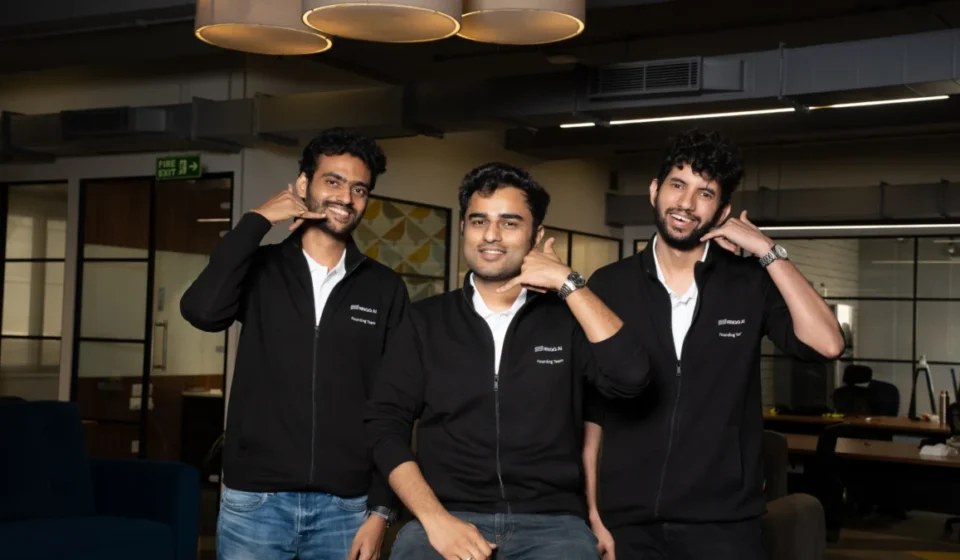
Siddharth Tripathi, co-founder of Ringg, has been vocal about the company’s desire to define a new category of "agentic" software. "We are trying to position ourselves as a platform for agents that bring outcomes or get things done rather than [just] voice agents for enterprises," Tripathi noted. He acknowledges that while the company currently uses an orchestration layer to route tasks to various specialized models, their long-term goal remains to own the full stack, including infrastructure and deployment, as costs continue to decline.
Rishen Kapoor, a principal at Peak XV Partners, highlighted that Ringg’s early research background is its primary competitive advantage. "Because of the technical capabilities, they can actually do these hard-won enterprise workflows end to end," Kapoor said. "They can complete these higher-value tasks like merchant onboarding, like L1 and L2 support, with quality and with consistency."
The Competitive Landscape: A Crowded Arena
The Voice AI space is arguably one of the most competitive sectors in global tech. Players like Deepgram, ElevenLabs, and Cartesia are pushing the boundaries of model performance, while local Indian contenders like Sarvam and Smallest.ai are rapidly gaining ground.
Ringg occupies a distinct "middle ground." It is not competing directly with foundational model makers; instead, it is curating the best models and wrapping them in an enterprise-grade orchestration layer. This strategy creates a "moat" around the client relationship. In the current AI landscape, the money and the defensibility lie with the company that owns the customer relationship and can guarantee a measurable business outcome.
Strategic Implications: The Role of Global Capability Centers
Ringg’s go-to-market strategy for international expansion is particularly clever. Rather than attempting a direct, resource-heavy entry into the U.S. market, they are leveraging India’s vast network of Global Capability Centers (GCCs). These offshore hubs serve as the backbone for multinational corporations, handling everything from back-office support to complex technical troubleshooting.
By partnering with these centers, Ringg is effectively "augmenting" human support teams with AI capacity. This B2B2B approach allows them to enter global markets without the friction of building a massive, direct sales force in foreign territories.
Future Outlook: Scaling for Success
With a team of 40—having expanded by more than 15 employees in the last three months—Ringg is currently in a phase of aggressive growth. The company is actively seeking "forward-deployed engineers"—a unique hybrid role that blends technical software development with high-level product management. These roles are critical for ensuring that the technology doesn’t just work in a lab, but provides tangible, measurable value in the chaotic, real-world environments of their clients.
Furthermore, the company is investing heavily in research to optimize the cost of running these complex models. As they continue to bridge the gap between human-like conversation and automated enterprise logic, Ringg is set to play a pivotal role in the digitisation of the Indian service economy.
In conclusion, Ringg’s trajectory serves as a case study for the next generation of AI startups. By eschewing the hype of foundational model training in favor of deep, complex enterprise integration, they have created a sustainable business model that resonates with both investors and corporate clients. As the demand for seamless, automated, and human-like interaction continues to grow, Ringg is well-positioned to turn the voice of the customer into a powerful, data-driven engine for business growth.