





















































Supreme Court Upholds Mail-In Voting Access, Bringing Relief to Election Officials Amidst Lingering Voter Doubts

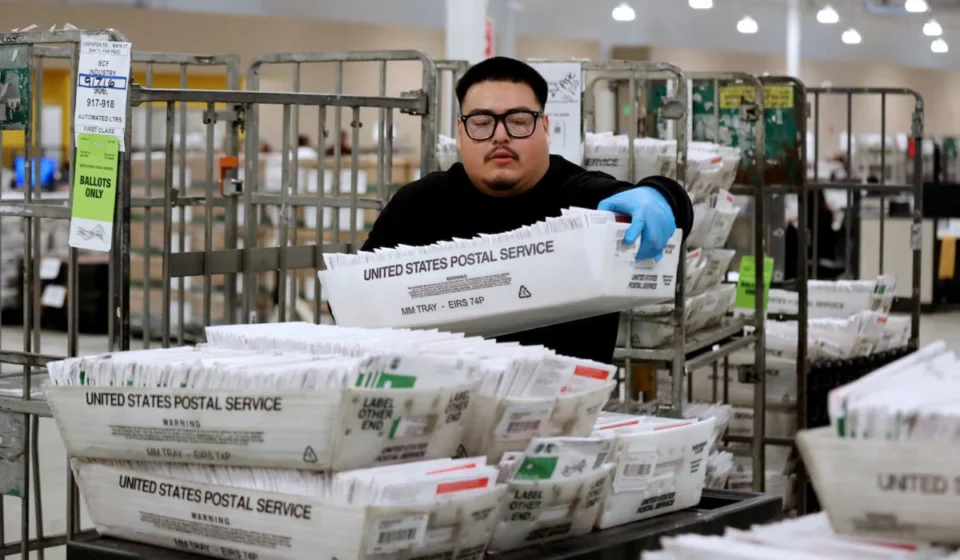
WASHINGTON D.C. – The nation’s electoral landscape for the upcoming November elections was decisively clarified last Monday when the U.S. Supreme Court intervened to block the Trump administration’s proposed restrictions on mail ballots. This pivotal decision ends months of intense legal uncertainty and logistical planning nightmares for election administrators nationwide, clearing the path for millions of Americans to cast their votes by mail, largely in line with established state-specific procedures.
The ruling has been met with a collective sigh of relief from election officials across the political spectrum, who had warned that the proposed new U.S. Postal Service (USPS) rules, introduced late in the election cycle, would create an unmanageable cascade of operational challenges and disenfranchise voters. While the immediate crisis has been averted, the prolonged legal battle and the accompanying political rhetoric have left a tangible residue of voter confusion and declining public trust in the integrity of the electoral process, prompting a renewed effort by election authorities to reassure the electorate.
“It’s a relief and it’s palpable,” stated Marybeth Kuznik, the elections director for Pennsylvania’s Fayette County, articulating a sentiment echoed by her counterparts nationwide. “I honestly don’t know how we could have complied with (the Postal Service’s restrictions) at this point in the election cycle.” Her words underscore the profound administrative burden that would have fallen upon already stretched local election offices had the proposed changes been allowed to proceed. The Supreme Court’s intervention, therefore, represents not just a legal victory for voting access but also a practical lifeline for the thousands of dedicated professionals responsible for administering free and fair elections.
Chronology: The Tumultuous Path to the Ruling
The journey to the Supreme Court’s definitive ruling was marked by a period of escalating tensions and legal challenges, reflecting a broader national debate over election security versus voter access. The Trump administration, through various statements and executive actions, had for months signaled its intention to tighten regulations around mail-in voting, frequently citing unsubstantiated claims of widespread fraud. These efforts culminated in proposed new rules for the U.S. Postal Service that, while never fully detailed publicly in the context of the legal challenge, were understood by election officials to demand significant, last-minute overhauls to ballot processing, mailing timelines, and verification procedures.
The precise nature of the proposed USPS restrictions remained somewhat ambiguous in the public discourse, but their intended effect was clear: to introduce more stringent requirements and potentially shorter deadlines for mail ballot processing. Election administrators, intimately familiar with the complex logistics of managing a large-scale election, immediately recognized the impracticality of implementing such changes with the November election looming just weeks away. The process of printing ballots, verifying voter registrations, mailing out applications, and then receiving, verifying, and counting returned ballots is a meticulously timed operation that begins months in advance. Disrupting these established rhythms at such a late stage would have risked chaos, delays, and potential disenfranchisement.
In response to these concerns, a formidable, bipartisan coalition of election officials mobilized. More than 80 local election administrators, including Fayette County’s Marybeth Kuznik, formally signed onto an amicus brief presented to the Supreme Court. This brief served as a stark warning, detailing the insurmountable logistical hurdles and the inadequate time available to meet any new, restrictive requirements before the election. Their collective voice emphasized the practical realities on the ground, arguing that abrupt changes would jeopardize the integrity and efficiency of the electoral process rather than enhance it.
Further compounding the pressure on the judiciary, several Republican secretaries of state—chief election officers in their respective states—also urged the Supreme Court to block the proposed plans. Officials from states such as Kentucky, Georgia, and Kansas publicly voiced their apprehension, underscoring the potential for widespread disruption and confusion if the new rules were implemented. Their pleas highlighted that the concerns transcended partisan lines, rooted instead in the shared responsibility of ensuring a smooth and secure election.
The Supreme Court’s decision, delivered last Monday, ultimately sided with the election officials. While the full reasoning behind the majority decision was not immediately detailed, Justice Brett Kavanaugh’s concurring opinion offered a crucial insight into the Court’s thinking. Justice Kavanaugh indicated that while he believed there was a "fair chance" the underlying legal arguments for the rules might hold up to scrutiny in a different context, applying them to the 2026 elections would be "arbitrary and capricious." His reasoning explicitly cited the primary concern of the election officials: "state and local election officials do not have sufficient time to reasonably implement the rule." This acknowledgment of the practical, administrative realities faced by local election authorities proved decisive, offering a critical reprieve for a system teetering on the brink of late-stage, mandated upheaval.
Official Responses and the Quest for Reassurance
With the Supreme Court’s ruling providing a much-needed sense of clarity, election officials are now shifting their focus from legal battles to public reassurance. The months of uncertainty, coupled with persistent rhetoric questioning the validity of mail-in voting, have sown seeds of doubt among the electorate. The challenge now is to convey a consistent message: the established, secure systems for voting by mail remain in place.
Local election administrators, who serve as the frontline guardians of democracy, are acutely aware of the confusion that has permeated the public consciousness. “It has already caused all sorts of voter confusion, and even though the rule is not in place for this election, that’s not to say that there won’t be some voters that think that it is,” explained Tammy Patrick, the chief program officer at the Election Center, a national nonprofit association for election administrators. Patrick, who herself filed an expert declaration in the Supreme Court cases challenging the Postal Service rules, emphasized the critical need for clear and consistent communication. “So it’s going to be incumbent on all of us to make sure that we just keep up the mantra that nothing has changed as a result of the rule.”
This "mantra" of continuity is vital. Election officials are now redoubling their efforts to educate voters on their state’s specific mail-in voting procedures, including how to request a ballot, how to properly fill it out, and the secure methods for returning it. They are emphasizing the existing safeguards, such as signature verification, ballot tracking systems, and secure drop boxes, which have been refined over years, and in some states, decades, of experience with absentee and mail-in voting.
The practical implications for election administration, had the proposed restrictions gone into effect, would have been catastrophic. For instance, any changes to the types of envelopes required, the weight of the paper, or specific postal markings would have necessitated reprinting millions of ballots and instructional materials, an impossible task within the existing timeframe and budget constraints. Adjustments to mail delivery standards or timelines would have thrown off critical processing schedules, potentially delaying the counting of votes and undermining public confidence in election results. Furthermore, the need to rapidly train thousands of poll workers and temporary staff on entirely new procedures would have introduced an unacceptable margin for error. The Supreme Court’s decision, therefore, effectively saved election offices from an administrative quagmire that could have severely impacted the efficiency and perceived legitimacy of the election.
Many officials, like Dana Lewis, the recorder overseeing elections in Arizona’s Pinal County, have taken proactive steps to enhance security and transparency, believing that visible measures build voter trust. Lewis, a Republican, has invested significantly in her county’s drop box system, which boasts 24/7 video monitoring and GPS-locked ballot boxes. These innovations are designed to provide voters with tangible evidence of security, countering narratives of unreliability. “Trust the system,” Lewis urged, reflecting the sentiment of many dedicated election administrators striving to uphold democratic processes. Her county’s experience with mail-in voting is extensive; federal data indicates that roughly three-quarters of Arizona’s voters cast mail ballots in 2024, demonstrating a long-standing reliance on the method.
Supporting Data: The Shifting Landscape of Voter Trust
Despite the Supreme Court’s ruling and the reassurances from election officials, the protracted debate over mail-in voting has undeniably taken a toll on public confidence in the nation’s electoral system. This decline in trust is a significant concern, casting a shadow over the upcoming elections even as the immediate legal hurdle has been cleared.
A new poll, released concurrently with the Supreme Court ruling by the University of California, San Diego, starkly illustrates this erosion of faith. The survey revealed that only 55% of respondents trusted that their vote would be counted fairly in the upcoming election. This represents a precipitous decline from just two years prior, when 71% of Americans expressed such confidence in 2024. The 16-point drop within a single election cycle is a alarming indicator of the impact of political rhetoric and legal skirmishes on the public psyche.
Furthermore, the UC San Diego poll found that a mere 49% of Americans expect the upcoming election to be free and fair. This sentiment aligns with other independent research, including a recent Pew Research Center survey. The Pew study, which has tracked public confidence over the past six years, reported that 55% of respondents believed the upcoming election would be free and fair—an historic low for this particular question. These figures collectively paint a sobering picture of a nation grappling with widespread skepticism about the foundational processes of its democracy.
The reasons behind this alarming decline in voter trust are multifaceted but are inextricably linked to the events preceding the Supreme Court’s decision. The relentless denouncement of mail-in voting by President Trump, despite his own use of the method, has played a significant role. His public statements, often delivered via social media, branding the process as a "disaster," a "Nation Destroying SCAM," and claiming it made America the "laughing stock all over the World," have undoubtedly resonated with a segment of the population, fostering doubt and suspicion. Even after the Supreme Court’s ruling, the President continued to attack the process, further complicating efforts by election officials to reassure voters.
Beyond political rhetoric, the very act of litigating election procedures at the highest court in the land, coupled with the constant news cycle surrounding potential changes and challenges, contributes to an atmosphere of instability. When the mechanisms of voting themselves become subjects of intense legal and political warfare, it is natural for citizens to question their reliability. This environment can inadvertently fuel disinformation and conspiracy theories, making it even harder for factual information to penetrate and for voters to feel secure in their participation. The decline in trust is not just about a specific voting method; it reflects a broader erosion of faith in the institutions designed to uphold democratic principles.
Implications: The Future of Mail-In Voting and Election Integrity
The Supreme Court’s decision, while resolving an immediate crisis, carries both short-term and long-term implications for the future of mail-in voting and the broader landscape of election integrity in the United States.
In the short term, the ruling ensures that the November elections will proceed without the last-minute disruption of new, restrictive mail-in ballot rules. This means that voters in states with established mail-in voting options can continue to utilize them as they have in previous cycles. Election officials can now fully concentrate on their primary tasks: educating voters, processing registrations, preparing ballots, and ensuring the smooth operation of polling places and ballot collection points. The emphasis will remain on early voting, whether in person or by mail, to minimize potential issues with postal delivery or processing deadlines. The immediate impact is a restoration of predictability for both administrators and voters, albeit one that comes after a period of intense uncertainty.
The long-term implications, however, are more profound and complex. The episode underscores several ongoing debates and challenges:
-
The Enduring Debate on Election Security vs. Access: The conflict over mail-in voting is a microcosm of the larger ideological battle concerning the balance between ensuring election security and maximizing voter access. Proponents of stricter rules often cite concerns about fraud, while advocates for broader access emphasize the importance of making voting convenient and equitable. This Supreme Court ruling did not settle this fundamental debate but merely punted a specific administrative challenge. Future election cycles are likely to see continued legislative and legal battles over voting methods, voter ID laws, and registration procedures.
-
The Role of the Judiciary in Election Administration: The Supreme Court’s intervention highlights the increasing role of the judiciary in resolving disputes over election procedures. While courts have always had a part to play, the frequency and intensity of election-related litigation have grown significantly. This trend can be both a safeguard against arbitrary changes and a source of potential instability if rulings come too close to an election. It also places a heavy burden on election officials to be prepared for rapid legal shifts.
-
The Need for Clear, Consistent Election Guidance: The confusion generated by the proposed USPS rules demonstrates the critical need for clear, consistent, and early guidance on election procedures. Any significant changes to voting laws or administrative rules must be implemented well in advance of an election to allow officials sufficient time for planning, communication, and execution. The principle articulated by Justice Kavanaugh – that officials need "sufficient time to reasonably implement the rule" – is a crucial standard that should ideally guide all future election policy decisions.
-
The Burden on Local Election Officials: This saga reaffirms the immense pressure and responsibility placed upon local and state election administrators. These individuals, often working with limited resources, are tasked with implementing complex laws, adapting to new technologies, combating misinformation, and navigating highly politicized environments. Their collective voice, which proved decisive in this Supreme Court case, underscores their indispensable role as non-partisan arbiters of democratic processes.
-
The Evolving Landscape of Voting Methods: The increased reliance on mail-in voting in recent years, particularly in response to public health crises, has accelerated a shift in how Americans cast their ballots. While in-person voting remains central, early voting and mail-in options are becoming increasingly prevalent. This diversification of voting methods requires ongoing investment in secure infrastructure, robust verification processes, and comprehensive voter education to ensure all options are trustworthy and accessible.
In conclusion, the Supreme Court’s decision to block the Trump administration’s mail-in ballot restrictions offers a vital reprieve for the nation’s election system, ensuring continuity and stability for the upcoming November elections. It is a testament to the persuasive power of election officials, whose practical concerns ultimately swayed the highest court. However, the underlying challenges of declining voter confidence, persistent political rhetoric questioning election integrity, and the ongoing debate over voting access versus security remain. The path forward will require continued vigilance, clear communication, and a renewed commitment from all stakeholders to foster trust in the democratic process, ensuring that every eligible citizen can cast their vote with confidence.
Dion Nissenbaum is Votebeat’s senior national reporter and is based in Houston. Contact Dion at [email protected].
Votebeat is a nonprofit news organization covering local election integrity and voting access. Sign up for their newsletters here.