

























































In a definitive move to shift from a standalone chatbot to a centralized digital workplace, OpenAI unveiled its latest suite of productivity tools during its highly anticipated 2026 DevDay event. The centerpiece of this announcement is "Pages," a collaborative document editor integrated directly into ChatGPT. This strategic evolution signals that OpenAI is no longer content with merely assisting users; it intends to host the very environment where professional work is created, edited, and shared.
By launching Pages—and teasing a forthcoming slide-creation app—OpenAI is moving to dismantle the "assistant-only" paradigm, positioning itself as a direct competitor to entrenched productivity giants like Microsoft, Google, and Notion.
Main Facts: A New Home for Collaborative AI
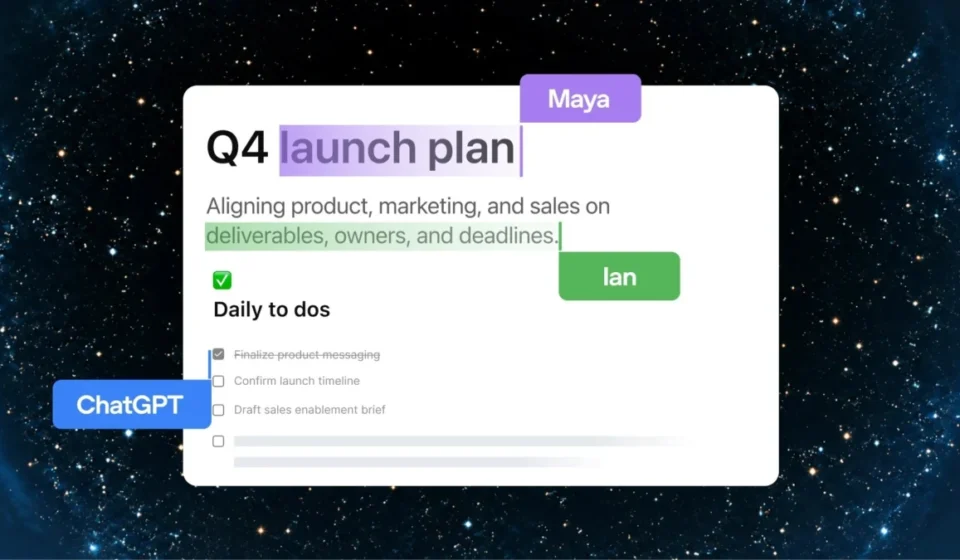
At the core of this update is the new "Space" tab, a digital environment designed to replace the legacy "Library" feature in ChatGPT. OpenAI describes Space as a dedicated hub for teams to collaborate, store documents, and manage files. Within this space, users can now generate, edit, and share Pages—a document format that emphasizes block-based organization, similar to the interface popularised by Notion.
Pages is not merely a word processor; it is an AI-native canvas. It allows users to:
- Create and Edit: Utilize a streamlined interface with floating toolbars for formatting, including headers, checklists, and quotes.
- Collaborate: Enable multiple users to work on a single document simultaneously, leveraging AI to suggest edits or generate content in real-time.
- Embed Intelligence: Insert "Prompt blocks" that allow readers to interact with the document, asking the AI to refine or expand upon the content dynamically.
- Integrate Data: Connect with external repositories like Google Drive to maintain a flow of information.
The feature is currently available to ChatGPT Pro, Business, and Enterprise customers. While the full suite is functional on web and desktop applications, mobile users are currently limited to viewing and sharing capabilities, reflecting the platform’s focus on deep-work desktop environments.
The Chronology of an Ambition
The path to this launch was paved by years of speculation regarding OpenAI’s roadmap.
- Pre-2026: OpenAI established dominance in the Large Language Model (LLM) space, with ChatGPT becoming a ubiquitous tool for individual productivity.
- Early 2026: Market analysts began noting a "productivity drift," where users were increasingly using LLMs to draft entire documents, only to copy-paste them into Microsoft Word or Google Docs.
- Tuesday, DevDay 2026: OpenAI officially unveiled Pages. The company presented the tool as a response to user demand for "less friction" between the generation of ideas and the finalization of documents.
- The Near Future: OpenAI has confirmed that a collaborative slides application is currently in development, aiming to capture the presentation-building market segment currently dominated by PowerPoint and Google Slides.
Supporting Data: The Expanding Enterprise AI Market
The timing of this shift coincides with a massive surge in enterprise AI spending. According to recent projections from Gartner, spending on enterprise AI assistants is expected to skyrocket from $17 billion in 2025 to $71 billion by 2030.
This financial trajectory suggests that the "AI-native office" is the next major frontier for software companies. The data indicates that knowledge workers are shifting their daily workflows: instead of opening a blank document and waiting for inspiration, they are increasingly spending their time in "chat-to-document" environments. Experts forecast that within the next three years, employees will spend more time interacting with AI-driven productivity interfaces than with any other category of enterprise software.
Competitive Landscape and Official Responses
The move to embed document editing into an AI agent is part of a broader industry trend. Both Anthropic and Microsoft have signaled similar shifts in the last fortnight:

- Anthropic: Recently introduced a rich-text editor and slide-creation tool into its Claude AI assistant, currently in beta testing.
- Microsoft: Updated its Copilot ecosystem last Friday to allow for the direct creation and editing of Office documents within the interface, aiming to unify enterprise context for chat, code, and documents.
Maria Bell, a senior research analyst at FDM CCS Insight, notes that these developments are not just feature updates; they are structural shifts. "Spaces and Pages broaden the competitive overlap," Bell says. "ChatGPT is moving beyond being primarily an individual assistant towards becoming a place where work can be retained, organized, and shared with colleagues. That brings it closer to the collaboration layer of Microsoft 365, Google Workspace, and Notion."
Jack Gold, principal analyst at J. Gold Associates, views this as a calculated effort to increase "stickiness." By keeping the user within the OpenAI ecosystem for the entire lifecycle of a project, the company hopes to secure recurring revenue. "OpenAI is trying to become a more user-centric environment that focuses on everyday workloads," Gold notes. "They are competing not just with Microsoft and Google, but with every AI company that wants to own the ‘on my desktop’ environment."
Implications: The High Bar for Adoption
Despite the technological prowess of Pages, analysts warn that the "rip and replace" strategy is rarely successful in the enterprise sector. Companies are historically resistant to switching their primary productivity suites due to the massive sunk costs in training, workflow integration, and existing file infrastructure.
The "Switching Cost" Barrier
For OpenAI to succeed, it must convince teams that it is more than just a novelty. "A user can adopt ChatGPT for drafting or research on their own," says Maria Bell. "But shared documents depend on colleagues using the same environment, agreeing how work is organized, and trusting it as a common workspace."
Incumbents like Microsoft and Google possess a deep-rooted advantage: they already hold the keys to the enterprise. Their platforms are integrated into years of shared content, complex permission settings, and established office hierarchies. Asking a corporation to migrate its entire workflow to a new platform like OpenAI is a "higher bar" than asking a user to adopt a new chat feature.
Security and Data Sovereignty
As OpenAI opens its platform to collaborative document editing, it faces significant scrutiny regarding data governance. Collaborative document access brings with it complex permission concerns. Users must navigate how files are shared and who has access to the underlying data that informs the AI’s generative outputs. While OpenAI has provided documentation on its "Space sharing" and "data control" features, enterprise clients will likely require rigorous audits before fully entrusting their proprietary data to a shared OpenAI workspace.
Conclusion: The Future of the Digital Desk
The launch of Pages marks a pivotal moment in the "AI-first" era of computing. OpenAI is essentially betting that the future of work will not happen inside a word processor that has been retrofitted with AI, but inside an AI that has been expanded to support word processing.
Whether this model can successfully disrupt the giants of the industry remains to be seen. The technical hurdle of creating a high-quality document editor is significant, but the human hurdle—the inertia of enterprise habits—is much higher. As the battle for the digital workspace intensifies, the primary beneficiaries will likely be the knowledge workers who will soon find themselves with more sophisticated, AI-driven tools than ever before.
For now, the industry watches as OpenAI pivots from being a "clever chatbot" to a "centralized office," testing whether the world is ready to replace its traditional suite of tools with the power of generative intelligence.