





















































Navigating Volatility: Chris Finch on the Timberwolves’ Evolution, Coaching Transitions, and the "Joan Beringer" Era

As the Minnesota Timberwolves stand on the precipice of a new NBA season, the air in Minneapolis is thick with a familiar blend of anticipation and uncertainty. In the final installment of an exclusive 80-minute interview with MinnPost, Head Coach Chris Finch pulls back the curtain on a franchise currently undergoing a fundamental recalibration.
Fresh off a season he candidly describes as "super-frustrating," Finch is tasked with merging a core of established stars with a raw, high-potential youth movement, all while restructuring a coaching staff that has seen significant departures.
The "Joan Beringer" Factor: A High-Stakes Development
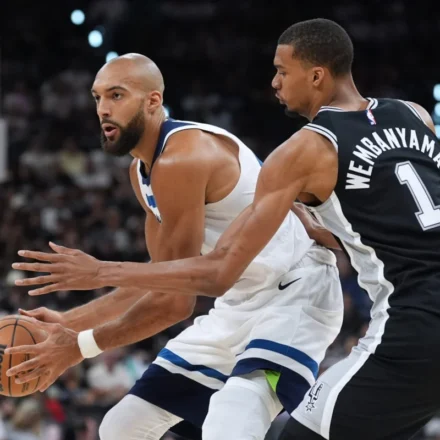
The focal point of the conversation is 19-year-old center Joan Beringer. Despite his tender age, Beringer has emerged as a cornerstone of the team’s upcoming campaign. Finch acknowledges the organizational "bullish" stance on the young big man but is quick to temper expectations with the harsh realities of the NBA learning curve.
"You have to realize, as with all young players, there is going to be inconsistency," Finch says. He distinguishes between "self-imposed" issues—such as unnecessary fouls and poor positioning—and the natural growth curve of a teenager adapting to the speed of the professional game.

Finch emphasizes that the coaching staff is currently prioritizing core strength for Beringer. "That’s where bigs get in trouble," Finch explains, noting that a strong core allows a player to remain vertical and balanced while making plays in the air. The goal is to minimize the "self-imposed" errors that plagued the team last year. The coaching staff is prepared for a volatile performance trajectory for the rookie: one game of brilliance, one of struggle, and one of mediocrity. "If we are getting to the point where two out of the three are not good, then we are going to be a little bit exposed," the coach admits.
Coaching Staff Restructuring: The Post-Nori Era
The departure of lead assistant Micah Nori to the Portland Trail Blazers as head coach has forced a massive redistribution of labor within the Timberwolves’ ranks. Nori was not merely an assistant; he was a tactical architect, responsible for late-game management, special situations, and clock management.
Finch is currently in the process of reassigning these duties. Pablo Prigioni is stepping up as the lead assistant, though Finch notes that Prigioni will retain his focus on the offensive engine of the team. Other responsibilities, particularly the critical "late-game" adjustments, will see Finch himself reclaiming a more direct role.
"I look at it the same as when we lose players: It is hard to replace a player straight-up for who they are," Finch says. "One of my challenges to the staff is they all have to take a step forward." The team will rely on a collective approach, with assistants like Nate Bubes, Elston Turner, and Kevin Hansen taking on expanded roles. The transition is fluid, and Finch views it as an opportunity to refresh the team’s tactical approach—a philosophy he has honed throughout his career.

Reflection: The "Continuity" Trap of Last Season
Reflecting on the 2025-26 season, Finch offers a remarkably transparent critique. The team entered the year with a "continuity" narrative, yet it failed to manifest in the consistency required to dominate the West.
Finch points to his own decision-making—specifically the late-season lineup shift that moved Mike Conley out of the starting five—as a point of personal regret. While the move was intended to optimize Donte DiVincenzo, the resulting strain on stars like Anthony Edwards and the increased pressure on Julius Randle created a ripple effect of inefficiency.
"I think we took Julius’s last 35 games from two seasons ago for granted and we didn’t create enough easy stuff for him," Finch admits. He identifies the "boredom" and lack of joy that permeated the locker room as a major hurdle. For a team that prided itself on being a championship contender, the inability to "get out of their own way" was a defining, and ultimately painful, characteristic.
The Path Forward: Defining the Identity
When asked about the hallmarks of his coaching philosophy, Finch returns to the fundamentals that built the Wolves’ identity: ball pressure, movement, and rapid decision-making.

"I want to continue to play faster, offensively, for sure," he says. The plan for the upcoming season is to utilize a more flexible structure that allows Anthony Edwards to operate in strategic two-man games, capitalizing on the presence of a true point guard to unlock new dimensions of the offense.
Defensively, the goal is to leverage the team’s inherent physicality. However, Finch is careful to note that knowing the adjustments is not the same as executing them. The team is currently in a "re-learning" phase, where both veterans and newcomers must internalize the coach’s voice.
Implications: A High-Variance Future
The most striking admission of the interview is the acknowledgment that the Timberwolves are, in many ways, "dancing on the cliff." When asked if the team’s floor is lower while the ceiling is higher, Finch agrees quietly.
The Western Conference continues to be an unforgiving gauntlet. Finch scoffs at the notion of projecting "60-win" seasons, noting the extreme difficulty of maintaining such a pace in the current league environment. He suggests that the team’s success may once again depend on the ability to consolidate strengths and make adjustments post-All-Star break, rather than winning the "marathon" of the regular season.

Embracing Volatility
Finch’s comfort with roster upheaval—a trait he attributes to his formative years coaching abroad—is a defining aspect of his leadership. While many organizations fear the instability of change, Finch sees it as a necessary, if challenging, component of modern NBA success.
"It never gets boring," he remarks. By focusing on the "four specific things" that allow a team to win in any given year, Finch avoids the trap of clinging to previous identities. He recognizes that last year’s disappointment was largely tied to the false expectation that continuity alone would yield results.
As the team heads into preseason, the sentiment from the top is clear: the Timberwolves are not looking back. They are embracing the volatility, empowering a new generation of coaches and players to "meet the moment," and preparing to navigate the treacherous, ever-evolving landscape of the Western Conference with a new, and perhaps more ruthless, focus.
Summary of Key Takeaways
- Joan Beringer: The 19-year-old is the X-factor for the season; the team is preparing for a high-volatility performance cycle as he learns to balance aggression with discipline.
- Coaching Staff: Following the departure of Micah Nori, the staff is undergoing a significant "granular" redistribution of duties, with Pablo Prigioni leading the offense and Finch reclaiming control over late-game management.
- Accountability: Finch takes personal responsibility for the tactical errors of last season, specifically regarding lineup adjustments and the failure to create easier offensive opportunities for his stars.
- Team Identity: The focus remains on speed, passing, and ball pressure, with an emphasis on a more "purposeful" use of Anthony Edwards within the offensive structure.
- Philosophy: Finch is a proponent of "learned volatility," believing that roster and staff changes are not obstacles, but essential elements of the modern NBA that must be managed to remain competitive.