














































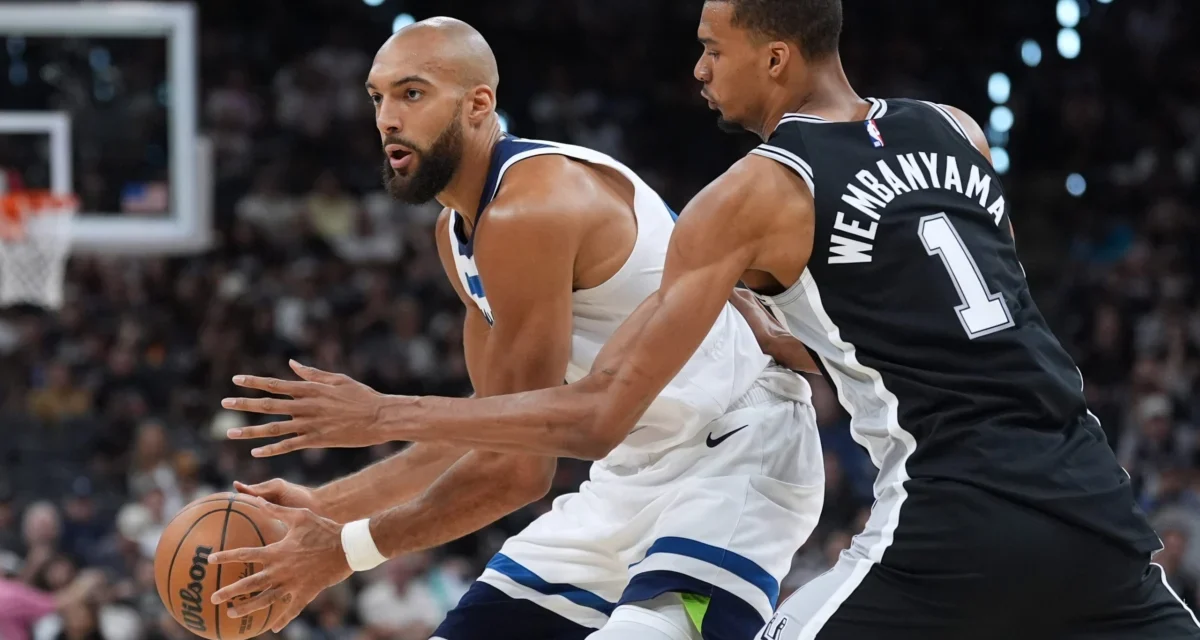



In a wide-ranging, 80-minute interview with MinnPost, Minnesota Timberwolves Head Coach Chris Finch sat down to dissect the evolving identity of his roster as the team prepares for the 2026-2027 NBA season. With the dust settling on a transformative summer, the focus of the organization has shifted from high-level acquisition to the granular work of integrating new talent into an established, albeit evolving, system.
Following parts one and two of this series—which covered the defensive philosophy and the arrival of LaMelo Ball—this third installment turns the spotlight toward the frontcourt, the depth of the bench, and the strategic "prove-it" mentality currently permeating the Timberwolves’ locker room.
The Kuminga Era: A New Anchor at the Four
The most significant roster change this offseason is the acquisition of Jonathan Kuminga, who is slated to step into the starting power forward role. Finch was unequivocal about the expectations for the former Warrior.
"It is his job to lose," Finch stated, emphasizing that the starting spot is not merely a placeholder but an opportunity for Kuminga to redefine his career trajectory.
Defensive Expectations and the "Elite" Threshold
When asked what would secure Kuminga’s place in the starting lineup, Finch pointed directly to the team’s defensive ceiling. "The way that he wins it most rapidly is by solidifying our defense into elite. We feel he has the capability to do that."

The pairing is viewed as a natural fit, provided the team can manage its collective discipline. A recurring theme in Finch’s analysis was the issue of excessive fouling—a malady that plagued the team last season. Finch noted that Kuminga shares this tendency, and the coaching staff has made it a point of emphasis to "get that under control teamwide."
Beyond perimeter defense, rebounding remains a critical metric. Finch has been explicit with Kuminga regarding his role on the glass: "If you rebound at a high level for us, it is going to be such a shot in the arm."
Offensive Chemistry and Tactical Versatility
Offensively, the Timberwolves are tasked with blending Kuminga’s high-motor game with the playmaking of stars like LaMelo Ball and Jaden McDaniels. Finch envisions Kuminga as a lethal off-ball cutter who can thrive in transition—a style of play that mirrors the team’s desire to "play early."
However, the challenge lies in shot selection. Finch drew a parallel to Jaden McDaniels, suggesting that Kuminga might serve as a barometer for the offense’s health. "Is he getting enough touches? And when he does get those touches, does he not feel the need or pressure to do something for himself all the time?"
Finch also touched on the psychological aspect of the move. Leaving the rigid, established system of Golden State for the Timberwolves requires an adjustment period. "It is hard to navigate that," Finch noted, acknowledging the complexities of Kuminga’s previous situation. "I don’t blame any of the parties who are scratching their heads about why that did or didn’t work. Not every player can come in and play in that system."

The Bench Rotation: Shannon and Dosunmu
The Timberwolves’ second unit is undergoing a subtle, yet significant, refinement. The pairing of TJ Shannon and Ayo Dosunmu is one that Finch plans to test heavily.
Developing Playmaking Synergy
"They are probably going to share the floor a lot together," Finch said. "So they are going to have to develop a fast chemistry."
- TJ Shannon: Finch describes Shannon as an underrated passer who often reaches the "heart of the defense." The coaching goal for Shannon is "self-regulation"—learning when to finish at the rim and when to kick the ball out to open shooters.
- Ayo Dosunmu: In contrast, Finch is more settled on Dosunmu’s role. "I’m not too worried about [Ayo]. He’s played in enough situations by now… he always finds his way." Dosunmu’s game is defined by its simplicity and repeatability, traits that provide a stable floor for the second unit.
Finch emphasized that for these two, the primary goal for the upcoming camp is increasing their "readiness" and playmaking efficiency. While Shannon provides the explosive athletic threat, Dosunmu serves as the cerebral, "simple" facilitator.
Defensive Growth and the "Chase" Mentality
A major point of discussion was the defensive development of the bench, particularly Shannon. Finch noted that while Shannon’s physical tools are elite, he often relies on them too late, failing to anticipate the moves of high-level NBA scorers.
"He has been such a good, strong, fast athlete his entire career that so many times he has waited too long," Finch explained. "In the NBA, he is going against equal athletes at times, and better skills at times, where he can’t close the gap. He has to figure out the anticipation piece."

Finch intends to mold Shannon into a "chase defender," leveraging his physical profile to harass opposing guards, provided he can shed the habit of reacting a beat behind the play.
Fringe Rotation Players: Hyland and Clark
The depth of the roster remains a subject of intense evaluation, specifically regarding Bones Hyland and Jaylen Clark.
Bones Hyland: The "Let-it-Fly" Mentality
For Hyland, the coaching staff is demanding a more aggressive, resilient mindset. Finch observed that Hyland occasionally turns down open shots, perhaps out of a desire to create for others. "He has to have more of a let-it-fly mentality. Because when he plays with that sort of mindset, those were some of his best games." Furthermore, Finch wants to see Hyland lean into the physical nature of the Western Conference, holding his own against the league’s bruising, physical guards.
Jaylen Clark: The Disruptor
Finch, a self-described "huge fan" of Jaylen Clark, highlighted the young player’s unique ability to create momentum out of chaotic defensive situations. "He makes a lot of plays out of nothing, momentum plays that can turn a game. He’s got a knack and a feel for that, things that you cannot teach."
However, the "kryptonite" for Clark, according to Finch, is his tendency to guard every player the same way. As he matures, Clark must learn the nuance of defending primary versus secondary options.

The Trey Lyles Factor
With the addition of Kuminga and the natural rotation of the frontcourt, Trey Lyles finds himself in a more precarious position regarding minutes. Finch admitted that a "22-minute a night" role is likely not in the cards, but noted that Lyles remains a vital piece of the puzzle.
"What I really like is his attacking on close-outs," Finch noted. "He’s a skilled big… and he understands who he is as a player and just keeps leaning into that." Whether as a small-ball center or a floor-spacing four, Lyles provides a specific, high-IQ skill set that gives the coaching staff flexibility in lineup construction.
Implications for the Season
The overall tone of the interview suggests an organization that has moved past the "hopeful" phase and into a "results-oriented" period. The decision to sign Kuminga to a "prove-it" contract, combined with the development of young bench pieces like Shannon and Clark, indicates a front office and coaching staff that believe they have the pieces to compete at the highest level of the Western Conference.
As the team heads into training camp, the narrative is clear: individual growth—specifically regarding defensive anticipation and offensive efficiency—will dictate the team’s ceiling. If Kuminga can anchor the defense, and the bench can find chemistry, the Timberwolves believe they have the ingredients to transform their recent playoff frustrations into a sustained championship-caliber run.
The fourth and final part of this interview series will be released later this week, focusing on the team’s closing strategy and long-term outlook.