

























































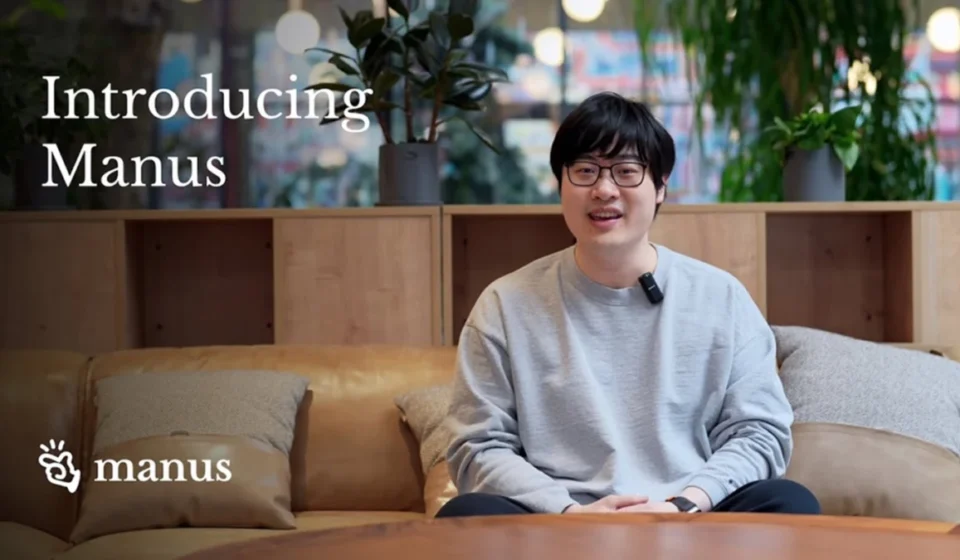

The landscape of agentic AI is undergoing a radical shift, and at the center of this transformation is Manus. Following a high-profile, aborted acquisition by Meta—a saga that ended in regulatory deadlock—Manus has emerged from the shadows of a potential buyout to stake its claim as a formidable, independent competitor. With the launch of Manus 2.0, the company is not merely updating its software; it is unveiling an entirely new architectural paradigm designed to bridge the gap between experimental AI and enterprise-grade automation.
Main Facts: A Total System Overhaul
Manus 2.0 represents a comprehensive reimagining of the company’s agentic framework. By moving beyond the traditional model of "chatbot-as-an-assistant," Manus is positioning itself as a platform for persistent, autonomous digital labor.
The centerpiece of this release is Cascade, an "agent harness" designed to manage the lifecycle of complex AI projects. Unlike standard LLM implementations that trigger high-cost compute for every minor action, Cascade acts as an intelligent traffic controller. By invoking specialized capabilities only when necessary, the system optimizes token usage and operational costs. According to internal data provided by the company, this architecture achieved a 32% reduction in operational costs and a 28.2% increase in speed during internal testing.
Complementing this is the introduction of "Cloud Computer," a persistent execution environment. This feature allows businesses to maintain a permanent "home" for their automated workflows. Rather than running tasks in fleeting, stateless sessions, these agents reside in a dedicated space, allowing for continuous, long-running operations—a critical requirement for enterprise services that must remain active 24/7.
For individual power users, Manus has launched Cue, a standalone application. Designed as a direct competitor to Meta’s Muse, Cue functions as a management hub for personal agents. Each agent within the Cue ecosystem is provisioned with its own unique digital identity, including independent access to email, wallets, and local computing resources. This allows agents to act with a degree of agency previously unseen in consumer-facing AI, even enabling them to collaborate in group chats to solve multi-step problems autonomously.
The Chronology: From Meta Partnership to Independence
The trajectory of Manus over the past year has been one of the most closely watched stories in the tech sector.
- December 2025: Meta announces its intention to acquire Manus, aiming to integrate its sophisticated agentic technology into the broader Meta AI ecosystem. The industry views this as a strategic play to solidify Meta’s lead in the race for agentic autonomy.
- April 2026: The deal hits a wall. China’s National Development and Reform Commission (NDRC) officially blocks the acquisition, citing regulatory concerns regarding cross-border technology transfers.
- August 2026: After eight months of limbo, Manus and Meta officially terminate the merger agreement. Manus re-establishes its independence, tasked with the difficult challenge of re-branding itself as a competitor to the very giant that nearly purchased it.
- Present Day: Manus 2.0 marks the company’s first major product release as a standalone entity, signaling its intent to dominate the agentic AI market by focusing on enterprise-specific orchestration and persistent automation.
Supporting Data: Efficiency and Performance
The transition to the new architecture is built upon the promise of efficiency. In an era where AI costs are often cited as the primary barrier to enterprise scaling, Manus’s focus on "token economy" is strategic.
The company’s reported metrics—23.2% fewer tokens used and 28.2% faster completion times—suggest that the "Cascade" harness effectively solves the issue of model "indiscrimination." By selectively routing tasks to the appropriate sub-components of the AI, rather than forcing the primary model to handle every request, Manus reduces the computational overhead that typically plagues LLM-driven applications.
Furthermore, the integration of Manus Studio—a unified workspace for documents, code, media, and even game development—serves as a comprehensive testing ground for these agents. By providing a common interface for both humans and AI, the platform ensures that the "hand-off" between human intent and machine execution is seamless, reducing the friction that often occurs when jumping between disparate applications.
Official Responses and Industry Context
The release of Manus 2.0 has been met with both excitement and professional skepticism. Industry analysts are highlighting the shift in how the market views AI. It is no longer about the intelligence of the model itself, but the sophistication of the "orchestration layer."
Anushree Verma, Senior Director Analyst at Gartner, notes that while the model is the engine, the orchestration layer is the chassis. "The strongest systems will combine a capable model with an efficient runtime that uses that model selectively," Verma said. She emphasizes that the market is beginning to prioritize companies that can manage the complexities of "agentic orchestration" rather than just those that can provide access to high-parameter LLMs.
Manus’s move toward "remote execution," where the AI can operate within a user’s local environment—viewing and interacting with approved files and browsers—has also sparked a necessary conversation about the risks of autonomous systems.
Implications: The Governance Gap
As Manus 2.0 brings powerful, agent-based autonomy to the desktop, the question of enterprise governance becomes paramount. The ability for an agent to independently access local apps, wallets, and browsers is a double-edged sword.
"The capability is becoming enterprise-relevant, but the autonomy is ahead of the governance," observes Verma. Her advice to enterprises is clear: Treat these agents as "untrusted or semi-trusted" entities. To safely deploy such technology, organizations must implement:
- Strict Approval Gates: Requiring human intervention for high-stakes actions, such as financial transactions or data deletion.
- Detailed Telemetry: Ensuring that every agent action is logged, audited, and traceable to a specific, authorized process.
- Narrowly Scoped Credentials: Using short-lived, permission-restricted access keys rather than persistent "master" access.
IDC’s Sakshi Grover adds another layer of concern: portability. For large-scale enterprises, the "vendor lock-in" risk is high. Organizations must evaluate how easily they can export their agentic state. "An export button alone does not establish that an agent’s operating state is portable," Grover warns. Companies need to ensure that their entire workflow—including intermediate task states, logs, and connector credentials—can be recovered or moved if the platform fails or is discontinued.
Looking Ahead
The release of Manus 2.0 sets the stage for a high-stakes competition between independent agile players like Manus and the massive, integrated ecosystems of Meta, OpenAI, and Anthropic. Manus has successfully positioned itself as a "platform-first" company, focusing on the infrastructure of work rather than just the content of the answer.
Whether this architecture can withstand the rigors of enterprise security and compliance requirements remains to be seen. However, by focusing on persistent, event-driven, and cost-efficient agentic workflows, Manus has signaled that it is no longer looking for a partner—it is looking for market leadership. For CIOs and enterprise architects, the era of "agentic experimentation" is closing, replaced by a new era of "agentic operations," and Manus 2.0 is one of the first contenders to offer a blueprint for that future.