


























































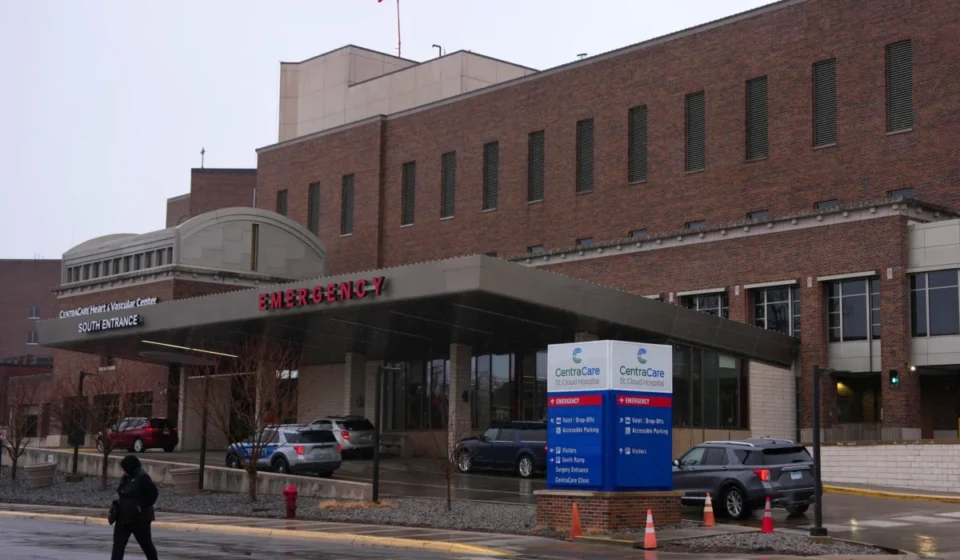

In the quiet suburbs of St. Cloud, Minnesota, Cori Roberts keeps a folder of records that represents a four-year battle not just against cancer, but against the very institution that treated it. Diagnosed with early-stage cervical cancer while working a $41,000-a-year human resources job, Roberts found herself caught in a vice grip. Despite carrying health insurance, she was left with $8,000 in out-of-pocket medical bills—a sum that threatened her basic survival.
"I had my car and a basket of clothes," Roberts recalled, describing her life at the time of her diagnosis. "Medical bills were not something I could have afforded."
Roberts sought help from CentraCare, the St. Cloud-based nonprofit health system that treated her. As a nonprofit, CentraCare receives significant federal, state, and local tax exemptions in exchange for its charitable mission, which includes providing care to those unable to pay. However, Roberts was told she earned too much to qualify. What followed was a two-year struggle involving sacrificed groceries, missed Christmas gifts for her children, and eventually, a lawsuit filed by the hospital for the remaining $6,000 of her debt.
The case of Cori Roberts is not an anomaly; it is a symptom of a systemic crisis. A joint investigation by the Minnesota Star Tribune and KFF Health News has revealed that Minnesota’s nonprofit hospitals are among the least charitable in the United States, often spending a fraction of their operating budgets on the very patients they are legally and ethically obligated to support.

The Disparity: How Minnesota Compares
The scale of the issue is startling. While hospitals nationally spend an average of 2.4% of their operating budgets on charity care, Minnesota hospitals spend roughly one-third of that amount.
The investigation, which analyzed five years of financial data and hundreds of individual hospital policies, found that of Minnesota’s 123 general hospitals, 62 devoted less than 0.5% of their operating budgets to charity care between 2020 and 2024. CentraCare’s flagship facility in St. Cloud is among the lowest, spending less than 0.25%. This translates to a mere $25 in patient aid for every $10,000 the hospital spends on operations.
This stands in stark contrast to states like Illinois, Iowa, Nevada, and Texas, where hospitals—often serving larger uninsured populations—consistently provide significantly higher percentages of financial aid.
A Chronology of Financial Strain
The journey for patients like Roberts and Abby Kelley-Hands—a St. Paul resident who incurred $20,000 in debt after an insurance snafu—often follows a harrowing timeline:

- The Diagnosis/Event: Patients seek care, often during life-altering health crises, assuming their nonprofit provider will offer a safety net.
- The Application Maze: Patients discover that hospital policies are opaque, inconsistent, and often require invasive documentation, including bank statements, retirement account details, and even valuations of vehicles and farm equipment.
- The Rejection: Many are denied aid based on income thresholds that vary wildly across the state, with some hospitals capping eligibility at $15,000 annually while others extend it to $47,000.
- The Escalation: Hospitals, prioritizing revenue, transition to aggressive collection practices, including lawsuits, even as the patient struggles to regain their health.
- The Outcome: Patients drain their savings, take out high-interest loans, or, in the case of Roberts, leverage their retirement plans to settle debts that the hospital—a tax-exempt entity—could have forgiven.
Supporting Data: Profits vs. Philanthropy
The tension between hospital finances and charitable obligations is at the heart of the current debate. Minnesota hospitals collectively post roughly $2.4 billion in annual net income. Yet, the state’s figures show they write off more in "bad debt"—unpaid bills they actively tried to collect—than they do in official charity care.
Critics argue this highlights a misplaced priority. "The system is not working," said Erin Hartung, director of legal services at Cancer Legal Care. "And the burden is falling hardest on the people who are least able to bear it."
While some hospitals, such as Hennepin Healthcare (HCMC), operate with thin margins as they serve as the state’s primary safety net, other major systems like the Mayo Clinic, Essentia Health, and Sanford Health remain robustly profitable. In 2024, most CentraCare facilities reported operating margins exceeding 10%, raising questions about why their charity care thresholds remain so restrictive.
Official Responses and the "Defensive" Stance
Hospital executives argue that the narrative is oversimplified. They contend that they are essential community anchors, training the next generation of medical professionals and maintaining money-losing services like obstetrics and mental health units.

"We are the second- or third-largest employer in town, running on razor-thin margins," said Robert Pastor, CEO of Rainy Lake Medical Center. "Rural hospitals like ours are often portrayed as though we are sitting on piles of cash. That is far from the reality."
Patti Banks, head of Ely-Bloomenson Community Hospital, echoed this sentiment: "I feel like I’m put in the position, being the hospital, where we have to defend being paid."
However, Minnesota Attorney General Keith Ellison remains skeptical of these defenses. "There is a benefit you get from being a nonprofit hospital in the state of Minnesota," Ellison noted. "But do the people get the benefit?"
The Policy Implications and Future Reform
The investigation has prompted calls for legislative action to ensure that tax-exempt hospitals are actually functioning as charities. Currently, the lack of standardized criteria creates a "maze of standards" that confuses patients and allows hospitals to set arbitrary barriers.

Proposed reforms include:
- Standardized Eligibility: Creating a uniform income threshold for charity care across the state to prevent geographic inequality.
- Universal Applications: Replacing individual, complex hospital forms with a single, simplified state-wide application.
- Automated Screening: Implementing software that automatically screens patients for charity care eligibility based on credit or tax data, similar to the system currently utilized by Sanford Health.
Some of these changes are already gaining traction. Following an investigation by the Attorney General’s office, the Mayo Clinic overhauled its charity care program, leading to a near-doubling of its charitable spending.
The Human Cost: A Call for Grace
Ultimately, the debate is not just about balance sheets and federal tax codes; it is about the role of healthcare in society. For patients like Cori Roberts, the lack of transparency and compassion creates a lasting sense of betrayal.
"They have all the money," Roberts said, gesturing toward the expansion of the very hospital that sued her. "But they can’t grant a good person some grace?"

As the uninsured rate in Minnesota reaches its highest level since 2017, the necessity of a functioning charity care system has never been more urgent. Whether the state moves toward legislative mandates or relies on hospitals to self-correct, the current model leaves millions of Minnesotans one illness away from financial ruin—a reality that challenges the very definition of a "nonprofit" health system.
The path forward will likely require a reckoning between the business of medicine and the mission of healing. For those caught in the middle, the wait for a more equitable system is not just a policy preference; it is a matter of survival.