

























































The technological landscape is undergoing its most significant shift since the advent of the internet. As organizations move beyond the era of generative AI chatbots—which merely provide answers—they are entering the age of Agentic AI. Unlike traditional software that follows rigid, preset rules, agentic AI systems are designed to perceive their environment, reason through complex problems, learn from experiences, and execute multi-step tasks with little to no human intervention.
This transition is not a gradual evolution; it is a fundamental transformation in how business is conducted. According to Gartner, by 2028, 33% of enterprise software applications will include agentic AI—up from less than 1% in 2024—effectively enabling 15% of day-to-day work decisions to be made autonomously.
The Core Shift: From Assistance to Action
Traditional AI models act as passive tools, requiring constant human prompts to function. Agentic AI, conversely, is characterized by its ability to act as a "digital colleague." These systems can communicate directly with other AI agents, call upon external tools, and navigate dynamic workflows to achieve high-level goals set by human operators.
This shift promises to solve critical labor shortages and manage hazardous or monotonous tasks in industries ranging from healthcare and retail to software development and cybersecurity. However, the move toward autonomous systems has brought the "accountability gap" to the forefront of executive concerns. When an AI agent makes a decision that leads to financial loss or a security breach, the question of who is liable—the developer, the operator, or the vendor—remains a central point of legal and ethical contention.
Chronology of an Autonomous Surge
The rapid maturation of agentic AI can be traced through a series of industry milestones that highlight both the ambition and the friction of the last two years:
- Late 2024: The industry sees the first major push toward "agentic swarms," exemplified by OpenAI’s experimental Swarm framework, signaling a shift toward multi-agent collaboration.
- Early 2025: The focus turns to production-grade infrastructure. Companies like Databricks (acquiring Neon) and AWS establish dedicated divisions to handle the complexities of agentic orchestration.
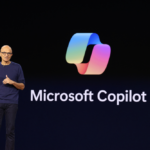
- Mid-2025: The "Agentic Mesh" concept gains traction. Leaders like Jensen Huang of Nvidia and Satya Nadella of Microsoft argue that agents are the future of software, with Nadella famously suggesting that agents may eventually replace traditional application interfaces.
- Late 2025 – Early 2026: The market faces a "reality check." High-profile incidents, such as the JadePuffer ransomware operation—the first documented end-to-end agentic cyberattack—force a massive pivot toward security, governance, and the "short-leashing" of autonomous tools.
- Mid-2026: The current state is defined by an explosion of AgentOps tools, focusing on observability, testing, and the integration of "human-in-the-loop" safeguards.
Supporting Data and Economic Realities
The financial implications of this shift are profound. While inference costs for basic AI are trending downward, the cost of running autonomous agents is rising. Gartner predicts that inference costs per workflow will increase more than fivefold through 2028, driven by the need for agents to reason, replan, and work continuously in the background.
Furthermore, the enterprise spend is massive: Gartner estimates that agentic AI puts $234 billion in traditional SaaS spending at risk as business processes shift from seat-based licensing to agent-driven operational models. This transition is forcing IT leaders to rethink their budgets. For example, some organizations have reported agent operating costs hitting $300 per day—a significant figure when the agent is only performing a fraction of a human employee’s workload.
Official Responses and Governance Frameworks
As agents move from lab experiments to the corporate production floor, the regulatory environment is beginning to tighten. The U.S. Senate’s AI AGENT Act has emerged as a landmark proposal, seeking to mandate user-linked accountability and mandatory registration with the Federal Trade Commission (FTC).
Tech giants have responded by baking "governance by design" into their platforms:
- Microsoft has introduced the Agent Governance Toolkit to address OWASP top risks, alongside Agent 365, a control plane designed to curb "agent sprawl."
- Google has focused on connectivity, launching the Agent2Agent (A2A) protocol to allow disparate agents to communicate across different vendor ecosystems.
- Salesforce has prioritized the "Trusted AI Foundation," aiming to provide the scaffolding necessary for enterprises to move from prototype to production at scale.
Implications for the Workforce and Security
The rise of agentic AI is fundamentally reshaping the IT organization. A report by SolarWinds notes that 80% of IT professionals are already reporting a shift in their roles from "operators" to "orchestrators." The day-to-day task of managing infrastructure is increasingly being handed over to agents, leaving humans to focus on high-level strategy and ethical oversight.
The Security Conundrum
Perhaps the most daunting implication is the changing threat landscape. Security is no longer just about protecting the perimeter; it is about protecting the agent. Malicious actors are already crafting "poisoned" configuration files and exploiting prompt injection vulnerabilities to turn enterprise agents into "quiet criminal helpers."
The industry’s response has been the emergence of AgentOps—a vital ecosystem of tools for monitoring AI activity, costs, and malfunctions. CISOs are now forced to adopt "red teaming" specifically for agentic workflows, testing how an agent reacts when it is nudged off-path by adversarial inputs.
The "One-Model" Trap
A recurring theme in recent analyst reports is the failure of the "one-model" approach. Enterprises that attempt to build agentic platforms using a single, monolithic model often fail because the real-world operating environment is messy. Requests change shape, latency budgets conflict, and tools occasionally "flake out." Success, therefore, relies on a modular architecture where multiple specialized agents can coordinate via an orchestration layer, rather than relying on a single "master" model to do everything.
Looking Ahead: The Path to Maturity
The hype surrounding agentic AI is beginning to give way to a more pragmatic, execution-focused mindset. While early projects often stalled due to poor planning, the next phase of development will be defined by three key pillars:
- Memory Management: Moving beyond basic conversation history to structured, cue-based retrieval systems (like Microsoft’s Memora) that allow agents to learn from the organization’s long-term data.
- Observability: The ability for IT leaders to trace every action an agent takes, ensuring transparency and providing the capability to "kill" a runaway agent instantly.
- Standardization: The adoption of protocols like the Model Context Protocol (MCP) and Agent2Agent, which will be essential for building a cohesive, multi-agent ecosystem that doesn’t collapse under the weight of its own complexity.
As we look toward 2027 and beyond, the companies that succeed will not be those that simply deploy the most agents, but those that build the most resilient frameworks for governing them. The agentic era is not merely a change in technology; it is a change in the fundamental definition of "work." For the CIO, the journey has moved from building AI to orchestrating a digital workforce that is increasingly capable of self-directed innovation—and, if left unchecked, self-directed chaos.
The question for the modern enterprise is no longer can we build an agent, but should we—and more importantly, can we keep it on a short enough leash to ensure it serves the business rather than disrupting it? The race to find that balance is the defining challenge of the decade.