

























































The Silent Crisis: How Nitrate Contamination is Quietly Poisoning the American Corn Belt

This report is based on investigative findings originally published by Circle of Blue.
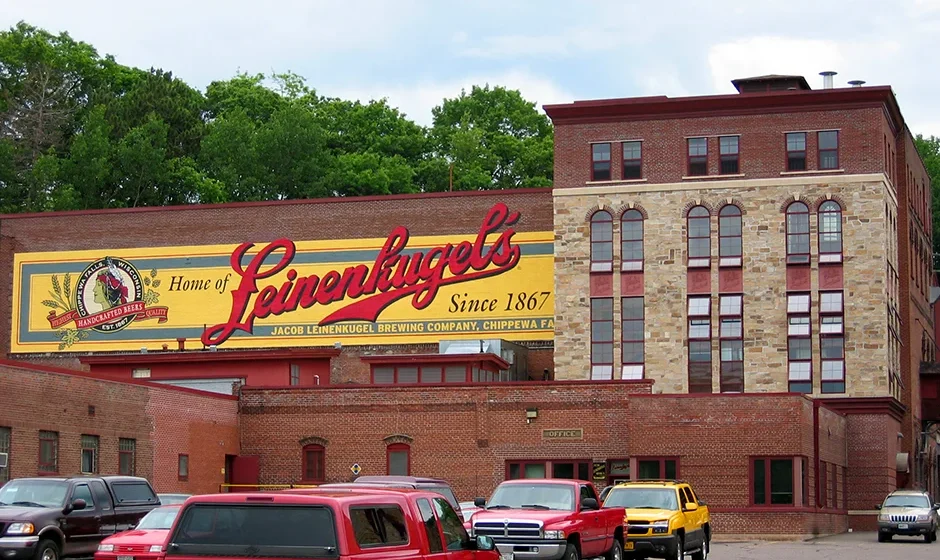
For generations, the purity of water in Chippewa Falls, Wisconsin, was more than a utility—it was a legacy. When Jacob Leinenkugel first tapped into the local spring waters to brew his iconic beer, he established a standard of quality that became the town’s hallmark. Today, that legacy is a stark reminder of a vanishing luxury. As industrial agriculture tightens its grip on the American Midwest, the very aquifers that once defined the region’s prosperity are being transformed into conduits for a silent, invisible, and carcinogenic threat: nitrate pollution.
The divide between those who can afford to treat their water and those left to fend for themselves has created a two-tiered system of health security. While municipal residents in Chippewa Falls enjoy water scrubbed of toxins, thousands of rural neighbors are drinking from private wells that increasingly mirror the chemical composition of the farm fields surrounding them.
The Tale of Two Cities: A Study in Inequality
In 1997, utility managers in Chippewa Falls sounded the alarm. Testing revealed nitrate concentrations encroaching on the federal safety limit of 10 parts per million (ppm). Acting with foresight, the city invested in sophisticated filtration infrastructure and drilled deeper wells into protected aquifers. The project, which costs the city $200,000 annually to operate, ensures that 16,000 residents receive water that complies with the Safe Drinking Water Act.
Yet, this success story masks a grimmer reality. Chippewa Falls is an island of safety in a sea of contamination. Most of the 67,000 residents of Chippewa County rely on private wells. These wells draw from the same shallow groundwater reservoirs that are now saturated with runoff from the region’s 1,200 farms.
Matthew Boos, the supervisor of the Chippewa Falls water treatment plant, sees the disparity daily. While he manages the high-tech filtration system that protects the city, his own home—located just outside the municipal boundary—tells a different story. "It was 10 [ppm] when I got there," Boos says. "Now it’s 20." Forced to take personal action, Boos installed a reverse osmosis system to protect his family. His parents, living nearby, discovered similar contamination levels and were only able to secure a new, deeper well through a competitive state grant. For many others, such expensive remediations are entirely out of reach.
A Chronology of Neglect
The roots of the nitrate crisis extend back more than half a century. In 1962, the U.S. Public Health Service established the 10 ppm limit for nitrates. The primary concern at the time was "blue baby syndrome" (methemoglobinemia), a rare but potentially fatal condition that impairs the blood’s ability to carry oxygen in infants.
- 1975: The 10 ppm standard is adopted as an interim measure under the newly formed Safe Drinking Water Act.
- 1992: The EPA formalizes the 10 ppm limit as a permanent national standard for municipal drinking water.
- 2000–2020: As industrial agriculture shifts toward larger, more concentrated animal feeding operations (CAFOs) and the heavy use of synthetic fertilizers, nitrate levels in groundwater steadily climb across the Midwest.
- 2020–2024: Multiple administrations attempt to revisit the outdated 1962 science, but these efforts are repeatedly stalled or halted by political intervention, leaving the original standard unchanged for 64 years.
Throughout this period, the scientific understanding of nitrates has evolved drastically. We now know that the 10 ppm limit, designed to protect against an acute infant illness, is woefully inadequate for protecting the general population from chronic, long-term health risks.
The Science of Risk: Beyond Blue Baby Syndrome
Nitrates are highly soluble, making them exceptionally mobile. Once nitrogen—the byproduct of synthetic fertilizer and millions of tons of livestock manure—is exposed to oxygen, it converts to nitrate and leaches through the soil into groundwater.
The health implications are profound. Emerging research links nitrate exposure to a variety of cancers, including blood, brain, breast, bladder, and ovarian cancers. A landmark study published in the journal Public Health found that even at concentrations well below the current 10 ppm legal limit, nitrate levels are associated with a 61% to 73% increase in cancer mortality.
Furthermore, studies have identified an increased risk of colorectal cancer, thyroid dysfunction, and birth defects at concentrations as low as 5 ppm. Despite this mounting evidence, the regulatory environment remains stagnant. Voluntary measures, which encourage farmers to manage runoff at their own discretion, have proven ineffective against the sheer volume of nutrients being poured onto the landscape.
Supporting Data: A National Epidemic
The situation in Wisconsin is merely a microcosm of a national health crisis. According to a recent analysis by the Environmental Working Group (EWG):
- 18% of the U.S. population—more than 62 million people—consume water from community systems that test at or above 3 ppm for nitrates.
- 85% of U.S. water treatment utilities lack the capacity to treat for nitrates entirely.
- 6,000+ community systems are currently delivering water with elevated nitrate levels to the public.
In Wisconsin, the problem is pervasive. Nearly one in ten private wells tested by state authorities over the last two decades have exceeded the federal health standard. With nitrogen fertilizer application rates five times higher than they were in 1960, the groundwater in the Corn Belt is being systematically poisoned.
Official Responses and the Regulatory Void
Governmental oversight of farm-related pollution has been characterized by a notable lack of enforcement. While municipal water systems are heavily regulated, agricultural operations—the primary source of the nitrogen deluge—operate under a "voluntary" framework that has failed to mitigate the environmental impact.
Tyler Lobdell, a staff attorney with Food & Water Watch, notes that the Corn Belt serves as the epicenter of this failure. "We’re not regulating the sources despite it being very obvious that we have a growing problem," Lobdell says. "It’s almost entirely attributable to industrial agricultural practices."
Political hurdles have exacerbated this paralysis. Recent attempts by the EPA to conduct formal, updated reviews of nitrate toxicity have been thwarted by executive-level interference, most notably during the Trump administration. As a result, the regulatory framework remains frozen in the early 1990s, while the environmental reality has deteriorated significantly.
Implications: The High Cost of Inaction
The implications of this crisis are both economic and humanitarian. In Chippewa County, the government has resorted to providing "refill stations" where residents can collect clean water in jugs and bottles. While this provides a temporary patch, it is an unsustainable solution for a region that relies on groundwater as its primary life source.
The burden of the crisis is being shifted from the polluters to the public. Residents are forced to choose between the high cost of home filtration systems, the physical labor of transporting water, or the long-term health risks of consuming contaminated tap water.
For cities like Chippewa Falls, the high cost of treatment—the $200,000 annual operational expense—is an investment in survival. But for the surrounding rural populations, the "city-county disconnect" highlights a fundamental breakdown in public health policy. As long as industrial agriculture continues to receive a pass on the environmental costs of its productivity, the water in the Corn Belt will remain a testament to a growing, preventable tragedy.
The evidence is clear: the 10 ppm standard is a relic of the past, and the health of the American public is being sacrificed at the altar of industrial convenience. Without a fundamental shift in regulatory policy and a crackdown on non-point source agricultural pollution, the "pure water" legacy that once defined the Midwest may soon be nothing more than a memory.