














































Echoes of Resistance: How Twin Cities Performance Art is Confronting Institutional Trauma

In an era defined by political instability and the persistent, heavy shadow of historical injustice, the stages of the Twin Cities have become vital crucibles for catharsis. This month, three distinct productions—Marcie R. Rendon’s Sweet Revenge, Moriah Evans’ }[…/+^%<>¬£¥$&@!!!!^^^], and Ananya Dance Theatre’s Prem—are not merely offering entertainment. Instead, they are engaging in a rigorous, multi-disciplinary dialogue about the nature of violence, the persistence of memory, and the necessity of community-led healing.
By weaving together the personal with the systemic, these works suggest that the most urgent art being produced today is that which refuses to look away from the structures that shape, and often fracture, our lives.
The Haunting of History: Sweet Revenge at Red Eye Theater
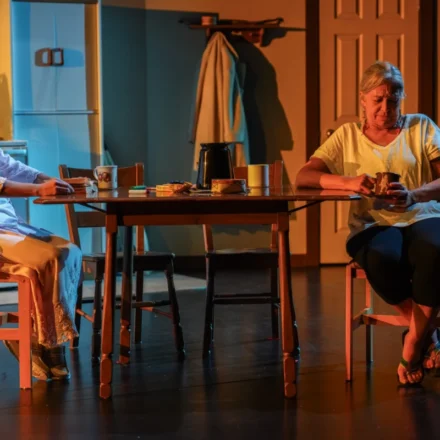
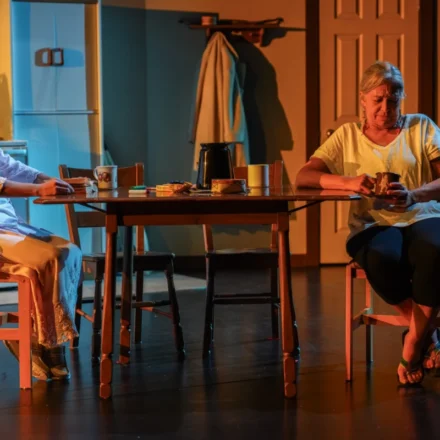
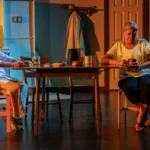
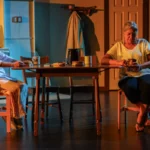
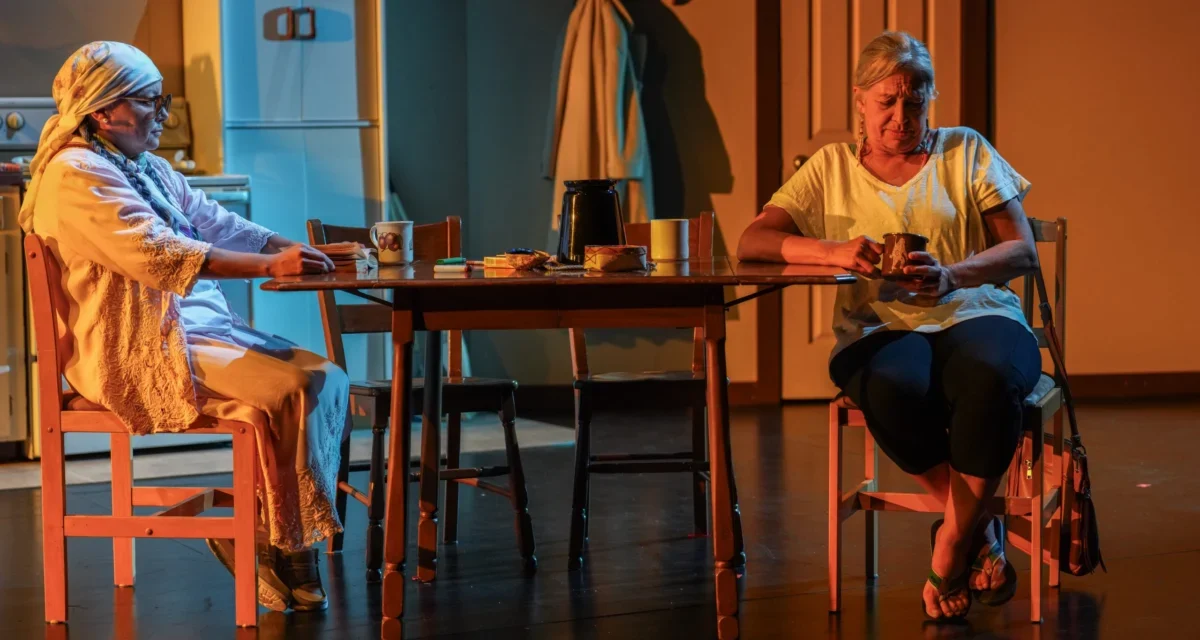
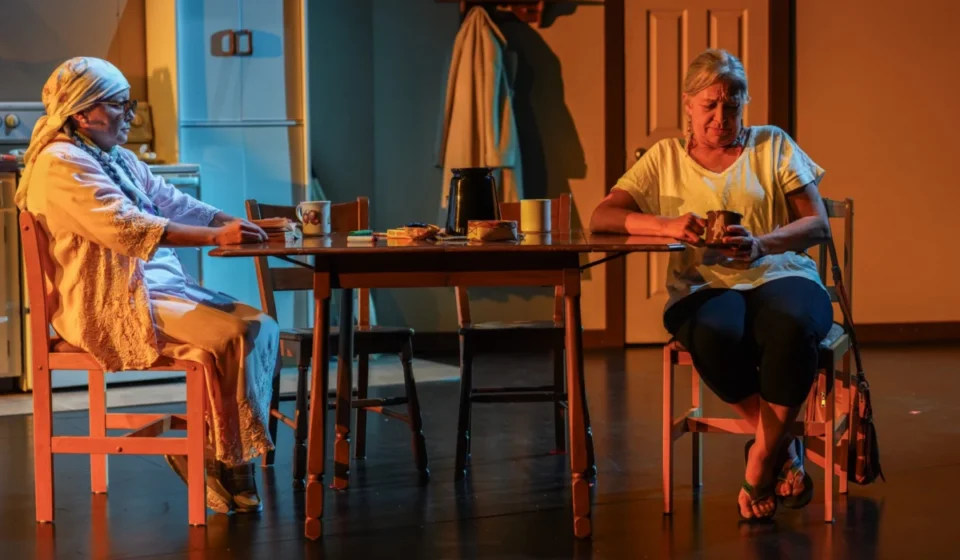
In Sweet Revenge, Marcie R. Rendon crafts a narrative that is both a whip-smart mystery and a profound meditation on intergenerational trauma. The play centers on Maggie (played with grounding, no-nonsense authority by Fern Renville), a woman who has carved out a life of spiritual and cultural stewardship within a tight-knit urban Native community.
The central conflict is triggered by a haunting, recurring motif: the cheerful, distorted tune of an ice cream truck that circles Maggie’s home every thirty minutes. For Maggie and her mother, Granny Josephine (Oogie Push), the melody is not a sign of childhood whimsy, but a piercing, sonic reminder of the boarding school era—a state-sponsored project designed to systematically erase Native language, culture, and innocence. When Maggie cries out, “I’m so tired of your rage controlling me,” it is a desperate plea for liberation from the trauma that has been handed down like an inheritance from mother to daughter.
Directed by Sequoia Hauck and presented by the Mni Giizhik Theatre Ensemble and Exposed Brick Theatre, the play balances its heavy thematic load with sharp, observational humor. The production provides a nuanced look at the complexities of urban Native life, including the performative nature of modern social service work. In one memorable sequence, three women—all high-powered professionals—attempt to purchase ready-made prayer ties and communal food to pass off as their own at a community event. Maggie’s response is a masterclass in patient, albeit firm, spiritual correction.
Despite some rough edges in staging and a recurring logical puzzle regarding the local ice cream industry’s high turnover rate (due to the mounting body count of drivers), the production succeeds. The visual storytelling, bolstered by Ches Cipriano’s evocative shadow puppetry, grounds the play’s supernatural elements in a tangible, deeply felt reality.
The Geography of Rage: Moriah Evans at the Walker Art Center
If Sweet Revenge explores the quiet, internal decay of trauma, Moriah Evans’ recent performance piece, […/+^%<>¬£¥$&@!!!!^^^]{, (a title that mimics the unpronounceable symbols of a cartoon expletive), externalizes it as a sprawling, physical insurrection against institutional control.

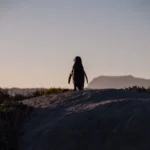
The performance began outdoors, utilizing the Walker Art Center’s campus as an extension of the stage. Dancers clad in fluorescent rain gear moved with the wind and the environment, creating a sense of ethereal freedom. However, this fluidity was abruptly shattered as the performers moved indoors. Within the museum’s walls, the movement shifted from organic to rigid, almost militaristic.
Evans, who has been vocal about her belief that the traditional proscenium stage functions as an "instrument of patriarchy," used the performance to turn the theater into a site of surveillance. The dancers’ movements were fractured and desperate; they crawled through hallways as if the institution itself were siphoning their agency. The performance explicitly invoked the weight of state-sponsored violence, referencing the lives of Renee Good and George Floyd through both text and rhythmic, frantic movement. By forcing the audience to sit with the discomfort of these dancers as they gyrated, screamed, and counted bodies, Evans challenged the complacency of the spectator, forcing them to acknowledge the "violent project" of choreography itself.
Collective Survival: The Philosophy of Prem
Narrative, as Ananya Chatterjea of the Ananya Dance Theatre notes, is often a tool of coercion—a weapon wielded in police reports and state propaganda. Her latest work, Prem, seeks to reclaim narrative as a tool for community resistance.
Prem—which translates to "love"—is a choreographic response to the systemic pressures of the modern age, specifically the 2020 uprisings and the federal immigration crackdowns that have terrorized local families. Directed by Dipankar Mukherjee, the piece abandons individual character arcs in favor of a Greek-chorus-style collective. It is a cyclical exploration of catastrophe, grief, and ultimately, joy.
The most resonant moment of the production comes when guest performer Mankwe Ndosi sings, “We make the future together,” and “no one is coming to save us because we are the ones that we need.” This is not a message of easy hope; it is a sobering acknowledgment of current reality. Given the ongoing threats to democratic institutions and the constant, looming violence facing immigrant neighbors, Prem avoids the trap of false optimism. Instead, it posits that community resilience is the only viable path forward when the state fails to protect its most vulnerable citizens.
Implications and Reflections
The emergence of these three works during the same window of time is not merely a coincidence; it is a reflection of the collective psyche of the Twin Cities arts community. Each piece confronts a specific dimension of violence:
- Historical Violence: Rendon’s exploration of the boarding school legacy in Sweet Revenge.
- Institutional Violence: Evans’ deconstruction of the museum and theater space as sites of control.
- State-Sponsored Violence: The Ananya Dance Theatre’s focus on immigration crackdowns and police uprisings.
What binds these disparate performances together is the refusal to offer a "neat" resolution. They do not suggest that the problems are solved, nor do they provide a roadmap for policy change. Instead, they perform a different function: they name the pain, document the loss, and affirm the survival of the community.

Chronology of Performance Cycles
The scheduling of these events allows for a unique cultural immersion for Twin Cities residents:
- Sweet Revenge: Playing through October 17 at the Red Eye Theater.
- PREM | Love: An Occupation: Continuing through October 17 at the Southern Theater.
The Role of the Audience
The role of the audience in these works is active rather than passive. Whether watching dancers on a hill from a balcony at the Walker or witnessing the intimate, domestic struggles of an urban Native family at the Red Eye, the viewer is asked to hold space for uncomfortable truths.
As the cultural landscape continues to shift under the weight of political polarization and economic instability, the role of performance art becomes increasingly clear. It acts as a mirror, showing us the architecture of our current crisis, but it also serves as a workshop for the kind of collective thinking required to dismantle that architecture.
In the words of Mankwe Ndosi, the realization that “we are the ones that we need” may be the most radical conclusion a theatergoer can reach. As these performances conclude their runs, they leave behind an indelible mark on the Twin Cities—a reminder that while the state may own the press releases, the people own the stories. And in those stories, there remains a power that no institution can fully suppress.
For those looking to engage with these works, the remaining dates offer a rare opportunity to participate in a larger, ongoing conversation about what it means to live, grieve, and resist in the modern American city.