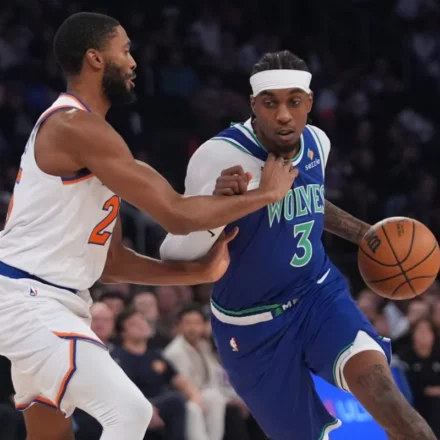









































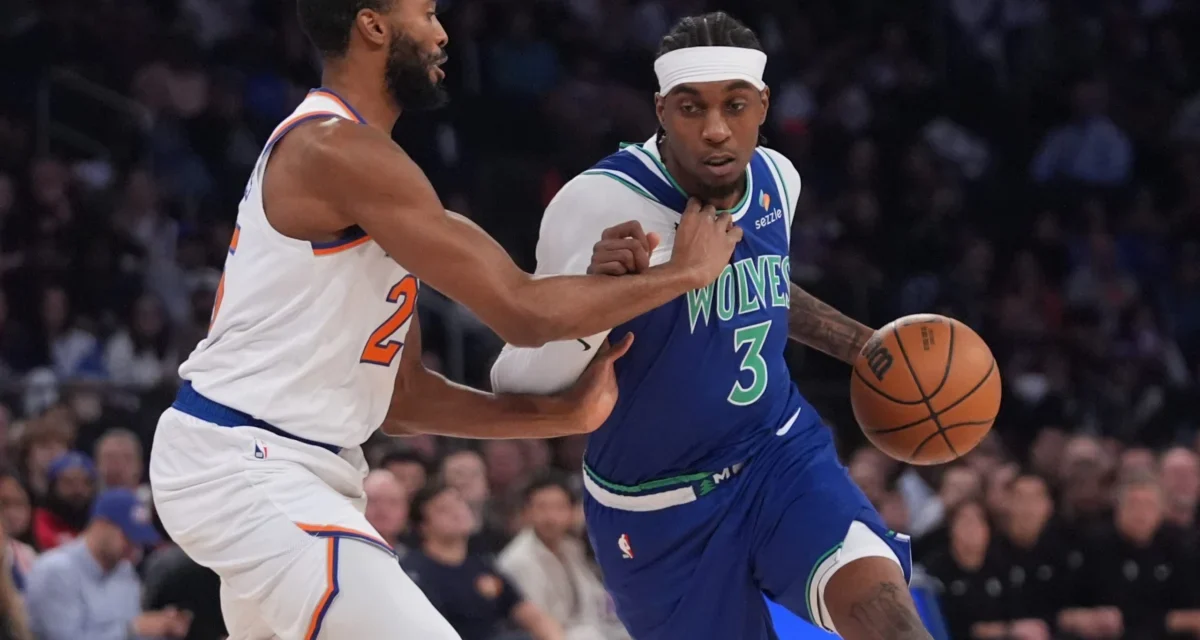




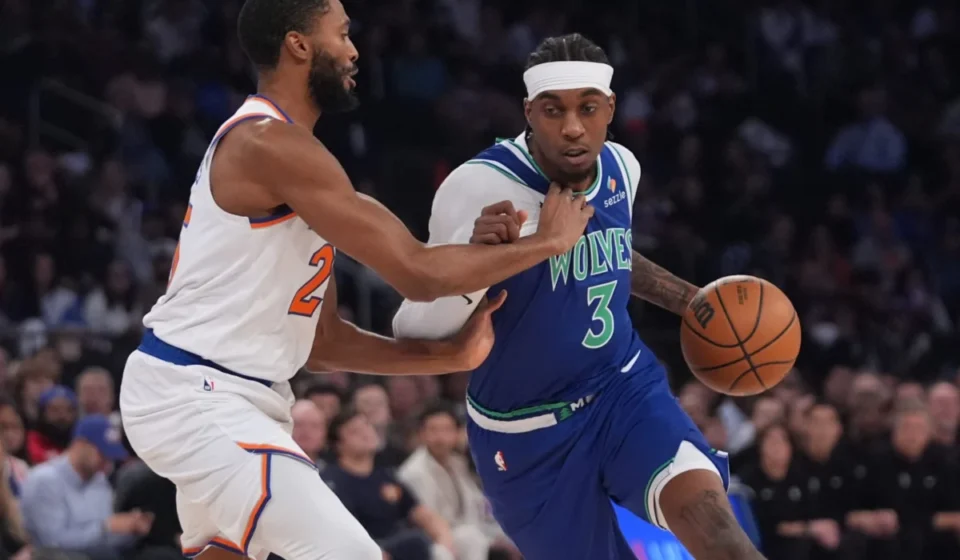

The Minnesota Timberwolves have officially entered their most transformative era in franchise history. Once a perennial footnote in the NBA’s Western Conference, the team has successfully shed its reputation as a "laughingstock" to become one of the league’s most compelling, high-variance attractions. Under the stewardship of President of Basketball Operations Tim Connelly and head coach Chris Finch, the Timberwolves are betting everything on a daring strategic pivot that favors blistering offensive velocity over the conventional, big-man-heavy blueprints of yesteryear.
As the 2026-27 season tips off, the organization finds itself at a crossroads. Following two consecutive postseason heartbreaks at the hands of the Oklahoma City Thunder and the San Antonio Spurs, the front office has rejected the safety of continuity, opting instead to tear down their established roster identity in pursuit of a championship ceiling that, until now, remained firmly out of reach.
A Chronology of Audacity: The Connelly Era
To understand the current iteration of the Timberwolves, one must examine the volatility of the Tim Connelly tenure. Since his arrival in May 2022, Connelly has treated the roster not as a fixed asset, but as a fluid experiment.
In his introductory press conference, Connelly famously remarked, "This place has an unbelievably special core. I’m here not to mess it up." Just 44 days later, he executed a seismic trade that sent five first-round picks and a significant portion of the rotation to Utah for Rudy Gobert. At the time, the move was widely panned as an archaic rejection of the "space-and-pace" era, as it paired Gobert with incumbent star Karl-Anthony Towns in a lumbering two-big lineup.

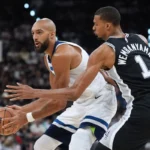
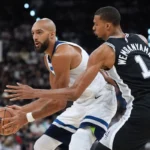
Critics were silenced two years later when that very core reached the Western Conference Finals. However, the 2025-26 season proved that success is not static. After failing to overcome the length and cohesion of the Spurs and Thunder, Connelly realized that merely "running it back" would be a surrender to mediocrity. This past summer, he aggressively offloaded his power forwards—the primary backup centers behind Gobert—to acquire the elite playmaking of LaMelo Ball. By pairing Ball with the electric Anthony Edwards, Connelly has effectively turbocharged the offense, signaling that in an era dominated by seven-foot-tall unicorns like Victor Wembanyama, the Wolves will fight fire with pure, unadulterated speed.
Statistical Foundations: Why the Backcourt Swap Matters
The rationale behind the LaMelo Ball acquisition is rooted in the efficiency gaps exposed by the 2025-26 campaign. Statistical analysis reveals a stark reality regarding Anthony Edwards’ shooting efficiency. When creating his own shot off the dribble, Edwards hovered at a respectable 35.3% from beyond the arc. However, when functioning as a catch-and-shoot threat, that number ballooned to 49.6%.
Under the previous system, the burden of ball-handling forced Edwards into high-difficulty pull-ups. By introducing Ball—a "passing wizard" who ranks among the league’s most unselfish facilitators—the Timberwolves aim to maximize Edwards’ efficiency by shifting his role from primary initiator to lethal finisher.
Ball brings more than just vision; he brings gravity. By leading the NBA in three-point attempts, including deep-range threats that force opposing defenses to extend, Ball creates the horizontal spacing necessary for Edwards to attack the rim or for forwards like Jaden McDaniels to exploit gaps. This is the "high-wire act" Connelly is attempting: trading interior bulk for perimeter velocity.

Supporting Data: The Roster’s New Anatomy
The 2026-27 rotation is a mix of high-upside gambles and established veterans, presenting a fascinating tactical puzzle for Chris Finch.
The Starting Five and Primary Rotation
The success of the starting unit hinges on the synergy between Ball and Edwards. If the offense achieves its projected pace, the team expects to mitigate the defensive drop-off caused by the departures of Julius Randle and Naz Reid.
- The "Non-Rudy" Minutes: The primary concern remains the defensive stability when Gobert sits. Joan Beringer, while active on the glass, remains a defensive liability, and Bones Hyland, while offensively gifted, faces physical disadvantages against the league’s larger wings.
- The 6MOY Candidate: Ayo Dosunmu is poised to anchor the second unit. His ability to push the pace meshes perfectly with TJ Shannon, creating a bench identity that prioritizes transition points.
The Defensive Mandate
With Rudy Gobert entering his age-34 season, the Timberwolves can no longer rely on him to compensate for every perimeter breakdown. The loss of interior "beef" means the team must rely on a "fly-around" defensive philosophy. Finch is expected to deploy aggressive, rotation-heavy schemes designed to disrupt passing lanes before the ball ever enters the paint. Jaden McDaniels has emerged as the team’s defensive anchor; his ability to switch across positions will be the barometer for whether the defense can hold a top-10 ranking.
Implications: The Quest for the Western Throne
The road to the NBA Finals is effectively blocked by two juggernauts: the Oklahoma City Thunder and the San Antonio Spurs. The consensus among league analysts is that these two franchises remain the class of the West due to their superior depth and the presence of established, superstar-level anchors.

The "Retooling, Not Rebuilding" Philosophy
The internal expectation is that the Timberwolves will finish in a second tier of teams, battling with the Denver Nuggets for home-court advantage while remaining ahead of the Los Angeles Lakers. Despite the skepticism, there is a clear strategic intent:
- Flexibility: The team is built to be nimble. With Jonathan Kuminga’s contract situation and the potential for a mid-season return for Donte DiVincenzo, Connelly has left himself the runway to acquire missing pieces before the trade deadline.
- Cultural Identity: For the fourth straight season, the goal is to win a playoff series as the lower seed. This has become the hallmark of the Connelly-Finch era—a refusal to accept the status quo.
The Verdict on Success
Is this a championship roster? Perhaps not today. But the ceiling of this team is undeniably higher than the rigid, predictable configurations of the last two years. The floor is equally low, which is the risk the organization has willingly embraced.
The success of this season will not be measured solely by the win column—though a 46-47 win season is the realistic expectation—but by the development of the younger core and the refinement of the team’s identity. Can Jaden McDaniels evolve into a two-way star? Can Kuminga justify his role as a load-bearer? Can Gobert anchor a defense without his traditional support?
These questions define the 2026-27 Timberwolves. It is a season of "joyful adrenaline," where the management and coaching staff are betting that talent and speed can overcome the traditional requirements of size and grit. For Minnesota fans, it is once again appointment viewing. The Timberwolves are no longer just a basketball team; they are an audacious, evolving experiment in modern NBA excellence. And as they prepare to chase down the titans of the West, they do so with the knowledge that in the Connelly-Finch era, the only mistake is standing still.