










































This story was originally reported by Kate Sosin of The 19th. The following is an expanded examination of the history, policy, and cultural friction surrounding gender identity in the world of roller derby.
For Juniper Simonis, the memory of a humid summer evening in 2012 remains etched in sensory detail: the rhythmic whir of bicycle tires against Ithaca pavement, the wind catching her helmet, and the soulful, haunting melodies of American folk singer Mariee Siou filtering through her headphones. But the moment’s true gravity came from a digital notification—an email confirming that the Ithaca League of Women Rollers had voted to accept her onto their team.
"As somebody who played sports and was queer, but those were two very separate parts of my life, the promise and the opportunity to integrate those was very hopeful for me," Simonis reflects. As a transgender woman, being welcomed into a traditionally women-centered space was not merely an athletic milestone; it was a profound affirmation of belonging.
Years before the inclusion of transgender athletes became a flashpoint in national politics and a subject of aggressive legislative debate, the world of roller derby—a high-contact, punk-rock-infused sport defined by aggressive hits and colorful pseudonyms—was already quietly grappling with the frontiers of inclusion. While the sport’s policies remain a work in progress, and while trans athletes and skaters of color continue to navigate systemic discrimination, roller derby has consistently chosen a path of radical inclusion, offering a blueprint for how sports can evolve alongside changing social mores.
A History of Counter-Culture Athletics
To understand the current landscape of roller derby, one must look back to its origins in the 1930s. Promoter Leo Seltzer, looking to capitalize on the public’s fascination with endurance, created a roller skating marathon that eventually morphed into a full-contact spectacle. According to the Smithsonian, the sport was co-ed from its inception, though it was plagued by the same pay disparities that defined the broader American workforce of the era.
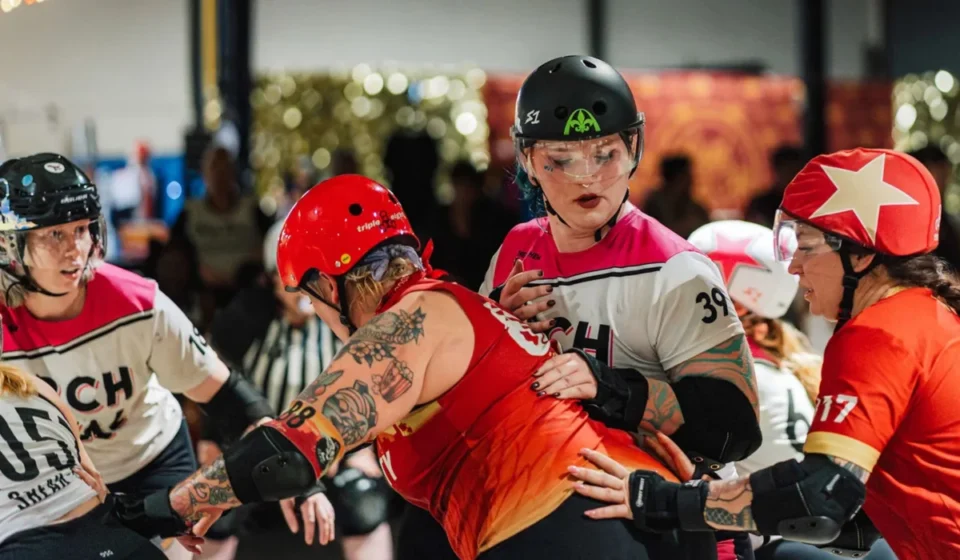
The modern iteration of the sport, however, truly took root in the early 2000s in Austin, Texas. It was a DIY phenomenon, born from a "riot grrrl" sensibility that functioned as a direct rebuttal to the hyper-feminized pop culture of the time. It was a space for those who didn’t fit into the traditional binary, a place where "badass" was the baseline. As Rachel "Rotten" Johnston, a derby veteran and director of the Angel City League, explains, the sport was as much about the culture—the bar fights, the black eyes, the subversion of femininity—as it was about the skating.
"It was like, I get to wear this outfit that’s also kind of sexy," Johnston notes. "It was a direct rejection of the pop culture happening around us." Out went the passive archetypes of the early 2000s; in came "Beyonslay," "Iron Maven," and "belle right hooks."
Chronology of Inclusion: From Gatekeeping to Open Doors
In the early 2000s, as the Women’s Flat Track Derby Association (WFTDA) began to organize, the sport was primarily focused on carving out a space for women to exist without the dominance of men. "At the time, ‘cis’ wasn’t really a term we were using," says Nicole Williams, known on the track as "Bonnie Thunders." "It was cis men that we didn’t want."
For a time, the WFTDA’s gender policies mirrored the restrictive standards of the International Olympic Committee: trans women were required to undergo hormone replacement therapy for two years before competing. However, the enforcement of these rules was often inconsistent. As Penelope "Fifi Nomenon" Nederlander discovered during her 2010 tryouts with the LA Derby Dolls, the culture of the sport was often more progressive than its written policy. When she disclosed her status as a trans woman, her mentor was unfazed, asking only if she held an ‘F’ on her driver’s license.
By 2015, the WFTDA officially abandoned the rigid, medically-contingent policies in favor of a model that welcomed anyone who identified as a "marginalized gender." This shift allowed for an influx of talent and community, including nonbinary athletes like Drew Flowers ("OMG WTF"). For many, the shift was not just about the sport—it was about the viability of their community and their livelihoods, as many skaters also owned shops or businesses within the ecosystem.

Supporting Data and the Reality of the Track
Despite these progressive policies, the experience of being a trans skater is not uniform. The sport faces ongoing challenges regarding intersectionality. Donita "Blaxyl Rose" Green points to the reality of "skating while Black," noting that skaters of color often face harsher officiating and microaggressions than their white peers. When that identity is coupled with a trans identity, the scrutiny often intensifies.
Simonis, despite her initial warm welcome in Ithaca, acknowledges the dark side of the sport, including instances of physical assault by other players due to her gender identity. These incidents underscore that even within an inclusive framework, individual prejudice and systemic bias persist. The WFTDA’s current mandate, while revolutionary in intent, does not automatically insulate athletes from the social anxieties that currently permeate the broader culture.
Official Responses and Internal Debates
The WFTDA’s stance has placed it in a unique position relative to other governing bodies. While many sports leagues have moved toward stricter, sex-segregated policies, derby has prioritized its own community definition of "fairness."
For years, roller derby was considered for Olympic inclusion, but leagues eventually walked away from the process. The prospect of bowing to international gender regulations—which would have forced them to exclude members of their own community—was seen as an unacceptable compromise.
Bonnie Thunders, often called the "LeBron James" of derby, remains critical of the "protect women’s spaces" rhetoric currently being used to justify the exclusion of trans athletes in other sports. "When I see ‘protect women’s spaces,’ that feels so repressive," she says. "I don’t want to discount that women’s spaces are important, but I don’t really identify with that in the way that I used to."
Implications: A Model for Future Sports?
The implications of the derby model are profound. By prioritizing inclusion, the sport has managed to maintain a high level of competition without the catastrophic outcomes that critics of trans inclusion often predict.
Nederlander argues for a more nuanced conversation—one that allows for an acknowledgment of biological variation without using it as a weapon to exclude. "I want to arrive at the same conclusion, but with honesty about it," she says, noting that the "threat" often cited in media narratives does not manifest in the high-contact reality of the track.
The prevailing argument among many within the WFTDA is that the very nature of sport is inherently unfair—athletes have different heights, weights, and natural aptitudes. "People who are concerned about people getting hurt are missing the fact that we’re playing a full-contact sport," says Johnston. "You’re going to get hurt no matter what. Life isn’t fair, and sports most certainly are not fair."
As the national debate over sports and gender continues to sharpen, the roller derby community stands as a testament to the idea that inclusion does not necessitate the destruction of competitive integrity. Instead, it suggests that when a sport defines itself by its values rather than by rigid, exclusionary categories, it may just find a way to become stronger, more diverse, and more authentic. The "freaky feminist" roots of the sport have produced a lasting legacy: a space where the rules are written to empower, rather than police, the body.