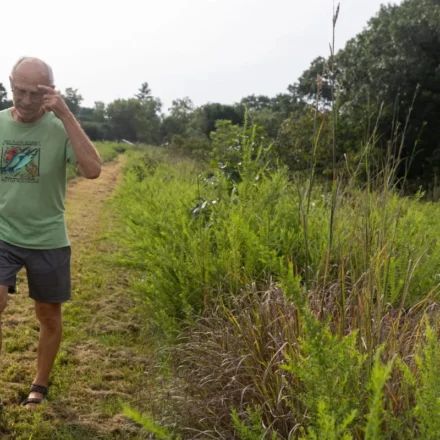























































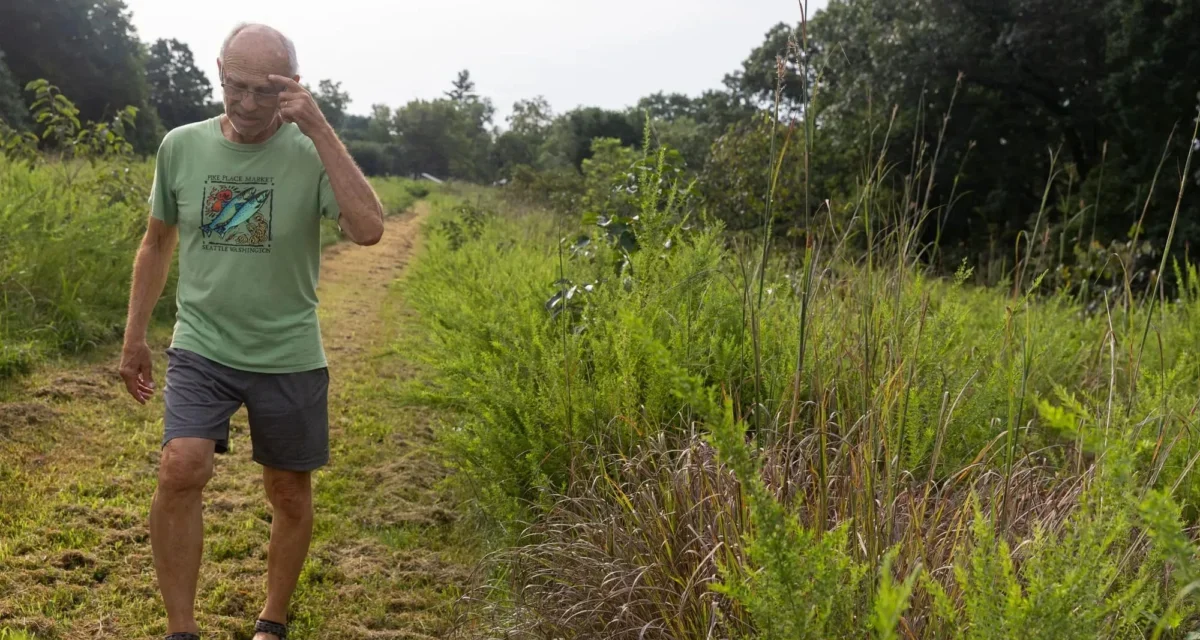
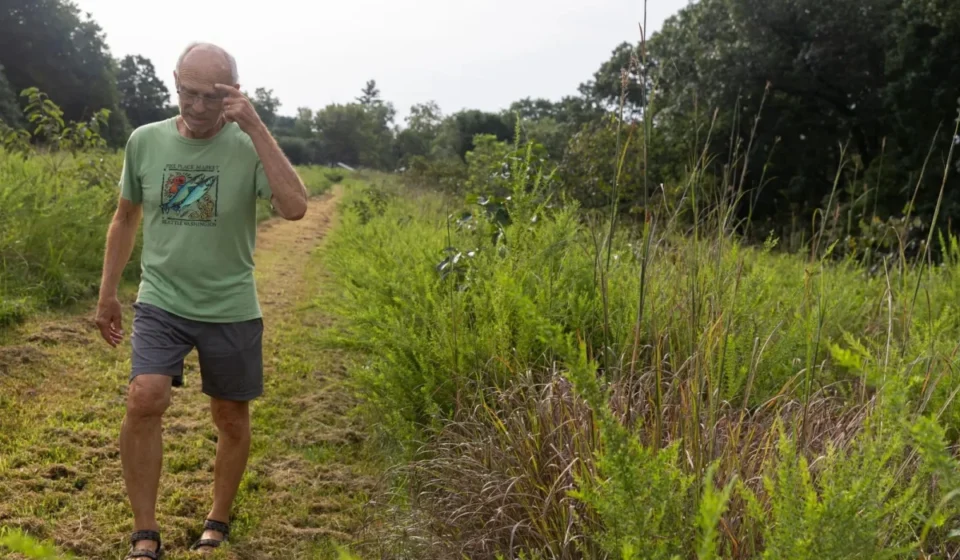

ASHLAND, Mo. — On a sweltering August morning, Dan Kuebler walks the perimeter of what was once his life’s work. For 33 years, these 30 acres in Boone County were a thriving mosaic of vegetables, fruits, and, eventually, artisanal fermented goods like sauerkraut and kimchi. As a fixture at the Columbia Farmers Market, Kuebler wasn’t just a producer; he was an advocate, pushing for the permanent, modern shelter that now serves as the heartbeat of the local food economy.
But as the suburban sprawl of Columbia and Jefferson City began to creep into the sleepy, rolling landscape of southern Boone County, Kuebler faced an existential crisis common to thousands of American farmers: how to retire without watching his land—the soil he nurtured for decades—be carved into sterile five-acre subdivisions.
"Ashland was a little, bitty, sleepy town in ’77 when we bought it," Kuebler recalls. "Watching it transform, seeing farmland broken up into parcels… it felt like sacrilege."
Kuebler is not alone. Across the Midwest, a massive demographic shift is occurring. As the average age of the American farmer climbs, millions of acres are poised to change hands. While developers salivate at the prospect of "highest and best use"—a real estate term that almost always prioritizes pavement over produce—a growing coalition of conservationists, government agencies, and legacy-minded farmers are turning to a powerful, if complicated, legal tool: the agricultural conservation easement.
A Legacy Etched in Law
For Kuebler, the decision to protect his land was personal. He rejected the lure of the "highest bidder," instead partnering with the Greenbelt Land Trust of Mid-Missouri to attach an agricultural easement to his property deed.
This legal instrument is designed to last in perpetuity. It effectively strips the development rights from the land, ensuring that no matter who holds the title in the future, the soil cannot be paved over for residential or commercial use.
"You cannot subdivide it, you cannot sell it off for residential development," explains Nick Shapiro, executive director of the Greenbelt Land Trust. "The initial landowner who donates the easement knows there is a legal document that binds future owners, and there is an organization required to defend that easement forever."
However, this protection comes at a significant cost. By voluntarily relinquishing the right to develop, landowners often see the appraised value of their property plummet—sometimes by as much as 65%. For a farmer like Kuebler, who balanced his farm with a career as an in-home physical therapist, the land was more than a sanctuary; it was a financial asset. Yet, he chose to prioritize the integrity of the ecosystem over the maximum possible profit.
The Chronology of a Crisis
The tension between housing development and agricultural production is not new, but it has reached a fever pitch.
- 2001–2016: A period of rapid suburbanization saw nearly 7 million acres of agricultural land converted into "low-density residential" developments across the United States.
- 2014: The federal government launched the Agricultural Conservation Easement Program (ACEP-ALE) to provide financial assistance to help farmers mitigate the loss of property value associated with easements.
- The Present Day: The American Farmland Trust estimates that roughly 2,000 acres of American farmland are lost or compromised by development every single day.
- The Horizon: Projections suggest that by 2040, an additional 18.4 million acres—a landmass roughly the size of South Carolina—will be converted from farm to sprawl.
This rapid encroachment is particularly visible in Missouri, the Midwest, and the South, where rural housing development is outpacing traditional land conservation efforts.
Supporting Data: The Math of Preservation
The economic reality of land preservation is a brutal ledger. When a farmer prepares for retirement, an appraiser evaluates the land based on its "highest and best use." In a market hungry for housing, that means the land is valued as a future subdivision, not a working farm.
"Unfortunately, in the current market, farming is considered the ‘worst use’ of land," says Josh Wright of the American Farmland Trust. Wright works daily to guide farmers through the years-long, legally complex process of securing easements.
To bridge this gap, Congress expanded federal funding for the ACEP-ALE program. Initially allocating $450 million annually, the program—further bolstered by recent legislative efforts—now provides $650 million to help "buy out" development rights. However, there is a glaring discrepancy between the federal funding and the skyrocketing cost of real estate.
As Eric Gramlich of the Ozark Land Trust points out, the federal subsidies often fail to keep pace with the profit potential of large-scale commercial development. "Even those payments struggle to keep up with the demand and the price of land," Gramlich notes. "It’s a big challenge for us to rise up and be on some sort of a playing field with the other competing interests."
The data reflects this struggle. Since 2014, over 1 million acres have been preserved through federal easements, but more than half of that total is concentrated in just three states: Montana, Wyoming, and Colorado. In states like Missouri, the number of acres under federal easement remains near zero, hampered by a lack of regional land trusts and a steep learning curve for the agricultural community.
Official Responses and Administrative Hurdles
The Natural Resources Conservation Service (NRCS) has acknowledged these friction points. In recent years, the agency has attempted to "streamline" the process, simplifying land appraisals, surveys, and the certification of land trusts. The goal is to move from a multi-year bureaucratic nightmare to a more agile system that can compete with the speed of a developer’s offer.
Despite these efforts, skepticism remains. Rick Mareske, who runs a 40-acre berry farm and forest farming operation on the north side of Kansas City, Kansas, remains wary. For Mareske, the easement process is not just about the loss of equity; it is about the entry barrier. "It’s like 20, 25 thousand dollars just to do it, and then you lose money," he says.
For many farmers, the land is their 401(k). Without a robust, streamlined, and adequately funded compensation system, asking a farmer to essentially donate half their retirement fund to protect the public’s food security is a tall order.
Implications: A Culture at a Crossroads
The implications of losing this land are far-reaching. It isn’t just about the loss of corn, soy, or artisanal peppers; it is about the loss of a regional identity. "So much of mid-Missouri’s not just economy, but culture and heritage is based in farming," Shapiro says. "There is an important role for us to play in helping to preserve that heritage."
Dan Kuebler’s story offers a glimmer of hope, albeit a complex one. He sold his land to another local farmer, with an easement that mandates sustainable and regenerative agricultural practices. He even negotiated a unique stipulation: he retains the right to use the small, old cabin on the property for the rest of his life.
"I really couldn’t give up the farm totally because I am so attached to it," Kuebler says.
As he now visits the Columbia Farmers Market as a customer rather than a vendor, catching up with former customers and friends, Kuebler feels he has succeeded where many others have failed. He has ensured his soil will never be covered in asphalt.
Yet, for every Dan Kuebler who finds a way to balance the books and the heart, dozens of other farmers are forced to sign contracts with developers. The future of the American food system depends on whether society views farmland as a disposable resource or as a finite, essential infrastructure that requires protection—even at a premium.
For now, the sprawl continues, and the battle between the plow and the bulldozer remains one of the most quiet, yet significant, conflicts in the heart of the nation.
This story is a product of the Mississippi River Basin Ag & Water Desk, an independent environmental reporting network covering America’s largest watershed. For more information on the effort to preserve agricultural lands, visit the American Farmland Trust or contact regional land trusts in your area.