





















































The Iron Renaissance: Niron Magnetics and the $1.8 Billion Quest to Reshape Minnesota’s Industrial Future

For more than a century, the jagged skyline of Minnesota’s Iron Range has served as a monument to the American industrial spirit. However, as global markets shifted toward recycled steel and imported materials, the region’s traditional taconite mining industry faced a slow, painful decline. Today, a new narrative is emerging—one that swaps traditional ore extraction for high-tech magnetism.
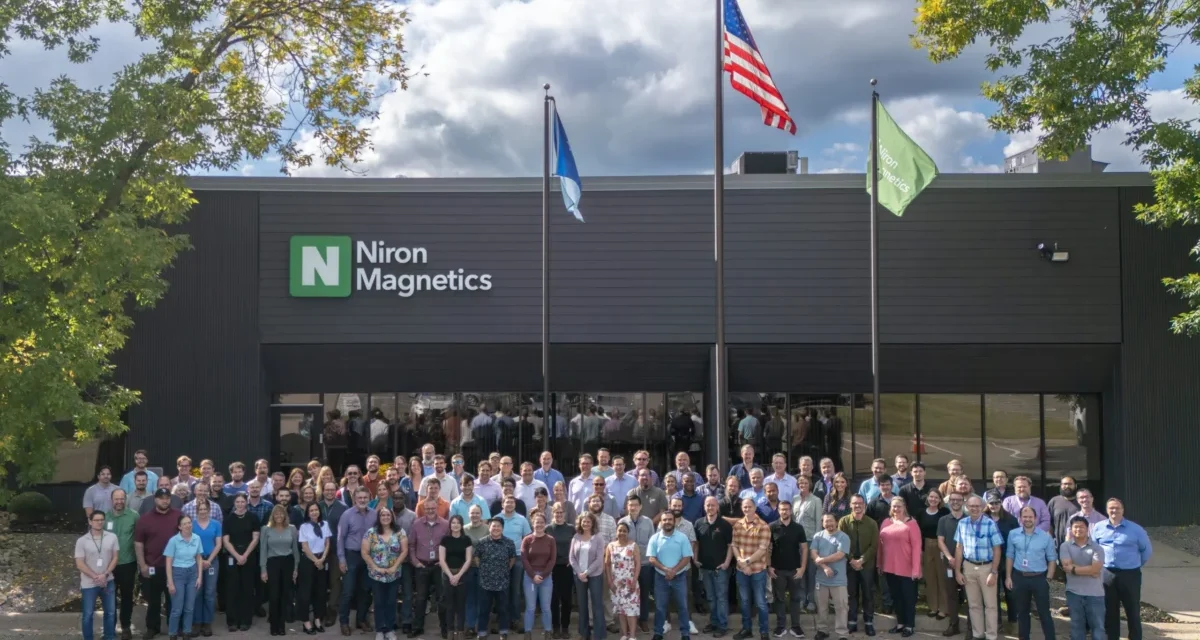
Minneapolis-based Niron Magnetics is currently evaluating the Iron Range as the potential site for its third and largest production facility. This $1.8 billion project represents more than just a capital investment; it is a strategic move to decouple the United States from its reliance on Chinese-controlled rare-earth minerals. By leveraging a breakthrough technology born at the University of Minnesota, Niron aims to transform the Iron Range into a global hub for "green" magnet production, potentially creating over 700 high-paying jobs and providing a sustainable alternative to controversial mining projects in the region.
I. Main Facts: A New Magnet for the Iron Range
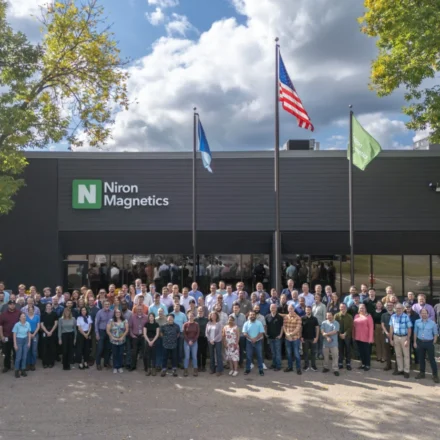
Niron Magnetics is not a traditional mining company. Instead, it is a materials science innovator that has developed the world’s first high-performance, rare-earth-free permanent magnet. The company’s "Clean Earth Magnet" technology utilizes iron and nitrogen—two of the most abundant elements on the planet—to replace minerals like neodymium and dysprosium, which are currently essential for electric vehicle (EV) motors, wind turbines, and defense systems.
The Scale of the Investment
The proposed "mega-plant" is staggering in its scope. With a projected price tag of $1.8 billion, the 1.6 million-square-foot facility would be one of the largest industrial developments in Minnesota’s recent history. Construction is tentatively slated to begin in 2028, with the goal of reaching full operational capacity by 2029.
At full scale, the facility is expected to:
- Employ 700+ workers: These roles would range from specialized chemical engineers to advanced manufacturing technicians.
- Produce 10,000 tons of magnets annually: For context, this would represent a significant portion of the projected domestic demand for high-performance magnets.
- Utilize local feedstock: Unlike rare-earth magnets that require complex chemical separation of toxic ores, Niron’s process uses commodity iron ore or recycled steel and atmospheric nitrogen.
Site Selection and Competition
While the Iron Range is a frontrunner due to its existing infrastructure and skilled labor pool, the selection process is competitive. Niron has engaged Savills, a global commercial real estate advisory firm, to evaluate sites not only in Minnesota but also in several other states. The company is looking for a "partner" state—one that offers a combination of infrastructure grants, energy capacity, and a workforce ready to transition from heavy industry to precision manufacturing.
II. Chronology: From Academic Discovery to Industrial Scaling
The journey of Niron Magnetics is a decades-long saga of academic persistence and venture capital acceleration.
2014–2021: The Breakthrough and Incubation
The technology was pioneered by Dr. Jian-Ping Wang, a professor at the University of Minnesota and a world-renowned expert in spintronics and magnetic materials. Dr. Wang successfully synthesized "Iron Nitride" (Fe16N2) in a stable form—a feat that had eluded scientists for nearly half a century. In 2014, Niron was spun out of the university to commercialize this discovery.
For several years, the company operated in a "stealth" and R&D phase, working out of a pilot plant in Northeast Minneapolis. During this time, they refined the chemical process of reducing iron to powder and infusing it with nitrogen without requiring the extreme, energy-intensive heat typical of traditional metallurgy.
2022–2024: Scaling Up
The company’s trajectory shifted from laboratory success to industrial viability in the early 2020s.
- Late 2023: Niron broke ground on its first commercial-scale production plant in Sartell, Minnesota, near St. Cloud. This facility, representing an investment of tens of millions of dollars (including a $10 million state investment), is expected to employ 175 people and produce 1,500 tons of magnets annually.
- Early 2024: Niron announced its search for a "mega-site" for its third facility. The company has already raised approximately $300 million in public and private capital from heavyweights such as GM Ventures, Volvo, Samsung Ventures, and the U.S. Department of Energy.
2025–2029: The Path to Market Dominance
The company is currently in the site selection phase for the $1.8 billion plant. If the Iron Range is selected, groundbreaking would likely occur in 2028, coinciding with the period when global demand for EV components is expected to peak.
III. Supporting Data: The Geopolitical and Economic Context
The urgency behind Niron’s expansion is fueled by a volatile global supply chain. Currently, China controls approximately 70% of the world’s rare-earth mining and upwards of 90% of the manufacturing of permanent magnets.
The Rare-Earth Crisis
Rare-earth elements are not actually "rare" in the crust, but they are difficult and environmentally hazardous to extract. The separation process involves toxic acids and produces radioactive waste. Because of these environmental and economic hurdles, the U.S. largely abandoned the industry decades ago, leaving a vacuum that China filled.
In late 2023, China imposed export controls on certain minerals and technologies related to magnets, highlighting the vulnerability of Western supply chains. For companies like GM, Volvo, and Stellantis (the parent company of Chrysler), Niron’s technology offers a way to "de-risk" their transition to electric vehicles.
Economic Impact on the Iron Range
The Iron Range has suffered from the volatility of the global steel market. Modern domestic mills increasingly use electric arc furnaces that rely on recycled scrap rather than the virgin taconite pellets produced in Northern Minnesota. Consequently, employment in the mining sector has seen a steady downward trend.
- Job Replacement: The 700+ jobs at the Niron plant would significantly offset losses from shuttered taconite operations.
- Tax Base: A $1.8 billion facility would provide a massive boost to local property tax revenues, supporting schools and infrastructure in rural counties.
IV. Official Responses: A Bipartisan Consensus
Rarely do environmentalists, industrial developers, and politicians from both sides of the aisle find common ground, but Niron Magnetics has managed to achieve a unique level of support.
State Economic Development
Ryan Malich, executive director of business development at the Minnesota Department of Iron Range Redevelopment and Resources (IRRR), views the project as a cornerstone of the region’s evolution. "These are the types of jobs that we’re trying to add to the area—evolving, innovative technologies," Malich said. "We want to be on the frontside of technological development."
Kevin McKinnon, Deputy Commissioner of the Department of Employment and Economic Development (DEED), echoed this sentiment, noting that the state has been a partner since the Sartell project. "The promise, the trajectory of where they are going is very exciting… We believe Minnesota is a compelling location for such a project."
The Political Landscape and Twin Metals
The Niron project stands in stark contrast to the Twin Metals project—a proposed copper-nickel mine owned by Chilean firm Antofagasta. While Twin Metals has been mired in a decade-long permitting battle due to its proximity to the Boundary Waters Canoe Area (BWCA) watershed, Niron’s project is seen as "environmentally benign."
Governor Tim Walz’s administration has generally opposed the Twin Metals mine on environmental grounds while simultaneously courting Niron. Interestingly, U.S. Rep. Pete Stauber (R-MN), a staunch supporter of traditional mining, also supports Niron’s expansion. This bipartisan backing is driven by a shared goal: national security and domestic energy independence.
V. Implications: The Future of American Manufacturing
If Niron Magnetics successfully builds its mega-plant on the Iron Range, the implications will ripple far beyond the borders of Minnesota.
1. Environmental Stewardship
Niron’s process represents a "circular" or "clean" industrial model. By using iron and nitrogen, the company avoids the toxic tailings and radioactive byproducts associated with rare-earth processing. This provides a blueprint for how the U.S. can rebuild its industrial base without compromising environmental standards—a critical factor in the sensitive ecosystems of Northern Minnesota.
2. National Security
The ability to produce high-performance magnets domestically is a matter of defense readiness. From the guidance systems of missiles to the motors in naval vessels, magnets are ubiquitous in military hardware. Breaking the Chinese monopoly on this technology is a high priority for the Pentagon, which has already funneled research grants into Niron’s development.
3. A Model for the "New" Rust Belt
The potential transformation of the Iron Range from an extraction-based economy to a value-added manufacturing economy could serve as a model for other "Rust Belt" regions. By partnering with state universities (like the U of M) and utilizing existing industrial infrastructure, legacy mining towns can pivot to the green economy.
4. Financial Viability
The ultimate success of the project depends on Niron’s ability to raise the remaining hundreds of millions of dollars required for the mega-plant. CEO Jonathan Rowntree has hinted at the possibility of a public offering (IPO) within the next few years. With a target of $1 billion in annual revenue, the company is positioning itself as a major player in the global materials market.
As the site selection process continues, the Iron Range waits with bated breath. The region that once built the tanks and ships of World War II with its iron ore may soon be the region that powers the electric revolution with its iron magnets. For Niron Magnetics, the Iron Range offers a legacy of hard work and industrial capability; for the Iron Range, Niron offers a path to a sustainable and prosperous future.