
























































The Gigawatt Gamble: Inside Google’s Quest to Solve Data Center Power Hunger via Virtual Plants

As the global race for artificial intelligence dominance intensifies, the physical infrastructure required to sustain it—massive, power-hungry data centers—is hitting a bottleneck. The electrical grid, long taken for granted, is buckling under the weight of hyperscale expansion. In response, Google has unveiled an ambitious, if controversial, strategy: a 1-gigawatt "virtual power plant" (VPP) designed to stabilize the PJM Interconnection, the largest power grid in the United States.
However, behind the technical branding of a "virtual power plant" lies a complex reality of energy arbitrage, economic incentives, and the strategic offloading of power demand. By partnering with energy aggregator Voltus, Google is attempting to rewrite the relationship between tech giants and the utility sector.
Main Facts: The Anatomy of a Virtual Power Plant
The term "virtual power plant" often conjures images of distributed solar arrays or home battery systems. In the context of Google’s latest initiative, the definition is far more utilitarian. A VPP, in this instance, is not a generator of electrons but a manager of consumption.
Google’s agreement with Voltus—which scales up an initial 100-megawatt pilot to a massive 1-gigawatt capacity—functions as a sophisticated "load-shedding" mechanism. When the PJM grid, which services 67 million people across 13 states and the District of Columbia, faces peak demand, the VPP triggers a series of pre-arranged responses. Instead of firing up a natural gas peaker plant, the system instructs industrial partners, commercial entities, and residential smart-thermostat networks to curtail their usage.
Essentially, Google is paying other consumers to turn off their appliances or dial down their industrial operations so that the grid can accommodate the surging electricity demands of its own data centers.
Chronology of a Power-Hungry Strategy
The escalation of Google’s energy strategy mirrors the rapid acceleration of the generative AI boom.
- Early 2024: Google and Voltus announce an initial 100-megawatt partnership. The goal is to test the viability of aggregating distributed energy resources to provide relief to the PJM market during high-stress periods.
- Mid-2024: As data center construction projects across the Midwest and Mid-Atlantic regions face public and regulatory scrutiny due to grid strain, Google identifies energy management as a primary operational hurdle.
- Late 2024: The realization that 100 megawatts is insufficient to offset the compounding load of new hyperscale data centers leads to the expansion of the partnership.
- Present Day: The 1-gigawatt target is established, representing a tenfold increase in scale. This move positions Google not just as an energy consumer, but as a dominant orchestrator of regional grid stability.
Supporting Data: The Cost of AI and Grid Strain
The necessity of this project is rooted in the unprecedented surge in energy consumption by hyperscalers. According to recent projections from Gartner, data center electricity consumption is expected to climb by 26% by 2026. This is not merely a quantitative increase; it is a structural challenge for utility companies.
The PJM Context
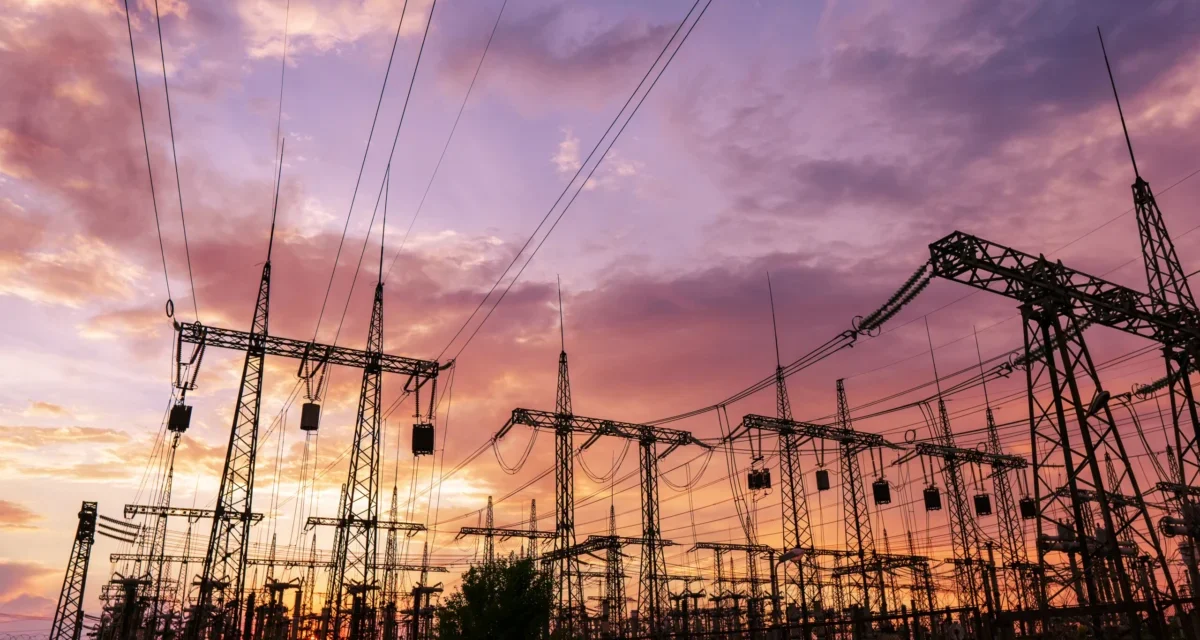
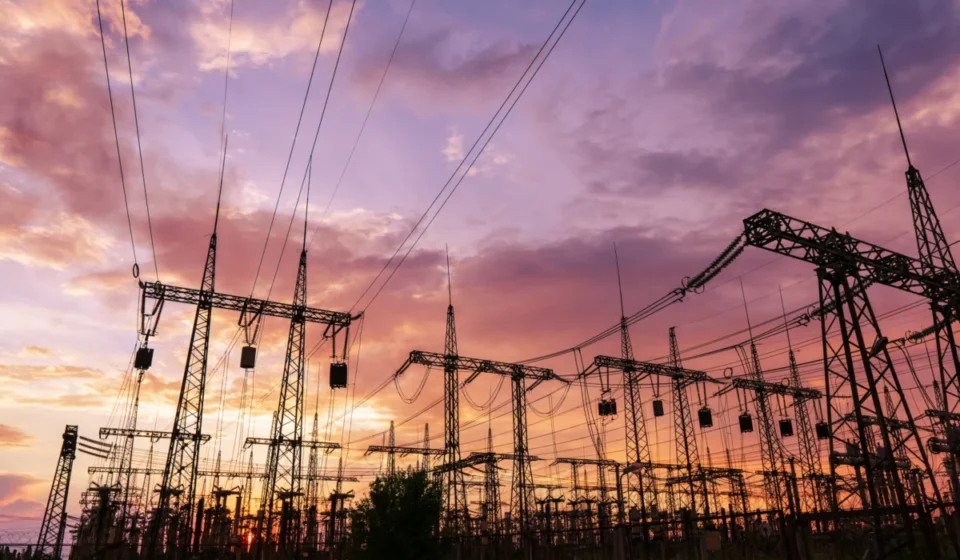
The PJM Interconnection is the nerve center of American electricity. As the largest competitive wholesale electricity market, it manages the flow of power for millions. However, it is also currently struggling with aging infrastructure and the retirement of coal-fired plants.
- Grid Demand: The addition of massive AI data centers is forcing utilities to delay the retirement of fossil-fuel plants to ensure baseline reliability.
- Economic Impact: As local utilities scramble to upgrade transmission lines and substations to accommodate hyperscalers, capital costs are skyrocketing. These costs are frequently passed on to the retail ratepayer, fueling public resentment toward Big Tech’s footprint.
- The 1GW Metric: 1 gigawatt is roughly equivalent to the output of a large nuclear reactor or a major coal-fired power station. By creating a VPP of this size, Google is effectively "creating" a power plant out of thin air by deleting demand from the system, theoretically avoiding the carbon intensity of traditional peaker plants.
Official Responses and Industry Perspectives
The reception to Google’s VPP initiative has been polarized, reflecting the tension between corporate sustainability goals and the realities of infrastructure management.
Google’s Stance
Google frames the initiative as a "sustainability-first" approach. By leveraging demand response, the company argues it is helping to balance the grid during times of extreme stress, thereby preventing brownouts and reducing the reliance on "dirty" peaker plants that are typically turned on only during the hottest or coldest days of the year.
The Voltus Perspective
Voltus, acting as the aggregator, views the deal as the future of the energy market. Their model relies on "inducements"—financial incentives offered to industrial companies, manufacturing plants, and residential users. "We are commoditizing the act of not using electricity," a spokesperson for the sector recently noted. By aggregating thousands of smaller load points, Voltus provides Google with a singular, manageable lever to pull when the grid begins to flicker.
Critics and Skeptics
Energy policy experts, however, are more cautious. Critics point out that "load-shedding" is a temporary fix for a permanent problem. If Google continues to expand its data center footprint at the current rate, relying on other consumers to turn off their lights or cease manufacturing processes may eventually reach a ceiling. Furthermore, there are concerns about "energy equity"—who exactly is being paid to turn off their power, and are the incentives truly accessible to lower-income households, or are they reserved for industrial giants who can afford to pause production?
Implications: The Future of the Grid
The shift toward virtual power plants as a core component of Big Tech’s operational strategy has profound implications for the energy sector.
1. The Privatization of Grid Reliability
We are witnessing a shift where private corporations are becoming the de facto managers of grid stability. When a company as large as Google enters the energy market at the gigawatt scale, it changes the power dynamic between the corporation and the local utility. The utility is no longer the sole arbiter of demand management; the tech giant is now a partner in the supply-demand equation.
2. The Economic Arbitrage of Energy
The Google-Voltus deal highlights a growing trend: energy arbitrage. By paying for the right to control consumption, Google is effectively trading electricity. If the cost of paying others to reduce consumption is lower than the cost of securing additional power through traditional power purchase agreements (PPAs), the VPP becomes a highly efficient financial tool.
3. Public Relations and Regulatory Scrutiny
For Google, this is a masterful PR stroke. It allows the company to claim that its data centers are not "taking" power from the grid but are instead "balancing" the grid. However, as public awareness grows regarding the electricity costs of AI, this narrative will face mounting pressure. Legislators in the PJM region are already beginning to question whether hyperscalers should be required to pay for the entirety of the infrastructure upgrades they necessitate, rather than simply paying to reduce usage during peak times.
4. Technical Hurdles: Scalability and Reliability
While 1 gigawatt sounds impressive, managing it is a massive technical undertaking. Synchronizing tens of thousands of smart thermostats, industrial HVAC systems, and manufacturing processes requires high-speed data transmission and precise software controls. Any latency in the network could result in a failure to deliver the promised "virtual power," potentially destabilizing the grid during a genuine emergency.
Conclusion: A Stopgap or a Paradigm Shift?
Google’s 1-gigawatt virtual power plant is a testament to the sheer scale of the energy challenge posed by the AI revolution. It is an innovative, if imperfect, solution that highlights the tension between the digital age’s insatiable hunger for compute and the physical world’s finite energy resources.
As the industry moves forward, the success of this project will serve as a bellwether for the rest of the tech sector. If Google can prove that a massive, distributed network of consumers can effectively function as a utility-grade power plant, other hyperscalers will likely follow suit.
However, one must look past the "green" branding to see the fundamental truth: this is an exercise in demand management necessitated by a massive increase in supply-side strain. Whether this model can scale to meet the future energy requirements of the next decade of AI development remains an open question. For now, the gigawatt gamble is on, and the lights—at least for the moment—stay on for everyone.