




















































Beyond the Classroom: How a New "Climate Literacy Seal" is Transforming High School Education

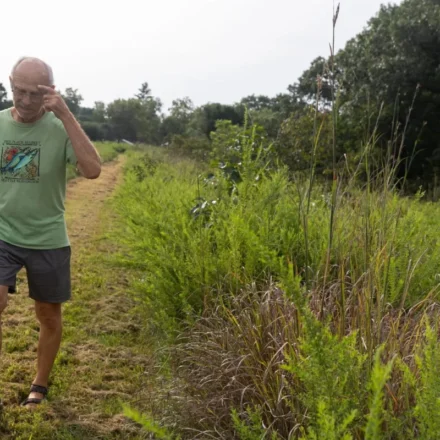
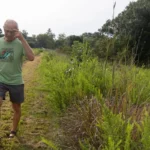
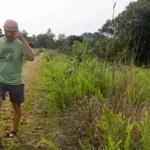
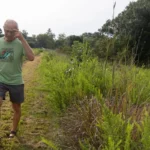
In the shadow of Denver International Airport, Anthony Muñoz spent his high school years looking upward, wondering if the constant stream of jet fuel exhaust was quietly degrading the ecosystem around his campus. A passionate gardener, Muñoz didn’t just wonder—he acted. By partnering with the National Center for Atmospheric Research (NCAR) and his charter school, Vista Academy, he transformed a patch of land into an “ozone garden,” utilizing native plants as biological sensors to monitor air quality.
This project was more than an extracurricular hobby; it was a capstone requirement for Colorado’s Seal of Climate Literacy. As climate change shifts from a theoretical concern to a daily reality, a growing movement of educators, students, and policymakers is working to ensure that the next generation is not just aware of the crisis, but equipped with the scientific and civic tools to address it.
The Evolution of Climate Literacy
The concept of a "Seal of Climate Literacy"—an official endorsement added to high school diplomas—represents a shift in how American schools handle environmental education. Historically, climate change has been relegated to a single, often fleeting unit in biology or earth science textbooks. The new initiative, pioneered by the Denver-based nonprofit Lyra Colorado, changes that dynamic by pairing rigorous academic coursework with hands-on, community-focused service.
To earn the seal, students must complete two advanced courses—one in a core science discipline and another in a field of their choice, such as the humanities or arts—and execute a project that addresses a local environmental challenge. From building beaver dams to implementing forestry management programs, these projects ground abstract global data in tangible, local action.
A Chronology of Policy Expansion
The push for institutionalized climate education has gained significant momentum over the past two years:
- 2024: Colorado lawmakers officially authorize the Seal of Climate Literacy, marking the first major legislative win for the initiative. 26 school districts across the state adopt the program within the first year.
- Early 2025: Maine, recognizing the unique environmental threats posed by its rapidly warming coastal waters, adopts its own version of the seal, bypassing legislative debate in favor of direct state education department implementation.
- Mid-2025: California passes landmark legislation (SB 1048) to establish the seal, acknowledging the state’s massive need for a workforce trained in climate-resilient agriculture, urban heat mitigation, and water resource management.
- Ongoing: Youth-led coalitions in Hawaii and Minnesota continue to lobby their respective legislatures, leveraging local support to advocate for the inclusion of climate literacy as a graduation standard.
Data-Driven Impact and Student Agency
The data suggests that the seal is more than a badge; it is a catalyst for engagement. In Maine’s initial pilot program, state officials expected roughly a dozen applicants; they were met with 57 seniors eager to participate. Across the participating districts in Colorado, an estimated 1,200 students have received the endorsement to date.
The initiative also addresses the growing phenomenon of "climate anxiety." By shifting the focus from global, catastrophic narratives to community-level problem-solving, educators hope to provide students with a sense of agency. As Laura Schifter, a senior fellow with the Aspen Institute’s This is Planet Ed, notes, the seal offers a "promising policy" that connects classroom learning to the real-world issues students encounter in their own backyards.
For students like Rylan Neumann, a graduate of Colorado’s Boulder Valley School District now studying environmental economics at UC Berkeley, the seal was a launchpad. Upon entering college, Neumann immediately joined an environmental advocacy group and traveled to Sacramento to testify in favor of California’s climate literacy bill, proving that the skills learned in high school translate directly into adult-level political advocacy.
Official Responses and Political Friction
Despite its popularity, the initiative has encountered significant headwinds. The primary challenges are budgetary and ideological.
The Funding Hurdle
Implementation costs remain a persistent barrier. With state-level funding often minimal—Colorado provided less than $20,000 for its rollout—the burden of funding materials and teacher time often falls on nonprofits like Lyra Colorado or the students themselves. Many, like Muñoz, have had to navigate the complex world of grant writing to secure the thousands of dollars necessary for their projects.
The Philosophical Divide
The program faces vocal opposition from groups like the Pacific Research Institute. Lance Izumi, a senior director at the think tank, argues that schools should prioritize foundational sciences over what he characterizes as "activist community projects." Izumi cites California’s relatively low standardized test scores in science as evidence that the curriculum should not be "diluted" by extracurricular requirements.
"Diverting focus away from foundational science learning could worsen performance levels," Izumi stated. Proponents of the seal, however, argue that the initiative does not subtract from the curriculum; it enhances it by providing a practical application for the foundational science students are already learning.
Federal Scrutiny and the Climate Debate
The political climate at the federal level has also complicated matters. The transition of political administrations has led to increased scrutiny of environmental research and, in some cases, direct threats to the institutions that support student projects. For instance, proposed budget cuts to the National Center for Atmospheric Research—the very institution that mentored Muñoz—have created a sense of uncertainty among educators who rely on these federal resources for data and technical guidance.
Furthermore, the Treasury Department and various congressional groups have targeted the tax-exempt status of nonprofit organizations involved in climate advocacy, creating a "chilling effect" on philanthropic donations. Mary Seawell, CEO of Lyra Colorado, has noted that donors are increasingly cautious about supporting programs that might be perceived as politically charged.
Implications for the Future Workforce
The long-term goal of the Seal of Climate Literacy is to create a seamless pipeline between high school education and the emerging "green economy." Lyra Colorado is currently working with higher education institutions, such as Colorado Mountain College, to align the seal’s requirements with professional certifications in high-demand fields like solar grid maintenance, sustainable agriculture, and heat pump installation.
The hope is that universities will eventually offer course credit or even partial minors for students who arrive with the seal, effectively shortening the path to a professional career in climate science or policy.
Conclusion: A New Generation of Leaders
The success of the climate literacy movement will ultimately be measured not by the number of seals printed on diplomas, but by the trajectory of the students who earn them. For Anthony Muñoz, now a sophomore studying mechanical engineering at the Colorado School of Mines, the seal was a gateway to leadership. He currently serves as the vice president of the university’s environmental club and remains committed to maintaining his high school garden, even as he pivots toward a career in biomedicine.
"Are you going to think beyond yourself and help not only those in need but the environment, or will you sit back and wait for someone else to change the world for you?" Muñoz asks.
As the program expands into new states and faces the realities of a changing political landscape, it remains a testament to the power of student-led innovation. By grounding climate change in local soil—whether it be an ozone garden in Denver, a sustainable fishery in Maine, or a water conservation project in California—this initiative is proving that even in a polarized era, the next generation is finding ways to take ownership of their future.
Whether these seals will become a standard fixture of American education or remain a regional phenomenon depends on the ability of its proponents to secure stable funding and navigate the shifting tides of national politics. But for the students already involved, the work has already begun. They are not waiting for consensus; they are building the infrastructure for a more resilient world, one project at a time.