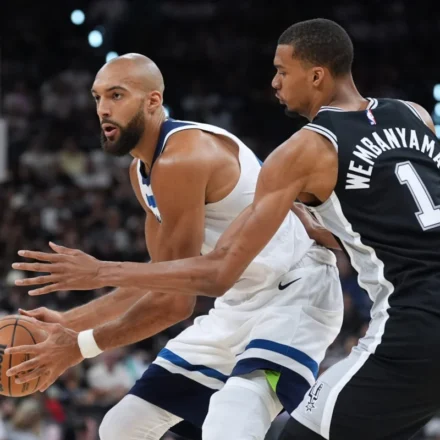


















































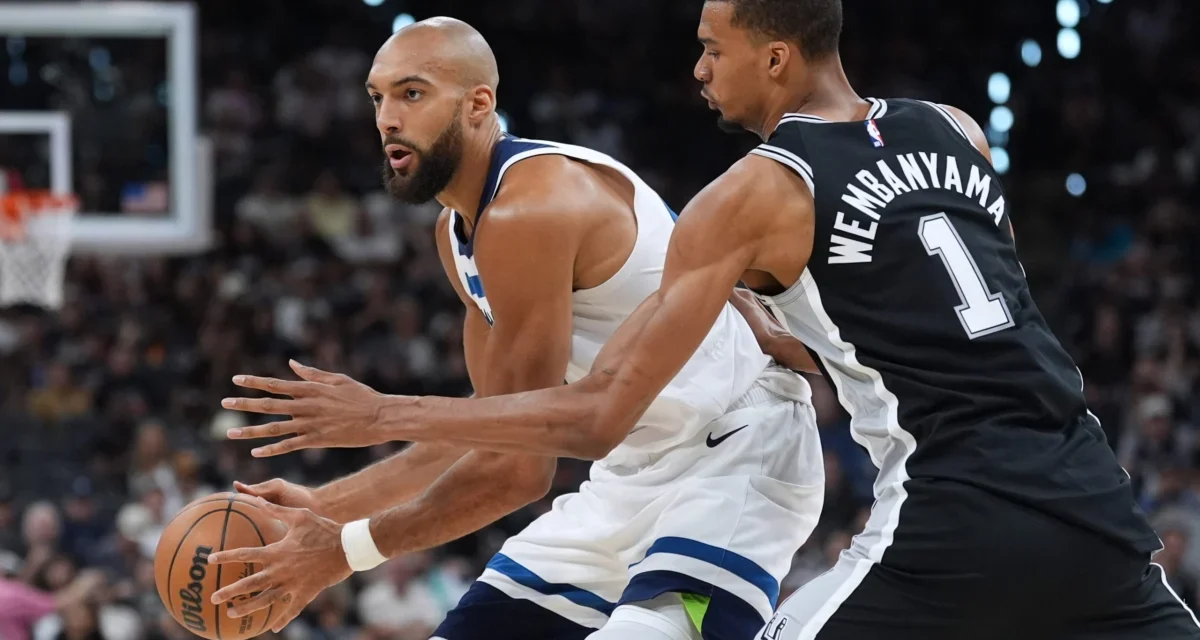



As the 2026-27 NBA season inches toward its opening tip-off, the Minnesota Timberwolves find themselves at a fascinating, high-stakes crossroads. The team has spent the offseason aggressively pivoting toward a new era, highlighted by the blockbuster acquisition of LaMelo Ball. Yet, amid the flash of new playmaking and the youthful energy of a roster where a dozen players are 26 or younger, the franchise’s championship aspirations continue to hinge on an anchor who has been a constant through the turbulence: 34-year-old center Rudy Gobert.
Following the team’s first official practice last month, Gobert—sporting a shaved head and a sharp, dark goatee that prompted head coach Chris Finch to quip that his star center looked like a "Russian gangster"—reflected on his position as the team’s elder statesman. With a bemused smile, he offered a perspective that belies his age. "It is interesting," he said. "But I feel wise and fresh at the same time. It is a good place to be."
The Structural Shift: A New Look for Minnesota
The Timberwolves’ roster transformation has been dramatic. The pursuit of LaMelo Ball, a creative virtuoso designed to unlock the full potential of superstar Anthony Edwards, required significant financial maneuvering. To clear the necessary salary-cap space, Minnesota parted ways with Julius Randle and sent a package including fan-favorite Naz Reid and precious draft capital to the Charlotte Hornets.
While the trade for Ball is intended to modernize the Wolves’ offense and increase their pace, the departures of Randle and Reid have created a glaring void in the frontcourt. For the past two seasons, these two power forwards served as the primary backup centers, offering the team tactical flexibility and reliable interior relief. By "punting" both players, the front office has effectively placed the entire responsibility of backup center on the shoulders of Joan Beringer, a 19-year-old French prospect who is still very much in the infancy of his development.
The Beringer Gamble: Baptism by Fire
The organization’s reliance on Joan Beringer is arguably the most significant gamble of the 2026-27 campaign. There is a broad consensus regarding his "towering upside." Standing with impressive physical dimensions and possessing a natural, sacrificial instinct for the game, Beringer has the tools to be a high-level big man. However, the chasm between his current skill level and the requirements of an NBA championship-contending team is substantial.
Beringer’s professional resume remains incredibly sparse. Prior to being drafted last year, he logged only about 50 games in the EuroCup and the Adriatic League. His rookie season with the Timberwolves was limited to 314 total minutes, supplemented by just three appearances for the Iowa Wolves in the G League. Now, he is being tasked with anchoring the second unit, expected to log 15 to 20 minutes per night against the most physical and skilled players on the planet.
Watching Beringer in the preseason is an exercise in both hope and apprehension. He is a player defined by "amazing grace, anxious gaffes, and admirable grit." He lacks the fundamental "stairsteps" of growth that come from a lifetime of high-level basketball—the gradual adaptation to speed, physicality, and complex team rotations. He is learning to navigate the spontaneity of the NBA on the fly, struggling with the nuanced decision-making required for defensive rotations and rebound positioning.

The Gobert Imperative: Sustaining the Foundation
The reality of the current roster construction is simple: the Timberwolves cannot afford a decline in Gobert’s output. Over his four seasons in Minnesota, he has averaged 32.3 minutes per game, appearing in an average of 73.5 games per season. If that workload drops due to injury or age-related fatigue, the team’s ceiling drops with it.
Coach Chris Finch has frequently labeled Gobert a "mistake eraser." His defensive IQ, combined with his unparalleled ability to organize the floor, masks the deficiencies of his teammates. Finch often notes that Gobert "raises the floor" of the team’s performance. With the loss of veteran depth, that floor is more fragile than it has ever been. If the team is forced to rely on unconventional solutions—such as Trey Lyles playing small-ball center or Jaden McDaniels sliding into the middle of a zone—they are merely masking the problem rather than solving it.
Philosophical Resilience: The Stoic in the Locker Room
The importance of Gobert to this team extends far beyond his shot-blocking and rebounding. It is psychological. Gobert has spent his career enduring the "petty and pernicious cruelty" of critics, ranging from social media trolls to fellow NBA players. He has faced professional indignities, including being benched during France’s Olympic run and the high-profile disappointment of the team’s playoff exit against the San Antonio Spurs last spring.
Yet, Gobert remains an immovable object, anchored by his dedication to Stoicism. "I’m big on Stoicism," he told reporters. "I’ve read Marcus Aurelius and those type of guys. It is about finding your own type of leadership and your own purpose. Control what you can control, and what I can control is how I show up every day."
This dedication to self-mastery is perhaps his most important contribution to the young Timberwolves squad. In a league where team culture is often ephemeral, Gobert’s "near-maniacal focus" on his health, diet, and recovery serves as a blueprint for the younger generation.
Cultivating a New Culture
The transition to a younger team has necessitated a change in how the Timberwolves approach leadership. During his preseason interview, Coach Finch expressed a desire to "take the diapers off" of stars like Anthony Edwards and Jaden McDaniels, urging them to step into more prominent leadership roles.
There are signs that this is taking root. This past summer, for the first time, Edwards led an initiative for the team to travel to France for off-season training and socialization with Gobert—a gesture that finally broke the cycle of teammates declining his invitations.

Players like Ayo Dosunmu, signed to a five-year deal, have praised Gobert’s generosity in sharing his lifestyle and expertise. Even LaMelo Ball, the new face of the team’s offense, seems to have developed a symbiotic relationship with the center, showing patience and trust as they refine their on-court chemistry.
Implications for the Season Ahead
The Timberwolves are entering the 2026-27 season with a high-wire act. They are betting that the combination of LaMelo Ball’s creative playmaking and Anthony Edwards’ continued ascent will outweigh the loss of depth behind Rudy Gobert.
However, the "non-Rudy" minutes will likely be the barometer for the team’s success. If the organization truly wants to capitalize on its championship window, they must move beyond seeing Gobert as just a defensive specialist. They must treat him as the structural integrity of the franchise.
Respect for Gobert is not merely a "kumbaya" exercise in team unity; it is a tactical necessity. If the younger players on this roster—many of whom are still prone to the "discord and absence of focus" that plagued the team last year—can adopt Gobert’s Stoic approach, the Timberwolves might just have the depth of character to survive the absence of depth on the roster.
As the season approaches, the question remains: Can the Wolves maintain their poise, or will they succumb to the growing pains of a youth-heavy rotation? If they falter, they know exactly who will be there to try to bail them out. For Rudy Gobert, it is just another day at the office—controlling what he can control, and leading by an example that, for the first time in his Minnesota tenure, is finally being met with the collective respect it deserves.