





















































As the 2026 midterm elections approach, the political landscape is being reshaped by a potent, if contentious, narrative. While high healthcare costs remain a primary concern for the American electorate, the Trump administration has successfully pivoted the conversation toward a high-stakes campaign against "fraud, waste, and abuse" within government health programs. By characterizing the federal safety net as a hotbed of mismanagement, Republican candidates are attempting to neutralize Democratic attacks on healthcare cuts, effectively transforming a defensive issue into a moral crusade for taxpayer protection.
The Strategic Shift: Redefining the Healthcare Debate
For years, the Republican Party has struggled to maintain parity with Democrats on the issue of healthcare. Traditionally, polling shows that voters trust Democratic candidates to protect safety net programs like the Affordable Care Act (ACA) and Medicaid. However, the current administration’s aggressive crackdown on alleged wrongdoing—ranging from investigations into state Medicaid units to the mass cancellation of ACA enrollments—has provided GOP candidates with a new, tactical vocabulary.
"Going after fraud gives Republicans a healthcare message when they would otherwise just be defending cuts to Medicaid and the Affordable Care Act," explains Larry Levitt, executive vice president for health policy at KFF. This strategy serves to "blunt" the Democratic advantage by framing the reduction of program rolls not as a policy preference, but as a necessary cleanup of a compromised system.
The data supports the political utility of this approach. According to a KFF poll conducted in mid-September, 44% of voters—and a commanding 54% of Republican voters—view fraud in government programs as an "extremely important" issue for candidates to address. Among rural Republican voters, it ranks as the single most critical talking point, suggesting that the administration’s messaging is successfully resonating with the party’s base.
A Chronology of Confrontation
The administration’s anti-fraud campaign has unfolded through a series of escalating actions that have blurred the line between technical oversight and political theater.
- Early 2026: The Government Accountability Office (GAO) issues a report warning that the sheer volume of payments in Medicare creates significant, systemic fraud risks. Simultaneously, GAO investigators successfully secure subsidized insurance for "fake" enrollees, providing the administration with a public relations catalyst.
- Spring 2026: The Centers for Medicare & Medicaid Services (CMS) begins aggressive audits of state Medicaid programs. This includes the withholding of billions in federal funding from blue states, most notably Minnesota and California, citing "lax oversight."
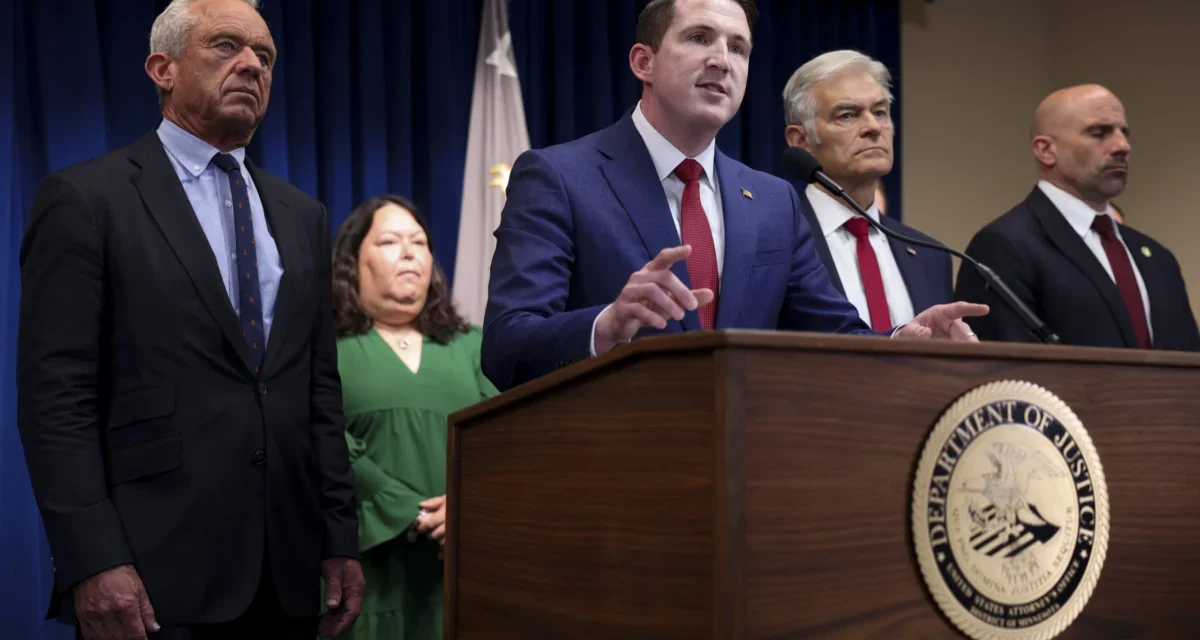
- Summer 2026: The Trump administration charges hundreds of individuals, including healthcare providers, in alleged billing schemes. Simultaneously, CMS Administrator Mehmet Oz announces the cancellation of 760,000 ACA enrollments, citing "phantom" consumers and missing Social Security numbers.
- October 2026: President Trump formally calls on Congress to mandate prison terms for healthcare fraud, aiming to eliminate probation as an option for offenders.
The Data Debate: Miscalculation vs. Malfeasance
The administration’s boldest moves have been met with skepticism and, at times, documented error. A notable instance involved the investigation of New York’s Medicaid program. CMS officials initially claimed that home care services had been provided to 5 million people—a figure that would have encompassed roughly three-quarters of the state’s entire Medicaid population.
When challenged, the administration was forced to admit to a "glaring error." Federal officials had fundamentally misunderstood the state’s billing codes. The actual number of beneficiaries was closer to 450,000. Despite this public admission, the administration continued its scrutiny of New York, eventually suspending millions in funding for the state’s Medicaid fraud unit on the grounds that it was not producing enough indictments.
Similarly, the administration’s cancellation of 760,000 ACA enrollments has sparked a firestorm. Administrator Mehmet Oz defended the move by pointing to "nonexistent consumers" and noting that roughly 35% of enrollees had never utilized their insurance. Critics, however, argue that these metrics are flawed. They note that healthy, younger individuals are naturally lower users of medical services, and that the absence of a Social Security number is not definitive proof of fraud, as it can occur when newborns are added to family plans.
Official Responses and Political Friction
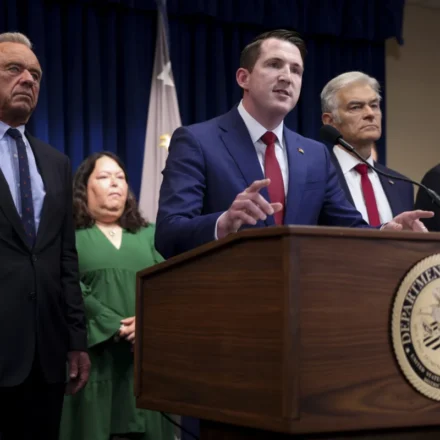
The tension between federal and state authorities has reached a boiling point. Vice President JD Vance, who chairs the Task Force to Eliminate Fraud, has personally overseen the announcement of funding deferrals for states like Minnesota.
State officials have responded with defiance. Minnesota, for instance, has challenged the $500 million funding freeze in court, with state leaders arguing that the administration is engaging in a politically motivated effort to destabilize their social services. Andy Schneider, a former CMS senior adviser, notes the unprecedented nature of these actions: "It’s a deferral, not a finding of fraud. This is being elevated by political decision-makers."
Democratic critics argue that the anti-fraud crusade is a thin veil for broader ideological goals. They point to the irony of the administration’s record: while the White House touts its crackdown, it has also recertified hundreds of insurance brokers previously suspended for fraud and laid off 200 CMS employees tasked with regional marketplace oversight. Furthermore, the administration’s pardoning of prominent health industry executives convicted of massive fraud schemes in previous years—many of whom have ties to political allies—has drawn sharp rebuke from groups like the National Health Care Anti-Fraud Association.
The Implications: A Costly Trade-off
The long-term implications of this political battle are profound. The Congressional Budget Office (CBO) has projected that recent GOP-led changes, including the failure to extend enhanced ACA premium subsidies, will result in 16 million additional uninsured Americans by 2034.
For the GOP, the focus on fraud offers a path to redirect public ire away from these statistics. By pinning the blame for rising costs on "bad actors" and "phantom enrollees," the administration creates a narrative that resonates with fiscal conservatives and voters concerned about government overreach.
However, the strategy carries significant risk. As advocates point out, if the administration’s "sweeping" cancellations ensnare legitimate, low-income families just weeks before the election, the potential for a voter backlash is substantial. The concentration of ACA enrollment in states like Florida and Texas—where GOP candidates hope to secure major wins—makes this a high-stakes gamble.
"It’s really a way to distract and reframe the cuts in a different way, to say it’s part of an anti-fraud effort," says Anthony Wright, executive director of Families USA. "Fighting fraud shouldn’t result in people losing coverage."
As November approaches, the question remains whether the electorate will view these actions as a necessary protection of the public purse or as a cynical dismantling of the healthcare safety net. The outcome will not only determine the balance of power in Congress but will likely define the future of federal oversight for public health programs for years to come. In the halls of power, the debate over "fraud" has become the defining skirmish of the 2026 election, ensuring that the health of the system is measured as much by its political utility as by its actual integrity.