

















































For millions of Americans, the three-digit dialing code 988 has become a vital bridge over troubled waters. Since its national launch in July 2022, the Suicide and Crisis Lifeline has evolved from a nascent federal experiment into a cornerstone of public health infrastructure. Yet, in Wisconsin, this life-saving service—which has demonstrably reduced suicide rates among young adults—finds itself in a precarious position, caught between soaring public demand and a cycle of uncertain, stop-gap funding.
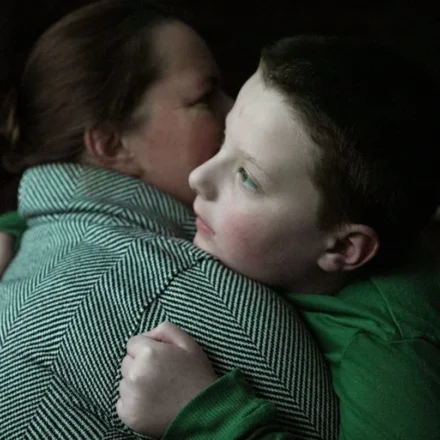
For Cadence Van Beek, a sophomore at Melrose-Mindoro High School during her own mental health crisis, 988 was not merely a number; it was a sanctuary. Fearing that reaching out would lead to bureaucratic delays or being relegated to a waitlist, Van Beek instead found a patient, empathetic counselor.
"It didn’t feel rushed," she recalls. "She took her time with me, and she was very kind—just a kind soul." That single interaction, which connected her to crucial local resources in Jackson County, represents one of over 345,000 instances of support provided by the state’s lifeline since its inception.
The Empirical Impact: A Proven Success
The stakes of this debate are measured in human lives. A landmark study published in the JAMA Network found that in the first two and a half years of the service’s existence, suicide rates among individuals aged 15 to 34 were 11% lower than statistical projections. This translates to approximately 4,400 fewer deaths—a profound testament to the effectiveness of immediate, accessible crisis intervention.

Despite these statistics, Wisconsin’s internal response metrics reveal a sobering reality. While the state has seen an answer rate improvement—climbing from 74% in January to 81% by July—it still trails behind leaders like Illinois and Minnesota, which consistently hit 90% in-state response rates. When Wisconsin’s primary centers are overwhelmed, calls are shunted to a national backup system, which often lacks the granular knowledge of local community resources and can lead to longer wait times that risk disengaging a person in the midst of a crisis.
Chronology of a Crisis: From Launch to Legislative Impasse
The history of 988 in Wisconsin is marked by rapid adoption and subsequent institutional inertia.
- July 2022: The 988 Suicide and Crisis Lifeline launches nationwide. Family Services of Northeast Wisconsin begins managing the state’s volume, bracing for moderate usage.
- 2023-2024: Demand obliterates all initial projections. The rise of digital-native Gen Z users necessitates the introduction of a 24/7 chat feature, further increasing the volume of interactions.
- May 2025: Facing inconsistent funding, advocates like Cadence Van Beek take their case to the state Capitol, presenting research that calls for a dedicated telecommunications fee, similar to the 75-cent monthly fee Wisconsinites already pay for 911.
- June 2025: State Rep. Ben Franklin and Sen. Jesse James introduce a bill to support the lifeline, but the proposal fails to include a funding mechanism. It dies in the legislative process without a floor vote.
- January 2026: Federal grants provide a temporary lifeline of $4.5 million annually for three years, yet a significant structural deficit remains for the upcoming biennial budget.
Supporting Data: Why "Sustainability" is the Watchword
Tana Koss, Senior Vice President at Family Services of Northeast Wisconsin, describes the surge in demand as a "perfect storm." Lingering mental health consequences from the COVID-19 pandemic, coupled with a societal reduction in stigma surrounding mental health help-seeking, have driven call volumes far beyond what original models anticipated.
The logistical challenge is immense. Family Services operates from Green Bay but coordinates a massive, remote network of counselors across the state. "The demand from Wisconsinites for this service has surpassed every model of projection that was available to us," Koss explains.

The financial picture is equally complex. The state requires roughly $12.2 million annually to maintain the service at its current level of efficacy. While the 2025-27 biennial budget allocated $7 million, the math simply does not add up to meet the long-term need. With a projected $6.195 million deficit looming for 2028, administrative exhaustion is setting in. For organizations like Family Services, the constant uncertainty of grant-based funding acts as a barrier to long-term staffing and recruitment.
The Case for a Dedicated Funding Stream
Advocates, including the National Alliance on Mental Illness (NAMI) Wisconsin, are pushing for a permanent, non-discretionary funding model. Julia Polk, NAMI’s advocacy coordinator, notes that the reliance on federal grants—which can be delayed or withdrawn due to shifts in national policy—is a dangerous gamble.
"We want to get them in the next state budget to say, ‘we’re going to permanently fund this,’" Polk says.
Legislative efforts to create a dedicated 988 fee—modeled after the successful 911 surcharge—have seen support in other states but remain politically fraught in Wisconsin. Some critics argue against new fees, while others suggest that the burden should fall on the tech sector. Legislation in states like Illinois has proposed holding AI companies financially accountable for failing to provide crisis resources to users experiencing suicidal ideation. While this could create a new revenue stream, local experts like Koss are less concerned with the "how" and more with the "when."

"I’m not personally attached to any route," Koss said. "I think the request that I would have and advocate for is sustainability over the long haul."
Implications for Future Generations
The cultural shift toward digital interaction has redefined crisis intervention. For Gen Z, who have grown up communicating primarily through screens, the 988 chat feature is a vital lifeline. Van Beek, now a psychology student at the University of Wisconsin-Whitewater, emphasizes that the accessibility of digital text-based support is what makes the service truly inclusive.
However, this reliance on technology also brings new risks. With the rise of generative AI companions—chatbots that are increasingly being used as confidants by young people—there is a growing concern that users may turn to AI when they should be turning to humans. Megan Zimmerman, outreach program director at NAMI Fox Valley, makes it a priority to educate students on the distinction between AI and 988.
"I always really encourage people to instead think about 988… because then you’re getting a real live human being," Zimmerman says. She notes that the fear of "being hospitalized" or having law enforcement intervene is a major deterrent, yet data shows that 99.6% of calls are resolved without any such emergency escalation.

Conclusion: A Moral and Fiscal Imperative
As Wisconsin moves toward the next budget cycle, the 988 crisis line stands at a crossroads. The human success stories—like that of Van Beek, who has transformed her own experience into a career path in psychology—prove that the investment yields tangible, life-saving returns.
The debate over 988 is no longer about whether the service works; the evidence is clear that it does. The question for Wisconsin lawmakers is whether they will treat mental health crisis intervention with the same permanence and fiscal priority as physical emergency services. As Van Beek succinctly put it: "988 has always kind of been a given. We always kind of assume that it’ll be there. The possibility that there might not be enough counselors on the line… just makes me a little worried."
For the thousands of Wisconsinites who reach out for help every month, that worry is a burden the state has the power—and the duty—to resolve.