


















































The Weight of a Closing Door: How Rural Minnesota Navigates the Crisis of School Consolidation

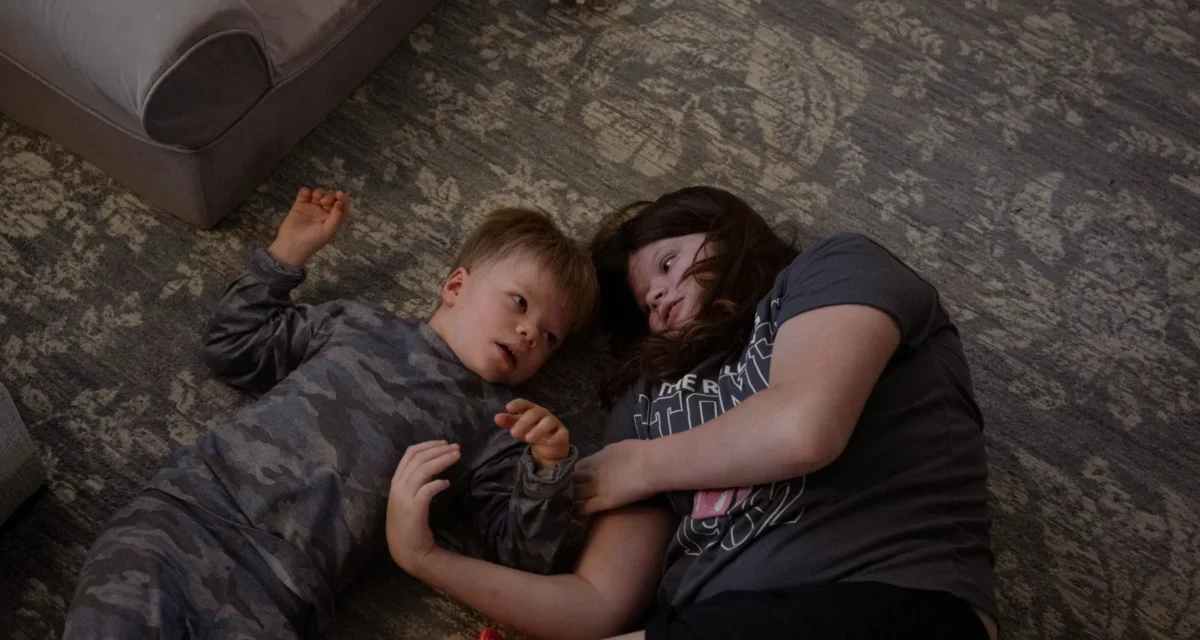
On a sun-drenched, late-summer morning in Hibbing, Minnesota, the playground at Greenhaven Elementary serves as a quiet stage for a changing era. Dave Benz, a local resident, watches as his daughter, Sabrina Weberg, helps his twin granddaughters, Maya and Lucy, navigate the slides and swings. In just a few days, the girls will turn three, but their future in this specific school building is already written in the past tense.
Standing in front of the elementary school is a large, weathered yellow sign: "For Sale." For families like the Benzes, the closure of Greenhaven—a casualty of a $2 million budget deficit—is more than a administrative decision. It is the dismantling of a neighborhood anchor.
"Yeah, it was a sad one," Benz says, his gaze lingering on the building. "I’m from here, so I’m a little biased."
Across Minnesota, this scene is playing out with alarming regularity. As enrollment numbers plummet and operational costs soar, rural school districts are finding themselves in a "pressure cooker" of financial instability. The result is a painful cycle of collaboration, consolidation, and the slow, often agonizing, erosion of community identity.
A Historical Context: The Long Shadow of Consolidation
The current crisis is not entirely unprecedented. In the 1990s, Minnesota experienced a seismic shift in its educational landscape. Faced with declining rural populations, shaky financial foundations, and legislative incentives designed to streamline operations, the state lost one-fifth of its school districts. More than 150 districts merged, and in the majority of those cases, the consolidation resulted in the shuttering of local school buildings.
While the rate of such mergers slowed over the last decade—with only seven districts consolidating in the past ten years—the underlying issues have returned with renewed intensity. Today, districts are once again forced to choose between maintaining their independence at the cost of educational quality or merging to ensure their long-term survival.
For many residents, this is an existential threat. In rural communities, the school is the primary repository of local identity. When the school goes, residents often feel as though a piece of their own history has been excised. Paul Peltier, a former educator and the current head of the Range Association of Municipalities and Schools (RAMS), recalls his own upbringing: "We felt like we were bounced around. But we were just ‘Balsam boys.’ And that’s what happens when you live 30 miles away from a school."

Peltier emphasizes that schools serve as custodians of family history. "Communities and families anchor themselves in their school," he says. "Schools owe it to them to make sure they are stewards of that identity."
The Rock Ridge Model: A Modern, Contentious Solution
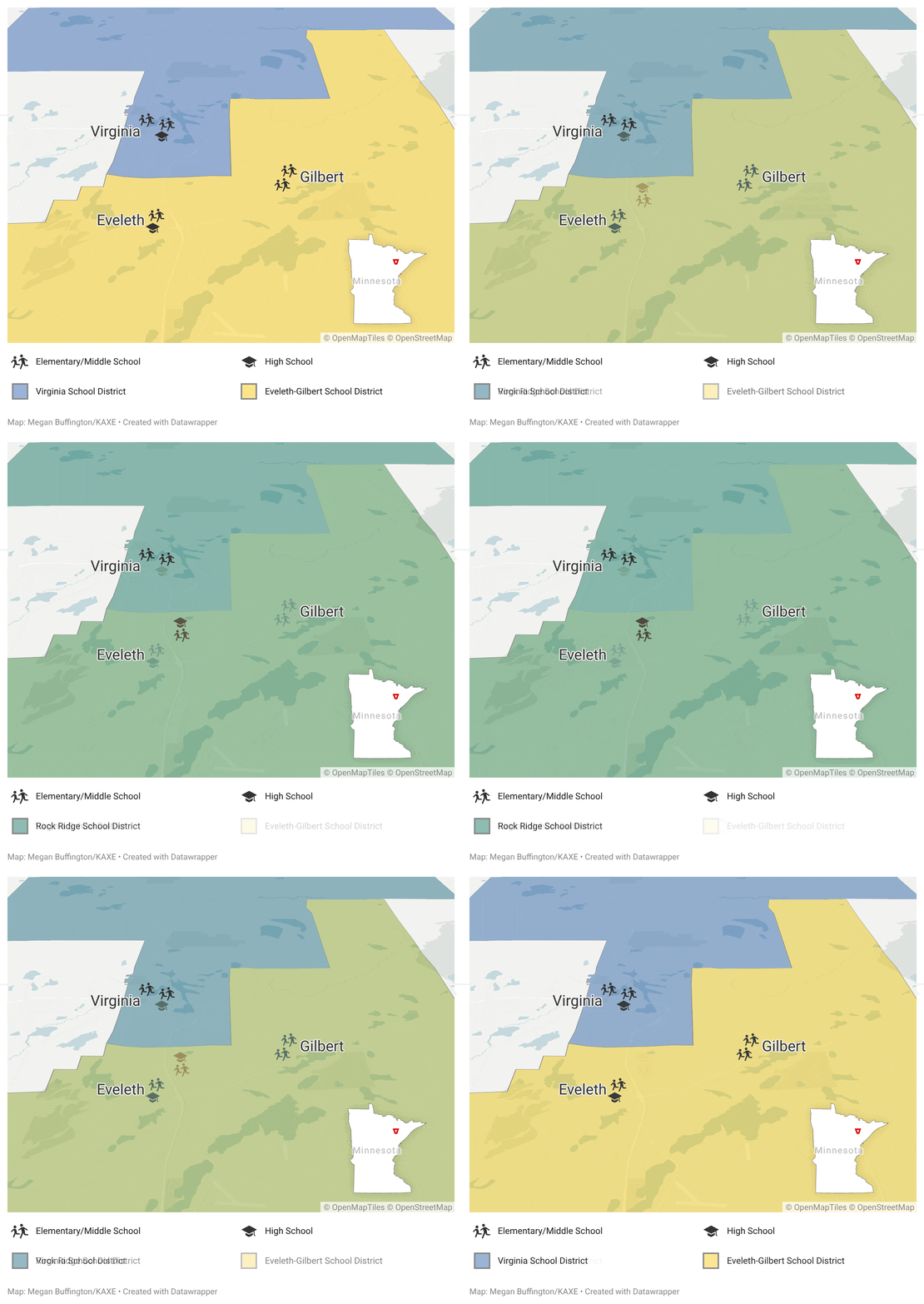
Perhaps nowhere is this struggle more visible than in the Iron Range, a region with a distinct cultural identity forged by mining and immigration. Here, the consolidation of Virginia and Eveleth-Gilbert into the new Rock Ridge School District serves as a primary case study—for better or worse.
The Rock Ridge campus is a state-of-the-art facility, boasting a grand piano in the cafeteria, a 3-ton crane in the metal shop, and a career academy model designed to prepare students for modern industry. For Superintendent Noel Schmidt, the consolidation was a necessity for survival. "If you’re a rural school, this is what you have to do," he argues.
Board Chair John Uhan, who grew up in the area, views the merger as a "no-brainer." He points to a curriculum far more robust than what the smaller, individual districts could ever afford, along with improved athletic and extracurricular success. "It was looking awfully dire," Uhan says of the final days of the Eveleth-Gilbert district. "We would have been in huge trouble."
However, the "Rock Ridge model" has its detractors. During an open house, one parent expressed deep resentment, calling the new institution "the worst school in Minnesota." While Superintendent Schmidt estimates that this vocal opposition represents only about 20% of the community, others argue the divide is closer to a 50/50 split.
The pain stems from the loss of the physical buildings that once defined these towns. In Gilbert, an empty lot stands where an elementary school served generations for over a century. For the residents who grew up in the shadow of these local institutions, the transition to a centralized, "modern" facility feels like an erasure of the town’s soul.
Supporting Data: The Arithmetic of Decline
The financial strain on rural districts is rooted in the complex, enrollment-driven funding model of the Minnesota education system. According to Aaron Fischer, Executive Director of the Minnesota Rural Education Association, the problem is one of basic logistics: "At a certain point, there aren’t enough students to pay for the basics."

Every district, regardless of size, must maintain an infrastructure that includes a superintendent, principals, business managers, custodians, and office staff. When the student population falls below a certain threshold, the per-pupil funding no longer covers the overhead of these essential roles.
This has led to a variety of "survival tactics":
- Sports Co-ops: Allowing small towns to pool their student-athletes to maintain competitive teams.
- Shared Services: Districts sharing business managers, special education resources, and early childhood programs.
- Facility Sharing: Municipalities and school districts combining efforts on infrastructure like bus garages and public works buildings.
Despite these efforts, the "death by a thousand paper cuts" continues. As Peltier notes, the state level of government is exhibiting a growing apathy toward these rural challenges. With state funding lagging behind inflation and new legislative mandates adding costs without providing new revenue, many districts feel the walls closing in.
Official Responses and the Leadership Dilemma
For leaders like Schmidt and Uhan, the challenge is managing the transition from an emotional past to a pragmatic future. Schmidt, who did not grow up in the region, admits that his outsider status was an advantage in pushing the consolidation through. "I had one advantage: I did not grow up here," he says. "It just took a little different viewpoint on how things are going."
Conversely, Uhan acknowledges the personal toll. "You lose sleep over it. It keeps you up at night," he says. "Eventually, you move on."
The Eveleth Community Center stands as a testament to this attempt to preserve history while moving forward. Built into the only remaining section of the old Eveleth-Gilbert school, the center hosts community events, line dancing, and children’s parties. It is a hybrid space—a place to acknowledge the "Golden Bears" legacy while accepting the reality that the district itself is gone.
Mayor Adam Roen captures the current sentiment: "When you take the school district out, I think you take a piece of that identity away. I don’t think you take it all. You can create your own."

Implications for the Future: A Call to Action
The overarching message from experts like Steve Giorgi, former leader of RAMS, is that consolidation is an inevitable, if painful, reality. "People know that they’re going to lose out," Giorgi says. "Somebody is going to lose an identity."
The challenge for the next decade is how to manage this decline without destroying the fabric of the communities involved. If rural schools wait for an external, forced crisis, the result will likely be a total loss of the educational quality these towns strive to protect.
"My biggest concern is that rural schools won’t move fast enough," Schmidt warns. "If we wait for an external factor to cause the consolidation, the improvement of education for our rural kids, we’re done for."
As Minnesota looks toward an uncertain budget future, the state’s rural districts are at a crossroads. The transition from the neighborhood schoolhouse—a place where everyone walked the same hallways—to the modern, regional academy is a transition from an intimate, historical identity to a broader, survival-based identity.
For parents like Sabrina Weberg and grandparents like Dave Benz, the future is uncertain. The "For Sale" sign at Greenhaven is a stark reminder that while the future of education may lie in larger, more efficient, and better-resourced institutions, the price of that progress is often paid in the currency of local tradition and the quiet, daily connections that once bound small-town communities together.
This reporting is part of a collaboration with the Institute for Nonprofit News’ Rural News Network and Big Local News at Stanford University, with data journalist Cherry Salazar’s analysis helping anchor the reporting. Six nonprofit newsrooms were involved in the investigation into the state of rural education.