




















































Collateral Damage: How Minnesota’s Anti-Fraud Campaign Is Crippling Essential Medicaid Services

WASHINGTON — What began as a high-stakes mission to sanitize Minnesota’s Medicaid system of "bad actors" and fraudulent billing has spiraled into a humanitarian crisis. Thousands of the state’s most vulnerable residents—including low-income seniors, individuals with profound disabilities, and children on the autism spectrum—are increasingly finding themselves as the overlooked casualties of a bureaucratic "war on fraud."
As the Minnesota Department of Human Services (DHS) races to comply with federal demands to root out systemic abuse, the resulting administrative friction has created a cascade of financial and operational failures. Medicaid providers, many of whom operate on razor-thin margins, are shuttering clinics, dipping into personal savings, or taking on high-interest loans to bridge the gap while waiting for state authorization. Meanwhile, patients are being forced to navigate a labyrinth of new, stringent requirements, leading to long wait times, gaps in life-saving care, and, in some cases, total loss of services.
The Human Cost of Administrative Rigor
For families like the McGuires of Bloomington, the state’s "Revalidation 2026" initiative has turned a challenging life into an unsustainable struggle. Caroline and Luke McGuire care for two children with complex medical needs: a 6-year-old son, Colin, who has cerebral palsy, and a 12-year-old daughter, Madeline, who deals with extensive chromosomal damage.
"It’s always been a far-from-perfect system, but now they have made it so much worse," Caroline McGuire said, detailing the hurdles her family now faces. "People with disabilities are paying the price, and it’s so much worse when it’s children."
The physical and psychological toll is palpable. Colin, who relies on regular physical therapy for his development, recently endured a four-month disruption in his care. According to his mother, the delay stemmed from a new authorization portal managed by Acentra Health, a third-party agent contracted by the state. The requirement to prove medical necessity on a monthly basis has turned into an exhausting bureaucratic gauntlet. Even the approval for a personal care assistant—an essential support for the family—has languished in administrative limbo.

This is not an isolated anecdote. Across the state, the story is repeated with varying degrees of severity. From the elderly fearing the closure of their local clinics to parents of autistic children scrambling to find therapists, the atmosphere is one of profound anxiety.
Chronology of a Crisis: The Path to Revalidation 2026
The roots of the current turmoil lie in the federal government’s pressure on the state to tighten its oversight. Under the Affordable Care Act, states are mandated to revalidate Medicaid providers every five years to identify high-risk entities.
The timeline of the current escalation follows a tense trajectory:
- Federal Pressure: During the previous administration, the Centers for Medicare & Medicaid Services (CMS) flagged specific high-risk Medicaid programs in Minnesota, citing concerns over "aberrant billing practices." The federal government threatened to withhold significant funding, eventually deferring approximately $550 million.
- The January Pivot: Facing the potential loss of billions in federal matching funds, the Minnesota DHS initiated an emergency "off-cycle" revalidation process in January.
- The May Deadline: Approximately 5,600 providers across 13 "high-risk" service categories were subjected to exhaustive scrutiny, including site visits, fingerprint-based background checks for anyone with a controlling interest, and intense documentation audits. All of this was forced into a compressed window ending in May.
- Systemic Backlog: As providers attempted to comply, the state’s infrastructure buckled. Third-party agents like Acentra Health and audit firms like Optum faced massive surges in data requests.
- Current State: As of early September, while thousands of providers were revalidated, thousands more remain in the "appeals in progress" category or have simply ceased operations due to the financial strain of the audit process.
Supporting Data: By the Numbers
The scale of the disruption is becoming increasingly clear through legislative testimony and state reports.
Dr. Eric Larsson, Chairman of the Autism Treatment Association of Minnesota, recently informed the state Senate Human Services Committee that a backlog at Acentra Health has left roughly 1,000 children waiting for essential autism services.

Paige Berland, co-owner of Minnesota Behavioralist Specialists in Eagan, echoed these concerns. Her firm, which serves children in homes and at a specialized center, saw authorization turnaround times balloon from one week to two months. At the peak of the backlog, one-third of her clients were effectively locked out of services because their authorizations remained in pending status.
The data provided by the DHS itself paints a picture of a system in flux:
- Total Revalidated: 3,587 providers.
- Appeals Ongoing: 1,177 providers.
- Failed/Abandoned Revalidation: 695 providers.
Crucially, the state admits it lacks a comprehensive assessment of how many patients have been displaced by these provider departures. "We do not have an assessment at this time of how many have stopped serving clients altogether," a DHS spokesperson noted, highlighting a dangerous blind spot in the state’s oversight.
Fraud and the Search for "Bad Actors"
The irony, according to critics, is that the aggressive crackdown has yet to yield significant evidence of widespread, systemic fraud. A July study by Georgetown University regarding Minnesota’s revalidation effort found that only 1% of the providers required to revalidate were referred to the Office of Inspector General for further review.
Critics argue that the state is using a sledgehammer where a scalpel was required. "There will be people who do not survive this," warned Maren Christensen, executive director of the Multicultural Autism Action Network. "There are many states that have a lot more fraud than Minnesota."

However, fraud is not nonexistent. Recently, an investigation by Minnesota Public Radio (MPR) revealed that the director of three suburban Twin Cities group homes was living in Liberia while serving as the managing director of that country’s National Port Authority. Such cases provide the political ammunition for the "war on fraud," yet for many providers, the focus on these rare outliers has resulted in a "guilty until proven innocent" culture that punishes legitimate, high-quality care providers.
Official Responses and Political Fallout
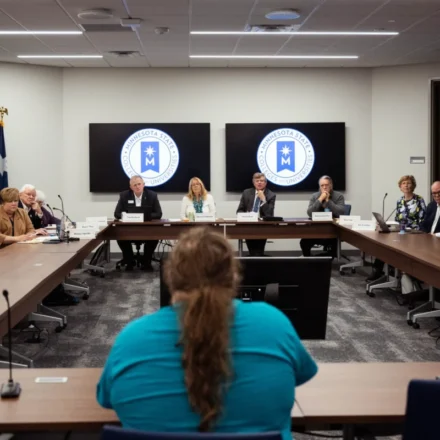
The political pressure on the Minnesota DHS is reaching a fever pitch. During a Senate Human Services Committee hearing last month, state Medicaid director John Connolly offered an apology for the distress caused by the revalidation process.
"DHS is in a very difficult moment, as I know you are," Connolly told the committee, acknowledging the hardship faced by both providers and the families they serve.
However, for families like the Carpenters of Red Wing, an apology does little to address the reality of life without support. Addyson Carpenter, chair of the Minnesota Council on Disability, faced a near-death experience due to septic shock in April. Her recovery has been hampered by the lack of in-home nursing care, forcing her partner to quit his job to provide full-time care. Despite her position as a disability advocate, she describes the system as fundamentally broken—not necessarily due to state incompetence, but due to a federal mandate that prioritizes fiscal rigidity over human well-being.
"The federal government is doing everything to hurt those with disabilities," Carpenter stated.

Implications for the Future
The implications of the current crisis are wide-reaching:
- Workforce Erosion: As companies like Behavior Frontiers lose staff due to pending revalidations, the talent pool of trained therapists is leaking into other sectors. Replacing these specialized workers will take years.
- Increased Costs of Neglect: The failure to provide preventative and consistent care—such as physical therapy for children—often leads to higher, more expensive emergency medical interventions later on.
- Provider Stability: The state’s decision to freeze the authorization of new providers until January 2027, while intended to allow for a "reset," effectively ensures that no new capacity will be added to the system for months, creating a permanent scarcity for new patients.
As Minnesota moves forward, the central tension remains: how to balance the stewardship of taxpayer dollars with the moral obligation to provide care for the state’s most vulnerable. For now, the "Revalidation 2026" effort serves as a cautionary tale of how the pursuit of administrative integrity, when implemented without a human-centered safety net, can inflict damage far greater than the problems it intends to solve.