




















































The Governance Gap: Why Indigenous Leadership is the Missing Link in Global Climate Resilience

From the fire-ravaged forests of Brazil to the drought-stricken highlands of Nepal and the flood-prone riverbanks of the Ecuadorian Amazon, Indigenous communities are standing on the front lines of an escalating planetary crisis. Yet, as the frequency and severity of climate-related disasters intensify, a critical oversight persists: while the world is beginning to acknowledge the value of Indigenous ecological knowledge, it continues to ignore the robust, centuries-old governance systems that make such knowledge actionable.
A new report from the global nonprofit Land Is Life underscores a sobering reality. Indigenous peoples are not merely passive victims of climate change; they are active, effective, and sophisticated stewards of their environments. However, their ability to lead is being systematically stifled by a lack of legal recognition, financial support, and meaningful partnership from the global powers that claim to be addressing the climate emergency.
The Overlapping Crisis: A New Normal
The traditional approach to disaster management—treating events as isolated occurrences—is failing. Climate change is not arriving in single, predictable waves; it is manifesting as a compounding series of "overlapping crises." According to the Land Is Life report, which synthesized data from over 200 surveys across 46 countries, more than 80 percent of Indigenous respondents reported facing two or more simultaneous climate disasters. Over 90 percent noted a marked increase in the frequency of these events.
This "polycrisis" environment—where drought may follow fire, or flooding may be exacerbated by soil degradation from previous storms—requires a level of adaptive governance that top-down, centralized bureaucratic structures often lack. Indigenous communities, by contrast, operate on long-term, landscape-scale management strategies that are inherently resilient.
Case Studies in Resilience: From Kenya to the Amazon
The effectiveness of Indigenous leadership is not theoretical; it is documented in real-time. In Kenya, Indigenous Endorois and Tugen women have pioneered the cultivation of climate-resilient, indigenous crop varieties—such as specialized strains of sorghum and millet. During years of catastrophic drought that left surrounding regions food-insecure, these women’s harvests remained stable, providing a critical lifeline for their communities.
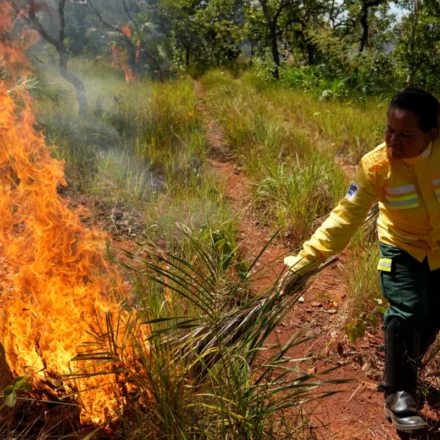
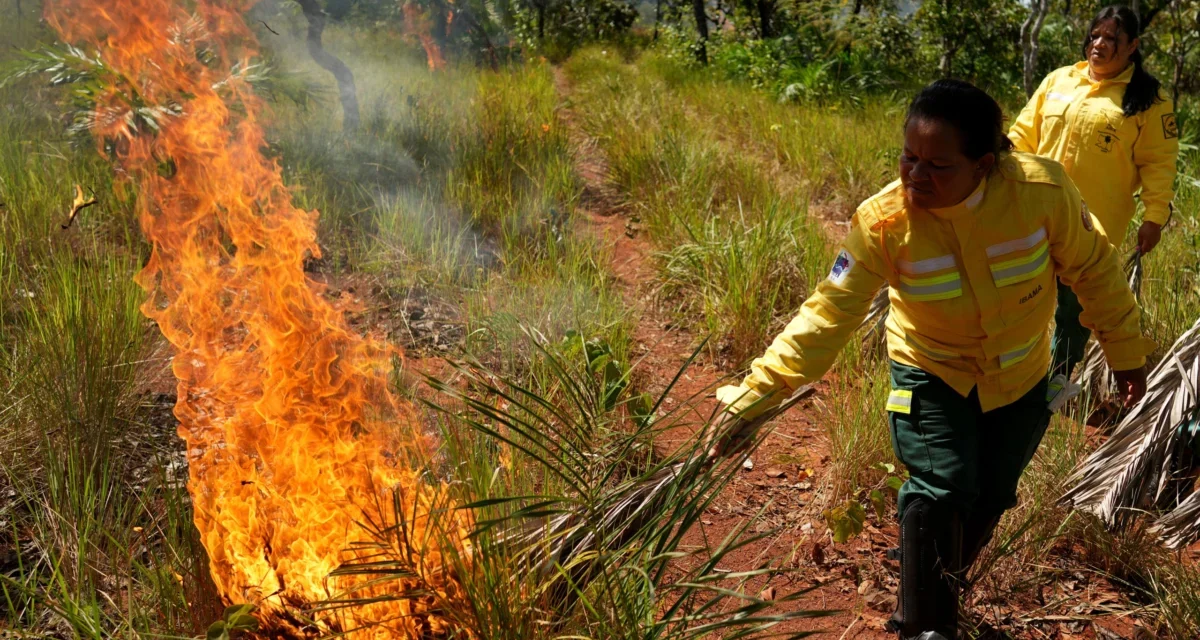
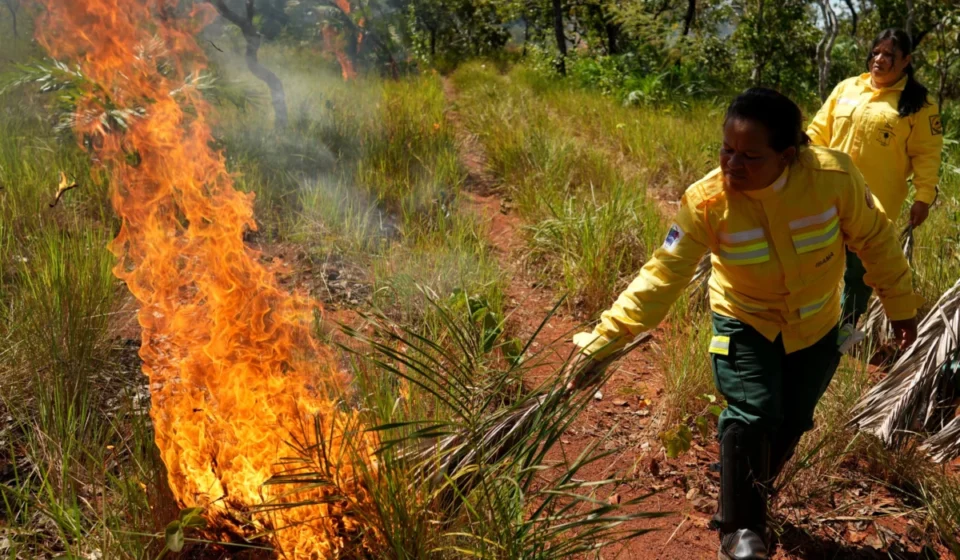
In the Brazilian Amazon, the Coordination of Indigenous Organizations of the Brazilian Amazon (COIAB) has become a model for large-scale environmental management. By organizing community-led fire brigades and mobilizing rapid-response teams, they have successfully managed and mitigated fire risks across vast, sensitive ecosystems.

Similarly, the Kichwa People of Sarayaku in the Ecuadorian Amazon provide a masterclass in disaster response. When devastating floods struck their territory in 2019, the community did not wait for outside intervention. Guided by the principle of minga—a Kichwa term for collective responsibility and solidarity—the community leveraged existing decision-making hierarchies to coordinate emergency housing, distribute resources, and communicate urgent needs to the outside world. For leaders like Daniel Santi, the community’s president, the lesson is clear: their resilience is not an accident of nature; it is the direct product of their autonomy.
The Governance Imperative: Why Knowledge Needs Authority
For decades, Western policymakers have treated "Indigenous knowledge" as a collection of isolated facts—a database of plants or weather patterns to be harvested. The Land Is Life report argues that this approach is fundamentally flawed. Knowledge is inextricably linked to the governance systems that apply it.
"We show that it’s not that they are only the most impacted, but they are already implementing effective solutions," says Luisa Castañeda Quintana, executive director of Land Is Life. "When it comes to adaptation, we don’t really need to create new structures or systems. We just need to see what is working."
Effective governance allows for:
- Immediate Action: Indigenous elders can interpret environmental indicators—such as subtle changes in lightning or wind patterns—to trigger community-wide emergency protocols before a disaster hits.
- Adaptive Resource Allocation: Unlike state-run systems that may be bogged down in red tape, local Indigenous councils can reallocate resources to the most vulnerable families within hours, not weeks.
- Cultural Continuity: By prioritizing Indigenous languages and traditional knowledge in communication, communities ensure that emergency alerts and adaptation strategies are understood and trusted by all members, from youth to elders.
The Structural Barriers to Success
Despite these clear advantages, global climate policy continues to overlook Indigenous sovereignty. The Land Is Life report identifies three major barriers:
- Legal Invisibility: In many nations, Indigenous land rights are not formally recognized. Without title to their ancestral territories, these communities are often treated as squatters on their own land, making it difficult to implement long-term conservation and disaster-mitigation strategies.
- The Funding Gap: While billions of dollars are pledged annually for climate adaptation, only a fraction reaches the grassroots level. Indigenous leaders consistently report that funds are intercepted by non-Indigenous NGOs or government entities, which often lack the cultural competency to implement projects effectively.
- Criminalization: In some jurisdictions, traditional practices like controlled burns—which have historically prevented massive wildfires—are criminalized, forcing communities to choose between protecting their land and obeying laws that don’t reflect ecological reality.
Anisha Buda, a program officer at the National Indigenous Women Forum in Nepal, describes the frustration of being sidelined: "It’s always the lack of resources and the lack of access to funding that makes it so difficult for us to work. There are so many projects that are supposed to be for Indigenous peoples, but they are implemented by non-Indigenous organizations."

A Call for Institutional Reform
The Land Is Life report, released during New York Climate Week, serves as a formal plea for a paradigm shift. The authors argue that if global powers are serious about climate adaptation, they must pivot from "aid" to "investment in sovereignty."
This requires a fundamental change in how philanthropy and state funding are distributed:
- Direct Financing: Removing the intermediaries that dilute the impact of climate funds.
- Legal Recognition: Pressuring national governments to grant land tenure and legal autonomy to Indigenous nations.
- Respectful Partnerships: Moving away from extractive research models toward collaborative efforts—similar to the work done in Peru’s Ausangate Regional Conservation Area, where Quechua communities successfully merged traditional monitoring with scientific research.
Implications: The Future of the Earth
The urgency of this issue is compounded by global instability. With major economies retracting climate commitments and international conflicts siphoning off global resources, there is a legitimate fear that Indigenous communities will be left to face the worst of the climate crisis alone.
Gisela Hurtado, the author of the Land Is Life report, emphasizes that the stakes are universal. "What they are seeing in the territories, we’re going to see it also in the future," she warns. Indigenous peoples are not just protecting their own backyards; they are acting as the planet’s early warning system. By observing their success, the rest of the world can learn how to survive an era of instability.
The path forward is not to invent new, complex global frameworks, but to support the ones that have already stood the test of time. As the climate continues to shift, the wisdom held by Indigenous nations—and the governance structures that uphold it—may well be the most valuable resource humanity has left. If the international community chooses to ignore this, they do so at the peril of not just the Indigenous populations, but of the global ecosystem itself.
Supporting Indigenous self-determination is not an act of charity; it is a pragmatic, evidence-based strategy for global survival. The tools for resilience already exist. The question remains whether the global power structures have the political will to finally put them into the hands of those who know how to use them.