














































This article was originally published by The Daily Yonder.
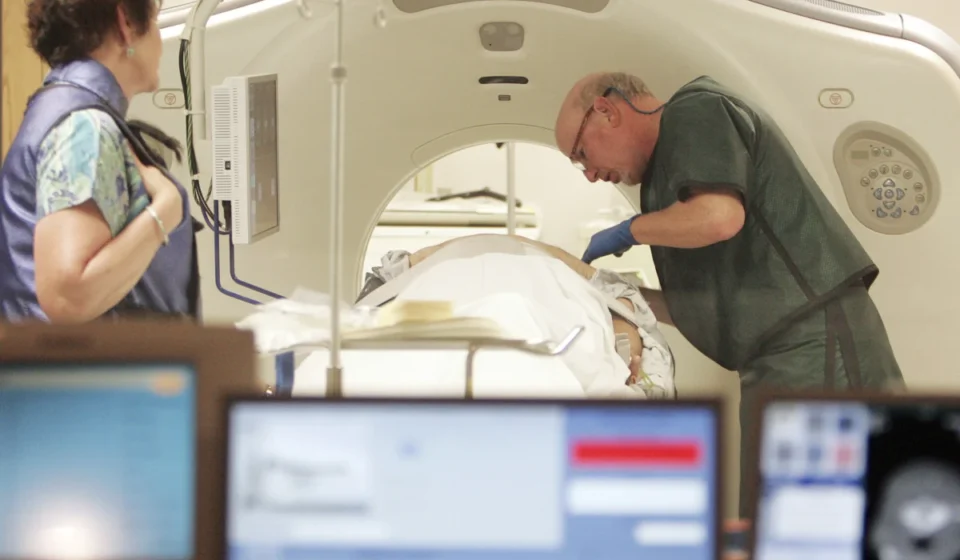
In the quiet corridors of rural medical clinics across Minnesota, a quiet revolution in cancer prevention is taking root. A pioneering research project, spearheaded by the University of Minnesota’s Masonic Cancer Center in collaboration with the Minnesota Cancer Clinical Trials Network (MNCCTN), is seeking to bridge a dangerous gap in healthcare access. The initiative aims to dramatically increase the number of rural residents receiving life-saving lung cancer screenings, a demographic that historically faces higher smoking rates and lower detection rates than their urban counterparts.
The Vital Stakes of Early Detection
The medical reality of lung cancer is stark: it remains one of the most lethal malignancies, yet it is also one of the most treatable when caught early. According to Dr. Abbie Begnaud, a pulmonologist and associate professor at the University of Minnesota Medical School, the window for intervention is narrow but incredibly effective.
"Anybody with lungs can get lung cancer," Dr. Begnaud explained. "When found early, lung cancer survival rates can reach 80% to 90%. The problem is that less than 20% of eligible Minnesotans are actually screened for lung cancer."
This diagnostic gap is not merely a matter of geography; it is a multifaceted issue involving systemic, psychological, and logistical barriers. By embedding screening advocacy directly into the primary care workflow, researchers hope to transform the "eligible patient" from a statistic into a success story.
The Chronology of the Pilot Program
The road to this initiative began with an analysis of the barriers inherent in rural primary care. Recognizing that traditional outreach—such as public service announcements—had hit a ceiling, Dr. Begnaud’s team shifted their focus to the point of care: the doctor’s office.
Phase 1: Identifying the Friction Points
Researchers identified that simply advising a patient to get screened was insufficient. In rural settings, patients often face "administrative fatigue," where they are handed a referral and left to navigate the logistics of imaging centers, insurance approvals, and long-distance travel on their own.
Phase 2: The "Whole-of-Office" Approach
The pilot program, conducted across six primary care clinics in rural Minnesota, moved away from physician-only recommendations. Instead, the team implemented a "whole-of-office" strategy. Under this model, the entire clinic staff—from receptionists to nurses—was trained to identify eligible patients, discuss the benefits of screening, and, crucially, assist in scheduling the appointment before the patient even left the building.
Phase 3: Measuring Success
The results of this pilot were encouraging. The clinics involved saw a 30% increase in the number of screening orders generated for eligible patients. While the pilot was limited in scope, the data provided a proof-of-concept that is now serving as the foundation for a planned statewide expansion.
Supporting Data: The Rural Smoking Disparity
The necessity for this project is underscored by sobering national data. Despite decades of anti-smoking campaigns, the U.S. continues to see a persistent divide in tobacco use and its associated health outcomes.
According to the American Lung Association, approximately 10.8% of U.S. adults smoke cigarettes as of 2023. While this represents a historic low, the U.S. Surgeon General’s 2024 report paints a more granular, concerning picture. Rural adults smoke at a rate of 15.4%, compared to just 10.1% for urban dwellers.
Key Demographic Findings:
- Intensity of Consumption: Rural smokers consume an average of 15 or more cigarettes per day, a higher volume than their urban counterparts.
- Early Onset: Youth in rural areas are statistically more likely to initiate smoking at a younger age and progress to daily use.
- Geographic Clustering: Rural adults in the Midwest and Southeast—including states like Kentucky, West Virginia, and Indiana—are 40% more likely to smoke than those in the Northeast or West.
- Cessation Struggles: Rural populations face significant "quit disparities." Data indicates that rural residents have lower "quit ratios" and lower success rates in past-year attempts to stop smoking, leading to higher rates of tobacco-related mortality.
The Weight of Stigma: A Psychological Barrier
Data alone does not capture the full human experience of the rural smoker. Dr. Begnaud emphasizes that the decline in smoking rates has been accompanied by a rise in social stigma—a byproduct that can paradoxically hinder healthcare access.
"All the public service announcements, packages, and warnings we’ve been doing over the last several decades have decreased the smoking rate, but they have also led to stigma and shame around cigarette smoking," Begnaud noted. "People who have smoked or continue to smoke are certainly aware that it’s bad for their health, and they know that everyone else is thinking about it. They internalize these messages of blame."
This internalized shame creates a psychological wall between the patient and the provider. If a patient fears being judged for their smoking history, they are less likely to bring up lung health or prioritize screening. Dr. Begnaud’s initiative seeks to "decouple" the clinical necessity of screening from the social judgment of smoking, reframing the conversation as a proactive health measure rather than a lecture on lifestyle choices.
Implications for Future Public Health Policy
The implications of this research extend far beyond the borders of Minnesota. If the "whole-of-office" approach can be scaled successfully, it could offer a blueprint for rural health systems across the United States.
The Shift to Proactive Systems
The core implication is the shift from passive advice to active facilitation. In many rural healthcare systems, resource constraints mean that staff are often overwhelmed. By proving that a team-based approach is feasible, researchers are demonstrating that screening for lung cancer does not have to be an additional burden on the physician, but rather a streamlined, shared task among the medical team.
Bridging the Access Gap
For a resident living an hour away from an imaging center, the logistics of a screening appointment can be insurmountable. By integrating the scheduling process into the clinic visit, the program reduces the "cognitive load" on the patient. It ensures that the transition from a conversation about health to the actual procedure is seamless.
A Personal Commitment to Change
For Dr. Begnaud, the drive to expand this project is deeply personal. As a pulmonologist, she is frequently the one who must deliver a diagnosis of advanced-stage lung cancer—a situation that is preventable in many cases if detected early.
"My clinical work as a lung specialist motivates me," she said. "Every time I see somebody who comes to me who should have been screened and wasn’t, and now they have a stage 3 or a stage 4 lung cancer, it motivates me to get up and work harder tomorrow, because there’s still a lot of work to do."
As the project moves from pilot to statewide trials, the focus will remain on scalability and sustainability. The researchers are looking to determine whether this model can be adapted to clinics with varying levels of resources, ensuring that no rural patient is left behind simply because of their zip code or their history with tobacco.
In the end, the success of this project will not be measured solely by the number of screenings performed, but by the number of lives saved through early intervention. It is a reminder that in the fight against cancer, the most powerful tool is often the simplest: a conversation that leads to action.