

































A Season of Transition: Twins Leadership Faces the Music Amidst Fan Frustration and Offseason Uncertainty

The Minnesota Twins’ 2026 campaign concluded not with a celebration, but with a somber, high-stakes postmortem. As the dust settles on a season that saw the club finish eight games under .500 and wallow in a distant third place in the American League Central, the organization finds itself at a critical crossroads.
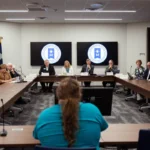
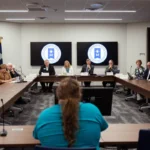
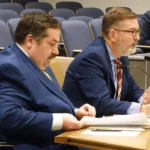
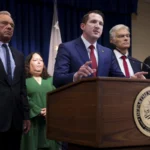
At the team’s end-of-season press conference held this Tuesday, the atmosphere was markedly different from the usual relaxed, business-casual environment typically associated with Twins media appearances. Executive Chair Tom Pohlad, flanked by General Manager Jeremy Zoll and manager Derek Shelton, arrived in a somber dark blue suit and tie—a sartorial choice that mirrored the gravity of the situation. For a franchise grappling with declining attendance, eroding fan trust, and a looming labor crisis in Major League Baseball, the message from the top was clear: the era of "merely competitive" baseball is over.
The State of the Franchise: A Brief Opening
Tom Pohlad did not mince words when addressing the media. He bypassed the usual platitudes, delivering an opening statement that was both a confession and a challenge.
"We aspired to play meaningful baseball in September, and we aspired to finish with a winning record," Pohlad stated. "We fell short on both of those fronts."
This admission serves as the baseline for the organization’s new trajectory. For years, the Pohlad family has faced intense scrutiny and frustration from a fanbase that has increasingly called for a change in ownership. In response to these pressures, Tom Pohlad used the platform to pivot away from the strategy of recent years, explicitly rejecting the notion that being "competitive" is sufficient.
"This is an organization that, in my opinion, has been comfortable with the goal to be competitive," Pohlad admitted. "I clearly stated that our goal is to win a world championship. That is the reason we set high expectations for ourselves this year, maybe expectations that some in this room thought were unreasonable."
Chronology of a Lost Season
The 2026 season was defined by inconsistency and a lack of identity. The Twins entered the year with modest hopes but struggled to maintain momentum, largely crippled by decisions made in previous cycles.
The decline began in earnest during the previous year’s trade deadline, where a decision to "torch the bullpen" effectively tanked the team’s long-term outlook. Despite General Manager Jeremy Zoll’s attempts to patch the roster with mid-season acquisitions this year, the results remained stagnant. The team’s collapse in the final two months—a 21-30 finish—underscored the lack of depth and the structural issues plaguing the pitching staff.
Even after the sweeping changes made to the coaching staff and front office last winter, the expected "new energy" failed to manifest. The team remained uninspired, and the standings reflected that inertia. As the calendar turned to September, the Twins were already looking toward 2027, leaving fans to wonder if the recent managerial and executive turnover had been worth the investment.
Supporting Data: The Erosion of the Fanbase
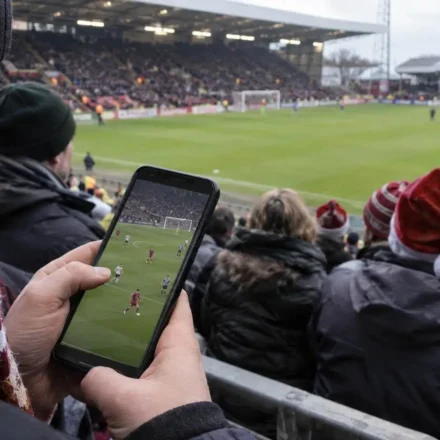
The most damning metric for the Twins in 2026 was the empty seats at Target Field. Attendance plummeted to 1,740,366—the lowest for a full, non-pandemic-affected season since the team’s days at the Metrodome in 2000. Ranking 25th out of 30 clubs, the Twins saw 28,362 fewer fans walk through the turnstiles compared to 2025.
Perhaps more concerning than the raw attendance numbers is the decline in season ticket renewals. For years, the organization touted a renewal rate of 90% or higher. This year, the team declined to release a figure, signaling that the core of their support—the season ticket base—has "eroded."
Pohlad acknowledged the drop-off, noting that while he was not surprised, he recognizes that the organization should be drawing closer to 2.5 million fans. Reclaiming that level of support, however, will require a radical departure from the status quo, especially with the threat of a labor-related delay hanging over the 2027 season.
Official Responses and Strategic Shifts
During the Q&A session, the leadership team outlined a path forward that focuses on aggressive investment and structural changes.

The Payroll Mandate
One of the most significant takeaways was Pohlad’s blunt assessment of the team’s financial commitment. "I have said over and over that a $100 million payroll, or anything close to that, is not sufficient to be consistently competitive and in the playoffs," he remarked.
While the 2026 payroll sat at approximately $115 million—a sharp decline from the $156 million high in 2023—Pohlad promised a "meaningful" investment in the upcoming off-season. He granted Zoll the "green light" to add salary, explicitly stating that the organization needs to move from words to action.
Coaching and Development
The organization has already begun the process of restructuring its coaching ranks. The firing of pitching coach Pete Maki and assistant Luis Ramirez signals that the team is no longer satisfied with the development of its young arms. In their place, the front office is looking for fresh skill sets, though they have notably retained bullpen coach LaTroy Hawkins, whose 21-year veteran experience is seen as a stabilizing force.
"At this point, we think what’s best for our group is to bring in some different skill sets and put a new structure in place," Zoll said.
Implications for the 2027 Roster
The Twins are currently banking on a "young core" to drive their resurgence. Manager Derek Shelton highlighted several names expected to play pivotal roles in the coming years: infielders Brooks Lee and Kaelen Culpepper, and outfielders Luke Keaschall, Walker Jenkins, Emmanuel Rodriguez, and Alan Roden. Zoll added Royce Lewis to that list, suggesting the foundation is set, provided it is properly supported.
The pitching rotation is also slated for a major boost. Pablo Lopez is expected to return from Tommy John surgery in early March, joining Joe Ryan and Taj Bradley to form a formidable top three. However, the depth remains a concern. With several pitchers entering free agency after 2027, the team may look to leverage current assets to acquire a "middle-of-the-lineup" bat—a position of desperate need.
While Kody Clemens provided a career-high 27 homers and 81 RBI, the leadership acknowledges that he is better suited for a utility role on a championship-caliber team rather than serving as the primary anchor in the cleanup spot.
The Catching Conundrum
The team also faces a difficult decision regarding catcher Ryan Jeffers. While Jeffers has indicated an interest in returning, the front office seems prepared for his departure. Zoll’s comments suggested the team will likely issue a qualifying offer of approximately $22 million, which, if declined, would net the team a compensatory draft pick. Victor Caratini is currently positioned as the most likely candidate to take over the starting duties behind the plate.
The Looming Labor Crisis
While the Twins look to improve, the entire league is facing a significant external threat. The current collective bargaining agreement expires on December 1, and the tension between owners—who are seeking a salary cap—and players—who are steadfastly resisting—has reached a fever pitch.
A delayed or shortened season is widely considered an inevitability. For the Twins, who are trying to win back a jaded fanbase, a strike or lockout would be a catastrophic blow to their efforts to restore credibility.
"We have a young, exciting core in place, and now it’s ownership’s responsibility to support them," Pohlad concluded. "I understand that patience in this market has run out, and I assure you we have a sense of urgency. Our goal this off-season is to field a roster so next spring, making the playoffs isn’t a hope, it’s the expectation that everyone in this room agrees is realistic."
Whether this is a turning point or merely another chapter of empty promises remains to be seen. What is certain is that the Minnesota Twins have run out of time, run out of excuses, and, as of this week, run out of the luxury of a patient fanbase. The 2027 season will be a referendum on the Pohlad era, and the work must begin immediately.