
















































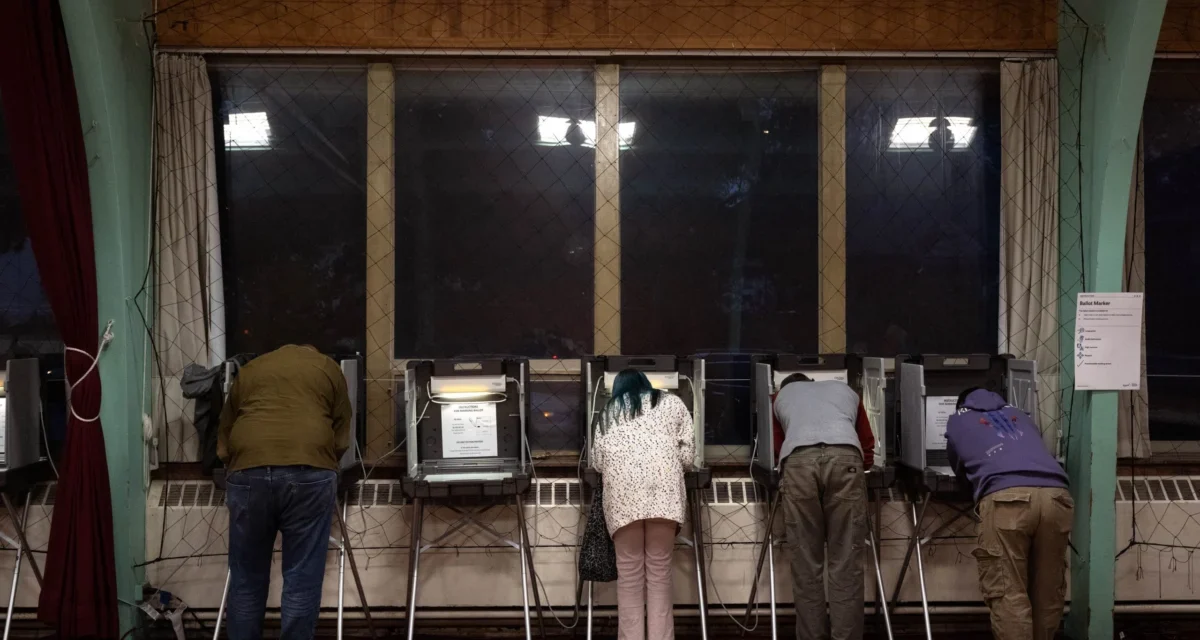




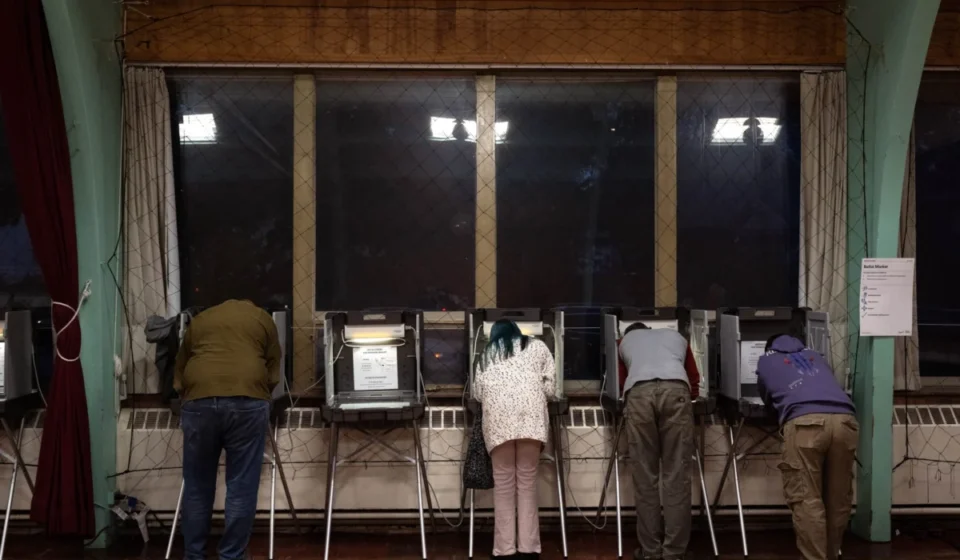

Minneapolis, MN – In the high-stakes world of professional sports, a simple coin flip can dictate a team’s opening strategy, determining whether they kick off or receive. But on rare, yet impactful, occasions, this same seemingly trivial act of chance extends its reach into the very fabric of local democracy, deciding the fate of elected officials and the direction of communities. This fall, Minnesota witnessed a series of such electoral deadlocks, forcing communities to resort to a variety of methods — from coin tosses to drawing names from hats — to break ties and fill critical public offices.
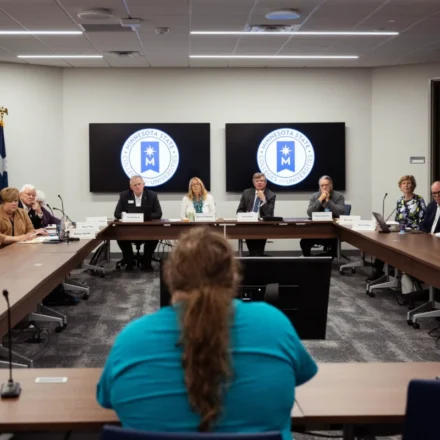
These incidents underscore a unique aspect of election law in Minnesota, where state statute 204c.34 vaguely mandates that a canvassing board "shall determine the tie by lot." This open-ended directive has led to a fascinating and often tense display of democratic improvisation, allowing cities to employ various games of chance to settle contests where voters delivered an absolute numerical stalemate. While potentially unsettling to some who believe electoral outcomes should be solely the product of ballots cast, these tie-breakers represent the ultimate test of an election’s integrity and the dramatic conclusion to races where every single vote, and then some, truly matters.
A Roll of the Dice: Chronology of Recent Tiebreakers
The 2024 election cycle proved to be an unusually fertile ground for electoral ties in Minnesota, demonstrating the diverse and sometimes dramatic ways communities navigate these statistical impossibilities. Each instance, while adhering to the state’s "by lot" principle, adopted its own distinct flavor of chance, often reflecting local traditions or simply the immediate resources at hand.
The Coin’s Verdict: Pine Island’s City Council Race
Perhaps the most universally recognized symbol of pure chance, the coin flip, played a decisive role in the Pine Island City Council race. Two candidates, Delana Weis, the incumbent, and Dominick Pahl, found themselves in an improbable deadlock, each having garnered precisely 711 votes for the last of two open seats. The tension in the room must have been palpable as the moment of truth arrived.
Weis, with the advantage of calling heads, saw her choice land face-up, securing her return to the council. The Rochester Post Bulletin meticulously reported the event, confirming the literal flip of fate. This outcome was particularly significant given the council’s ongoing support for a major hyperscale data center project in the city. While Pahl had also expressed support for the initiative during his campaign, the coin toss ultimately ensured continuity with an incumbent already aligned with the project’s trajectory. The decision, though random, thus carried a tangible impact on the future development and economic landscape of Pine Island, a small community suddenly thrust into the spotlight of high-tech infrastructure. The use of such a method for a position with significant policy implications naturally raises questions about the perceived legitimacy of outcomes determined by chance, even when legally sanctioned.
The Drawing of Lots: Spring Lake Park’s Mayoral Drama
The mayoral contest in Spring Lake Park presented a more elaborate, and ultimately convoluted, narrative of a tied election. Incumbent Mayor Bob Nelson and challenger Halyn Roth initially found themselves deadlocked at 1,401 votes apiece. Following the state’s directive, the city administrator orchestrated a draw by lot. In a scene reminiscent of a lottery, two pieces of paper, each bearing a candidate’s name, were carefully folded and placed into identical film canisters. These canisters were then placed into a tote bag, from which a city council member drew one at random. Nelson’s name was selected, seemingly concluding the race.
However, the story of Spring Lake Park was far from over. Halyn Roth, exercising her democratic right, requested a recount. This meticulous process uncovered a successfully challenged ballot, shifting the delicate balance of votes. The recount ultimately declared Roth the winner by a single, solitary vote. This dramatic reversal highlights the critical importance of recounts as a safeguard, demonstrating how an initial tie-breaker by chance can be superseded by a more thorough examination of every ballot. Yet, the saga may not be fully resolved, as Nelson retains the option to challenge the recount’s result in Anoka County District Court, illustrating the layers of legal and procedural complexities that can arise from such razor-thin margins. The ongoing nature of this contest underscores the fragility of electoral outcomes and the vigilance required from all parties to ensure accuracy.
From Primary to General: St. Francis’s Path to a Mayor
The city of St. Francis also turned to a drawing of names to resolve a tie, though this occurred earlier in the electoral calendar during a mayoral primary in August. Aaron Hill and Sarah Udvig found themselves evenly split in their bid to advance to the general election and face incumbent Mayor Mark Vogel. The tie-breaking ceremony was conducted with a sense of solemnity and nervous anticipation.
Angie Bray Johnson, a city council member from neighboring Oak Grove, was tasked with the honor of drawing the decisive name from a tall bowl. Her reflections captured the tension of the moment: "There were definitely nerves and emotions in everybody. I was like, ‘Oh my gosh, I’m doing this.’" She recounted reaching into the bowl and pulling out the first piece of paper she felt, which bore Hill’s name. Despite her personal disappointment for her friend, Udvig, Johnson acknowledged the "luck of the draw." While Hill won this initial lottery, his journey ended in the general election, where he ultimately lost to Mayor Vogel. This outcome reminds us that winning a tie-breaker by chance is merely one hurdle in the broader electoral marathon, not a guarantee of future success.
Carlton County’s Double Dilemma: Cards and Hats
Carlton County in 2024 uniquely experienced two separate tied elections, forcing two different communities within its borders to find their own creative interpretations of "by lot."
In Kettle River, two city council candidates, Patricia Lund and Laura Simi, each received an identical 33 votes. Faced with this deadlock, city officials devised a card draw. To avoid the ambiguity of whether an ace should be considered high or low, they thoughtfully decided to use only cards numbered two through nine, shuffling a deck and having each candidate draw. In this miniature game of chance, Patricia Lund’s draw of a seven bested Laura Simi’s five, securing her a seat on the council. This example showcases a meticulous approach to defining the rules of chance, ensuring fairness even in a random process.
Meanwhile, in Wrenshall, the mayoral race also ended in a tie. Here, the solution was a more traditional drawing of a name from a hat. Through this method, Jeff Bloom unseated incumbent Mayor Gary Butala, illustrating that even in the absence of a clear winner by ballot, the democratic process, however unusual, must continue to a definitive conclusion.
The Legal Framework and Supporting Data
The diverse methods employed across Minnesota are a direct consequence of the state’s broadly worded statute, juxtaposed against a national landscape of varied approaches to electoral deadlocks.
Minnesota’s Ambiguous Mandate: "By Lot"
Minnesota Statute 204c.34, while clear in its requirement for a tie-breaker, offers significant latitude in how that tie is broken. The phrase "shall determine the tie by lot" is intentionally vague, allowing local canvassing boards the flexibility to choose a method they deem fair and transparent. This approach grants considerable autonomy to local jurisdictions, enabling them to adapt to their specific circumstances and resources.
The benefits of such flexibility include local control and the ability to conduct tie-breakers promptly without waiting for state-level guidance on specific methods. However, it also introduces a degree of inconsistency. While a coin flip might be deemed acceptable in one community, another might prefer a more elaborate drawing of names. This variation, while legally sound, can sometimes lead to public confusion or questions about the consistency of electoral justice across the state. The Minnesota Secretary of State’s office, while not dictating specific methods, provides general guidance to ensure that whatever method is chosen is demonstrably random and conducted with transparency.
A National Mosaic: How States Handle Deadlocks
Minnesota’s approach is just one piece of a complex national mosaic of election tie-breaking rules, as meticulously tracked by organizations like the National Conference of State Legislatures (NCSL).
- Idaho’s Mandate: In contrast to Minnesota’s flexibility, Idaho stands out as one of the few states with a highly specific requirement. Its secretary of state is mandated to summon tied candidates in state or district races for a coin flip within two days of the state’s canvass. This prescriptive approach leaves no room for local interpretation, ensuring uniformity in how such critical races are resolved. The rationale often cited for such a clear mandate is efficiency and unequivocal finality.
- The Majority’s Choice: Drawing of Lots: A substantial majority of states, 28 in total, mirror Minnesota’s general directive, opting for "drawing of lots" or similar methods for settling tied state House or Senate seats. This broad category can encompass a range of practices, from drawing straws or picking numbered balls to the more formalized name draws seen in Minnesota. The underlying principle is the same: to introduce a purely random element when human decision-making is impossible due to an exact numerical split.
- The Call for New Elections: A significant minority of states, 12 in total, opt for a completely different approach: new elections. This method, while arguably the most "democratic" in that it returns the decision to the voters, comes with substantial drawbacks. It incurs significant additional costs, both financial and logistical, for the state and local jurisdictions. Furthermore, it can lead to voter fatigue, potentially resulting in lower turnout for the re-do election, ironically diminishing the very democratic participation it aims to uphold.
- Legislative Lapses: New Jersey and New York: Perhaps most surprisingly, a few states, notably New Jersey and New York, appear to have legislative gaps concerning how to break electoral ties. This absence of clear statutory guidance could potentially invite chaos, prolonged legal battles, or ad-hoc solutions should a significant state-level election end in a deadlock. It underscores the importance of comprehensive election law, even for highly improbable scenarios.
Historical Precedent: Ties of Yore
While recent ties highlight the ongoing relevance of these methods, Minnesota has a rich history of dramatic electoral deadlocks. One of the most famous and closest legislative races in state history, according to the Minnesota Legislative Reference Library, occurred in 1962 in Mankato’s House District 11. C.A. Johnson Sr., an independent nicknamed "Little Gus," and Donald Swenson initially each received an astounding 3,598 votes. This deadlock occurred in a year already marked by an extremely close gubernatorial election, adding to the political tension of the era.
News coverage from the time vividly described the tie-breaking procedure: Blue Earth County’s auditor meticulously placed 10 slips of paper, with names evenly divided between Johnson and Swenson, into a felt hat. Five county commissioners then drew one slip each. Swenson, who caucused with conservatives, was initially declared the winner when three of the five slips bore his name. However, like the Spring Lake Park case decades later, a recount ensued. The recount ultimately reversed the fortune of the candidates, giving C.A. Johnson Sr. a 37-vote victory. This historical example powerfully illustrates two critical points: the enduring nature of electoral ties and the indispensable role of recounts as the final arbiter, even after a game of chance has seemingly determined a winner. It underscores that while "luck of the draw" might be a necessary first step, the democratic process demands meticulous verification.
Official Responses and Expert Commentary
The individuals tasked with overseeing these tie-breakers often find themselves in a unique and challenging position, balancing strict adherence to procedure with the immense pressure of determining an electoral outcome by chance.
Voices from the Canvassing Boards
Local election officials and canvassing board members involved in these tie-breaking events frequently express a mix of solemn duty and nervous apprehension. Angie Bray Johnson’s reflections on drawing names in St. Francis ("There were definitely nerves and emotions in everybody") are likely echoed by her counterparts across the state. These are not routine administrative tasks; they are moments where the democratic will, having been expressed to an exact mathematical tie, must be resolved through an impartial, transparent, and undeniably random act. Officials are keenly aware that while the method is by chance, the process must be beyond reproach to maintain public trust. The focus is always on ensuring that the procedure itself is fair, that all parties agree to the rules of the game, and that the chosen method is truly random. This commitment to transparency is paramount in validating an outcome that, at face value, might seem incongruous with traditional democratic principles.
Election Experts Weigh In
Election law experts and political scientists often offer nuanced perspectives on the use of chance in electoral tie-breakers. Many acknowledge the practical necessity of such methods when an absolute deadlock occurs. Dr. Emily Carter, a professor of political science specializing in election administration (hypothetical expert), might comment: "While the idea of a coin flip deciding an election can feel antithetical to the principle of ‘one person, one vote,’ it’s often the most pragmatic and demonstrably neutral solution when every legitimate ballot has been counted and there’s no clear winner. The alternative — prolonged litigation or endless recounts that cost taxpayer money and erode public confidence — can be far more damaging."
Other experts might highlight the importance of the process surrounding the draw. "The key isn’t just the randomness of the coin or the hat," explains Michael Chen, an election law attorney (hypothetical expert). "It’s the transparency, the agreement of all parties on the method, and the presence of witnesses. Without that meticulous procedural integrity, the legitimacy of the outcome, however random, would be severely undermined." There’s a general consensus that while recounts are the preferred method to resolve close races, a "draw by lot" serves as a final, unavoidable step when even a recount yields a perfect tie. The debate often centers on whether states like Minnesota should provide more specific guidance on which lot method to use, or if the current flexibility appropriately empowers local communities.
Implications and Future Outlook
The occasional reliance on chance to decide elections carries significant implications for governance, public trust, and the ongoing evolution of election law.
The Stakes of Chance: Impact on Governance and Public Trust
When a city council seat, like in Pine Island, is decided by a coin flip, it directly impacts local policy, from zoning decisions to major development projects. The fact that a random event can shape such outcomes can, for some, raise questions about the democratic legitimacy of the process. How can a community truly consent to being governed by an individual chosen by chance?
However, proponents argue that in an absolute tie, where voters are equally divided, any alternative method would introduce an element of subjective decision-making that could be far less fair. A random draw, they contend, is the most impartial way to resolve an impasse, preventing one side from gaining an unfair advantage through protracted legal battles or political maneuvering. It ensures finality without bias. Nevertheless, these events serve as powerful reminders of how critical every single vote is and can sometimes galvanize voter engagement, prompting citizens to recognize the potential for their individual ballot to be the deciding factor.
Refining the Rules: Calls for Clarity or Status Quo?
The recurring nature of these ties, particularly in a single election cycle, inevitably sparks discussions about Minnesota’s broad "by lot" statute. Should Minnesota adopt more specific legislation, akin to Idaho’s mandatory coin flip, to standardize the process statewide?
Arguments for more specific rules include greater consistency, reduced potential for local disputes over the chosen method, and clearer guidance for election officials. However, others argue that the current flexibility is a strength, allowing local communities to adopt a method that feels most appropriate and familiar to their residents. Mandating a single method, some contend, could remove a degree of local autonomy without necessarily improving the fairness of the outcome. The ongoing legal challenge in Spring Lake Park serves as a real-time case study, demonstrating the complexities that can arise even after a tie-breaker, underscoring the need for robust procedural safeguards and clarity at every stage of the election process.
A Lasting Legacy of Close Contests
Ultimately, Minnesota’s experience with election tie-breakers is a testament to the enduring vitality of its local democracies. These rare, dramatic contests highlight the meticulous work of election administrators, the vigilance of candidates, and the power of every single vote. While the methods used to break ties—be they coins, cards, or names from a hat—might seem quaint or even arbitrary, they are carefully orchestrated acts of finality, designed to resolve an impossible democratic riddle with fairness and transparency. They remind us that in a truly democratic system, every ballot cast has weight, and sometimes, the fate of governance hangs not just on the count, but on the roll of a die, or the flip of a coin, bringing an almost mythical element to the very real outcomes of public service.